
Suppressing emotions means hiding a feeling you know is there. You feel the anger in a meeting and keep your face still, or you feel hurt and say “I’m fine.” Most people do this sometimes, and in the moment it can be the right call. But some people do it so often that they stop noticing they are doing it. And some people aren’t hiding a feeling at all, because they struggle to find it in the first place. That second pattern is called alexithymia. This guide helps you work out which one sounds like you, what suppression actually does, and how to start letting feelings through.
What Suppressing Emotions Means
Psychologists call it expressive suppression: holding back the outward signs of a feeling while you are feeling it. In a classic study, 85 people watched a short, disgusting film. Some were asked to behave so that anyone watching wouldn’t know they felt anything. They managed it, and their faces showed much less. But they felt just as disgusted as the people who watched normally, and their bodies showed some signs of extra arousal.[1] So suppression changes what other people see, not what you feel internally.
It also helps to separate suppression from control, because people are often told to “control” their feelings without being told what that means. In a Reddit discussion about the difference, one person put it in three lines:
“Feeling angry, so you explode at someone: not controlling or suppressing.
Feeling angry, so you address an issue they caused you as maturely as you can, either with the other person or on your own: controlling.
Feeling angry, but it’s inconvenient or uncomfortable, so you push it down and act like you’re not angry: suppressing.”[6]
A commenter in r/explainlikeimfive, in a discussion about controlling versus suppressing emotions
Emotional control, in this sense, is a flexible way to manage how you respond to a feeling. It usually goes something like this. You notice the feeling and name it, or at least admit to yourself that it’s there. You listen to what it’s telling you, such as that a line was crossed or that something matters to you. You choose what to do and how much to show, based on where you are and who you’re with. And if the moment isn’t right, you come back to the feeling later and work through it, on your own or with someone you trust.
Expressive suppression is narrower. It only holds back what shows on the outside. That makes it one tool that control can use, not the opposite of control. Keeping a calm face in a tense meeting can be part of control when you know you’re angry and plan to deal with it later. It turns into the pattern this guide is about when hiding becomes the whole response, and the feeling gets pushed down and never looked at again.
A related idea comes up when someone else is upset. Interpersonal emotional containment means staying steady, listening, and giving the other person room to feel what they feel, rather than shutting them down or rushing them past it. A man staying calm and present while his partner cries about a hard day is one example, but containment isn’t tied to gender. Anyone can offer it to a partner, a friend, or a child. You may hold back some of your own reaction while you do it, but the aim is to make space for their feelings, not to bury yours.
In a relationship, having a choice means you can stay calm now and still tell someone what mattered to you later. Habitually hiding feelings is linked with less closeness.[3] In one study, people who could both show and hide emotions when asked reported less distress two years later.[5]
Control, suppression, repression, and alexithymia
All four can look like calm from the outside. The differences are what you notice and what you do with the feeling.
| Pattern | What is happening | Can you name the feeling? | It often sounds like |
|---|---|---|---|
| Control | You notice the feeling, take in what it is telling you, and choose how much to show now and what to do with it later | Usually, or you at least know something is there | ”I’m angry about this. I’ll bring it up once I’ve calmed down.” |
| Suppression | You notice the feeling and choose to hide it | Usually, at least later | ”I was furious, but I kept smiling.” |
| Repression | The feeling is kept out of awareness without you choosing it | Not easily, though it may show up in other ways | ”I’m not angry about it,” while snapping at everyone |
| Alexithymia | Something is going on inside, but it is hard to notice, tell apart, and put into words | Often not, even when you try | ”I feel something. I just don’t know what it is.” |
Repression comes from psychoanalysis and is hard to study directly. One lab study, though, found that people with a repressive coping style and people high in alexithymia reacted in opposite ways to giving a stressful speech. Repressors reported less distress than their heart rate suggested. People high in alexithymia did the reverse and reported more distress than their heart rate suggested, much like people with high anxiety.[7] So two people who both look calm can be going through very different things inside.
Signs You Might Be Suppressing Emotions
Suppression is easy to miss, because after a while it happens on autopilot. These are signs people often describe:
- You say “I’m fine” or change the subject when you aren’t fine.
- Feelings arrive late, hours or days after the event, often when you are alone or trying to sleep.
- Small things set off big reactions, because earlier feelings never went anywhere.
- You stay busy, scroll, drink, or eat so you don’t have to be alone with a feeling.
- People close to you say they can’t tell what you are thinking or feeling.
- You feel tense, tired, or flat without knowing why.
Late feelings deserve a closer look, because they can belong to suppression and alexithymia at once. In a Reddit discussion about suppression learned in childhood, one person described it like this:
“often times i caught myself “studying” emotions on daily interactions. when something happens to me i go numb and start asking myself “what feeling should be placed here?” - then months after, when the rationalizing part is done, i feel a wave of emotion and start ruminating the situation for a long time.”[8]
A commenter in r/emotionalneglect, in a discussion about the effects of emotional suppression
Going numb and asking which feeling “should” be there is close to how many people describe alexithymia. The wave of emotion months later suggests the feeling was there all along, even if it couldn’t be found at the time.
A quick self-check
Think of a recent moment that upset you, then ask yourself these questions:
- Did you know what you felt at the time? If you could name it, even roughly, and chose not to show it, that is suppression.
- Could you name it later, once you were alone? If it came back as a clear feeling, the feeling was there. It was hidden rather than missing.
- Did you mostly notice your body instead of a feeling? A racing heart, a tight jaw, or tiredness with no word attached points more toward alexithymia.
- Do you feel little even when you look for it, and has it been that way for years? A long-running pattern like that also points toward alexithymia, or toward the kinds of numbness covered in the guide to emotional numbness.
If you said yes to question 1 or 2, start with If you know what you feel. If question 3 or 4 sounded more like you, start with If you can’t find the feeling. Plenty of people resonate with both.
Where Suppression and Alexithymia Meet
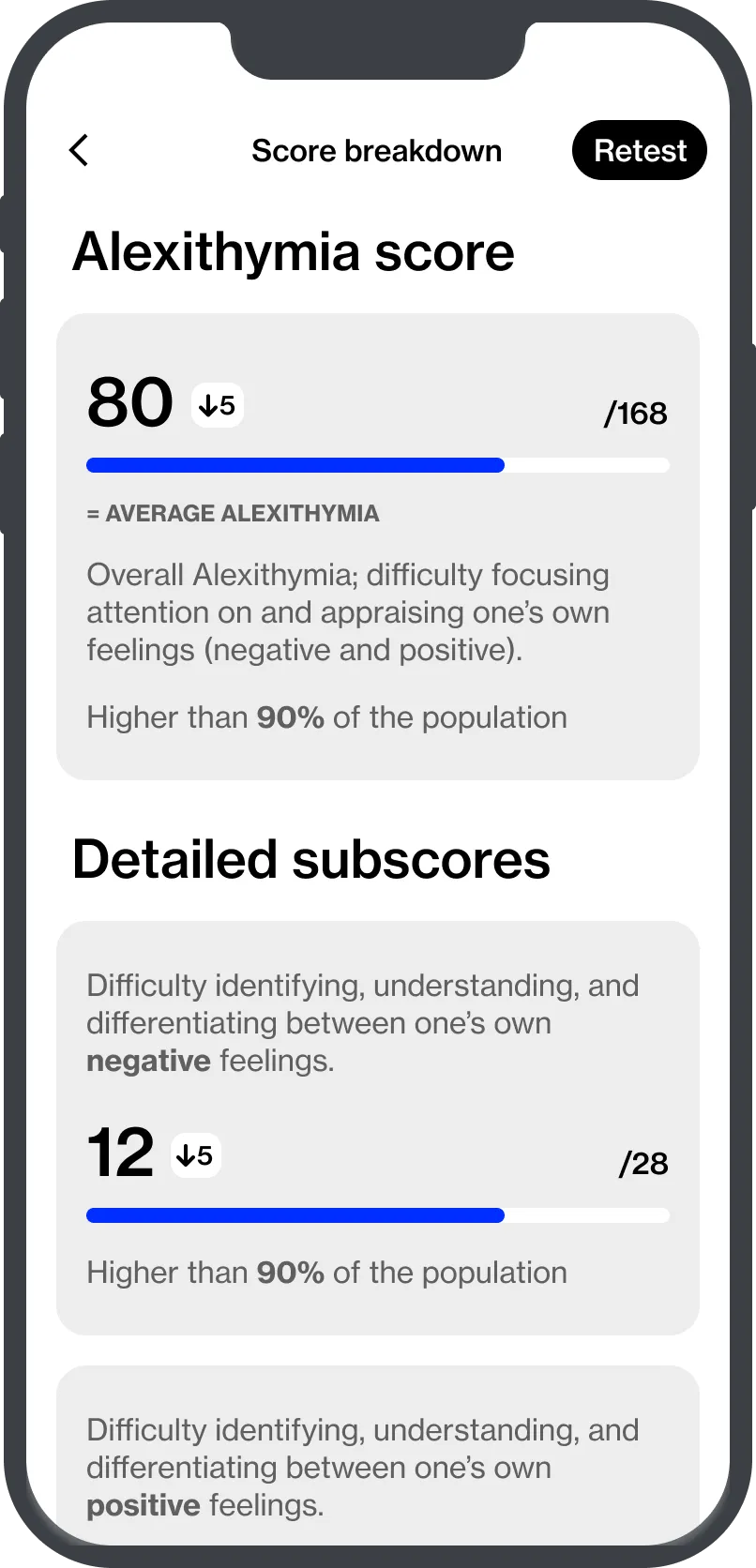
The two patterns often show up together. In a survey of 501 US adults, people with high alexithymia scores used more expressive suppression, and they also withdrew and ignored problems more. They were less likely to rethink a situation or reach out for support.[2] A smaller Dutch study found the same lean toward suppression over rethinking.[9]
Each pattern can feed the other. If you can’t tell what you feel, hiding it can seem like the safest option. And if you grew up hiding feelings, you got less practice noticing and naming them. Many people trace their own habit of holding back to how feelings were treated at home. In some homes, feelings were mocked or punished, so hiding them felt safer. In other homes, nobody made fun of you, but nobody paid much attention when you were upset either. That lack of response is one way childhood emotional neglect can look.
Someone asking on Reddit how to tell alexithymia apart from repressed emotions described what the overlap can feel like:
“I’ve noticed recently that I only know something’s going on when I feel weird and when i check my pulse, it’s fast even though I don’t feel it, or notice my thought patterns sounds anxious.”[10]
A person posting in r/autism, asking whether they had alexithymia or repressed emotions after trauma
Their body picked up on something first, and it only started to make sense once they checked their pulse. Whatever the right label is for them, that is a different problem from knowing you are angry and hiding it, and it calls for a different first step, so the practical section below splits in two. If trauma is part of your story, the guide to alexithymia and trauma covers how shutting down can protect people after overwhelming events.
What Suppressing Emotions Does to You
The clearest effects of habitual suppression are on mood and relationships. Its effects on physical health are more complicated.
Your mood and relationships
In five studies, people who habitually suppressed felt less positive emotion and more negative emotion than people who rarely did, and they reported worse relationships and lower well-being.[3] A large review of 114 studies also linked suppression with more symptoms of anxiety, depression, eating problems, and substance use.[11]
Relationships take a hit as well. When pairs of women discussed an upsetting topic, a partner who was asked to hide her feelings made the conversation go less smoothly, and the other woman’s blood pressure rose more.[4] Students who suppressed more around their move to college had less support and felt less close to others.[12] And a review of 43 papers found the same link between suppression and poorer social well-being, including weaker romantic relationships.[13] The guide to alexithymia in relationships has more on what partners notice.
Your body
Many articles say suppression weakens your immune system or causes heart disease. Hiding a feeling can add to your body’s stress response in the moment. A 2024 review brought together 24 studies of healthy people under stress. When people were asked to hide their feelings during a stressful task, their bodies showed slightly larger stress responses in the moment. People who said they suppressed as a habit didn’t show a bigger stress response overall, but they did show larger rises in the stress hormone cortisol.[14] These are small, short-term effects, not proof of lasting damage. A US study that followed 729 adults for 12 years found that people with higher suppression scores had a modestly higher risk of dying during that time, a result right at the edge of statistical significance.[15] It is a single observational study, so it can’t show that suppression was the reason.
These studies looked at suppression on its own. They don’t answer what happens when hiding feelings goes together with difficulty identifying them, which is the overlap this guide keeps coming back to. In the survey of 501 adults mentioned earlier, people with more alexithymia also reported more expressive suppression, though a one-time survey like that can’t show which comes first.[2] Alexithymia has its own link with the body. A review of the research found a small-to-moderate association between alexithymia and reporting more physical symptoms, strongest for difficulty identifying feelings.[23] The guide to alexithymia and physical symptoms covers that research in more detail.
When hiding a feeling is the right call
Suppression isn’t always a mistake. Holding back tears in a job interview can be exactly the right move. So can staying calm while a child is hurt. You may feel scared, but keeping your voice steady, listening to the child, and letting them cry is control and containment, not denial. You know the fear is there, and you can come back to it once the child is safe. What seems to help is having a choice. New York college students who were better at both showing and hiding feelings on cue had less distress two years after the September 11 attacks.[5] Cultural context changes the picture too. Suppression was linked with worse well-being in European American students but not in students from Hong Kong, where holding back is more expected.[16] And in a 2026 study of 483 first-year students, suppression predicted more depression and anxiety over a semester only among students who felt out of step with their true selves.[17] The trouble comes from hiding by default and never coming back to the feeling, more than from the occasional choice to hold it in.
How to Stop Suppressing Emotions
Which steps help depends on what the self-check showed. If you can find the feeling but hide it, the work is letting it out in small, safe ways. If the feeling is hard to find, the work starts earlier, with noticing.
If you know what you feel
- Name it to yourself. In the moment, say the word in your head: “annoyed,” “hurt,” or “scared.” In a brain imaging study, putting a word to a feeling calmed the brain’s alarm response to upsetting pictures.[18] Keeping a straight face is fine when the situation needs it, as long as you don’t hide the feeling from yourself.
- Come back to it on purpose. Holding a feeling in for a meeting is part of control when you return to it later. One person in a Reddit thread about stopping repression wrote that they “shoved it back down again” because they had to work.[19] Pick a time, like the drive home or ten minutes before bed, and ask yourself what you held back today.
- Say one small true thing. You don’t need to pour everything out. Try “I’m frustrated about this, give me a minute” instead of “I’m fine.”
- Write it down. A few lines about what happened and what you felt give the feeling somewhere to go. The alexithymia exercises include simple prompts to start with.
If you can’t find the feeling
When you can’t tell what you feel, advice to “just express it” doesn’t help, because there is nothing clear to express yet. Many people find it easier to start with the body. In a Reddit discussion about becoming aware of emotions, one person wrote:
“I’ve learned the first step is to just start feeling body feelings (bc feelings-feelings and body feelings are intimately connected, apparently). Like, tightness in your jaw, tension in your stomach, the ground under your feet, etc., and it will slowly build from there into feelings. I also get frustrated trying to name my emotions, but this body thing seems doable.”[20]
A commenter in r/Alexithymia, in a discussion about becoming aware of emotions without forcing techniques
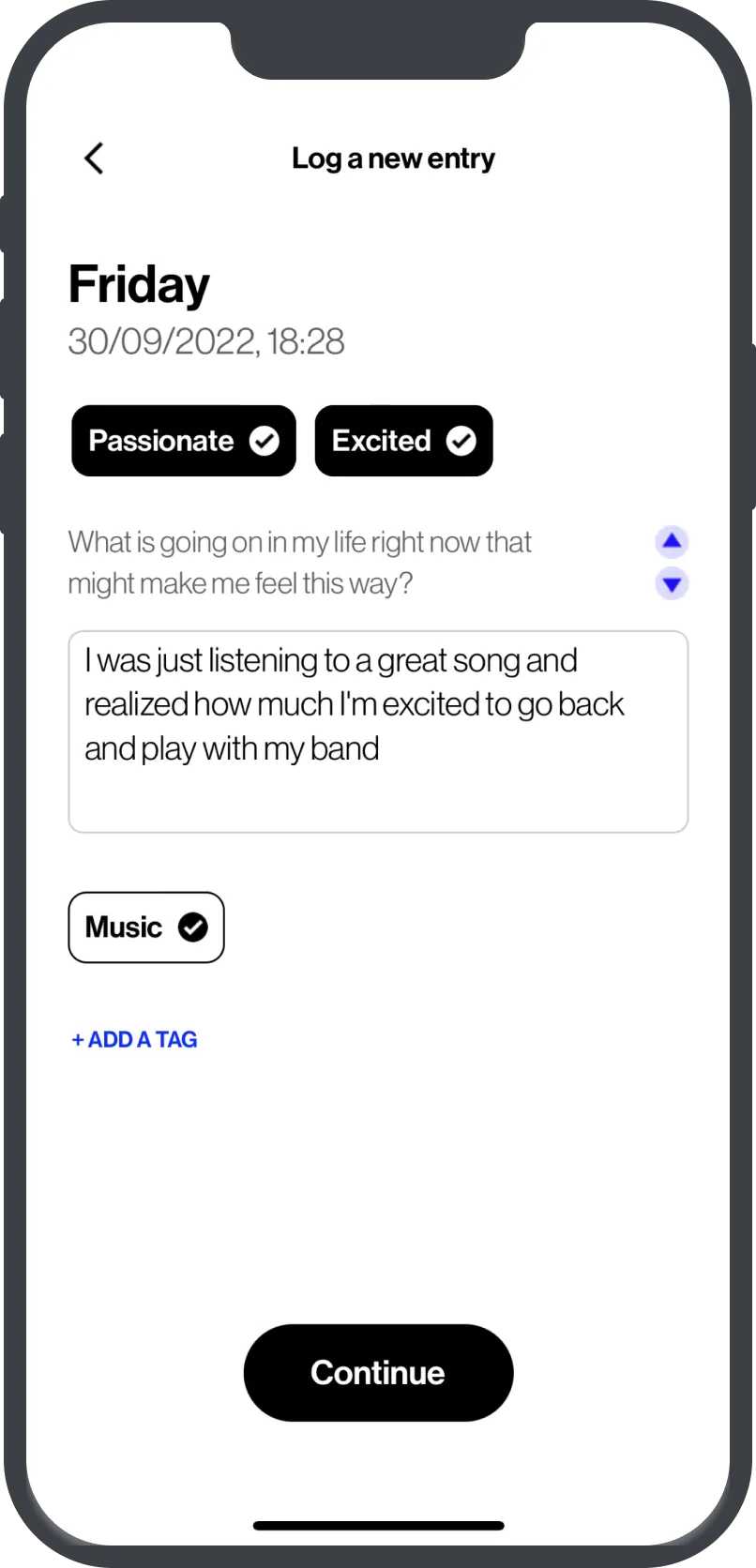
- Notice one body signal. Check your jaw, chest, stomach, and hands a few times a day. Write down what you find, such as “tight chest” or “hot face,” even with no feeling attached.
- Guess, then check. Pick a rough word that might go with the signal, such as “nervous” or “irritated,” and see whether it feels closer or further away. Rough guesses count.
- Look for the trigger. Ask what happened just before the signal started. Over time you start to see which situations go with which sensations.
The guide to interoception explains why body signals make such a useful starting point.
When feelings come back loud
Once you stop pushing feelings down, they may not arrive gently. People who have held back for years often describe a noisy phase, when feelings that used to stay hidden suddenly seem too big:
“They start off quiet, because you’re not used to listening for them. In reality, they’re screaming because they’ve been ignored for a long time. When you do start to hear them, they get overwhelming really fast. Because you’re not used to hearing them, you can’t self-regulate them yet, so you act out and have disproportional responses to things. With practice, you learn to self-regulate (because it’s a skill and all skills need practice to do well).”[21]
A commenter in r/emotionalneglect, answering what happens when you stop repressing emotions
That phase can be a sign of progress, and it tends to settle with practice. Work within your window of tolerance, the range where a feeling is uncomfortable but you can still think and stay present. Keep practice short, a few minutes at a time. If sitting with hard feelings makes things worse, start with comfortable sensations instead, like your feet on the floor or the weight of your body in a chair. As one person in a Reddit discussion about this put it, “You don’t start by inviting in the bad stuff, you start by inviting in the good stuff.”[22] If you hit panic, feel detached from your body, or feel overwhelmed, stop and switch to something that keeps your attention outward, and reach out to someone you trust or a professional.
When to Get Help
Talk to a doctor or mental health professional if holding feelings in has left you low, anxious, or numb for weeks, if you are using alcohol, drugs, or food to keep feelings down, or if outbursts are hurting you or the people around you. A therapist can also help if painful memories come back along with the feelings, especially after abuse or neglect.
Next Steps
Go back to the self-check and pick one step from the matching section for the next week. If the feelings themselves seem hard to find, the guide to alexithymia explains the trait in depth, and the alexithymia test gives you a baseline to track progress against. With practice, hidden feelings can become easier to notice, name, and share.
References
Show referencesHide references
- Gross JJ, Levenson RW. Emotional suppression: physiology, self-report, and expressive behavior. J Pers Soc Psychol. 1993;64(6):970-986. doi:10.1037/0022-3514.64.6.970.
- Preece DA, Mehta A, Petrova K, Sikka P, Bjureberg J, Becerra R, Gross JJ. Alexithymia and emotion regulation. J Affect Disord. 2023;324:232-238. doi:10.1016/j.jad.2022.12.065.
- Gross JJ, John OP. Individual differences in two emotion regulation processes: implications for affect, relationships, and well-being. J Pers Soc Psychol. 2003;85(2):348-362. doi:10.1037/0022-3514.85.2.348.
- Butler EA, Egloff B, Wilhelm FH, Smith NC, Erickson EA, Gross JJ. The social consequences of expressive suppression. Emotion. 2003;3(1):48-67. doi:10.1037/1528-3542.3.1.48.
- Bonanno GA, Papa A, Lalande K, Westphal M, Coifman K. The importance of being flexible: the ability to both enhance and suppress emotional expression predicts long-term adjustment. Psychol Sci. 2004;15(7):482-487. doi:10.1111/j.0956-7976.2004.00705.x.
- Reddit, r/explainlikeimfive. Comment in the discussion “ELI5 the difference between controlling and suppressing emotions”. Individual experience, October 2024.
- Newton TL, Contrada RJ. Alexithymia and repression: contrasting emotion-focused coping styles. Psychosom Med. 1994;56(5):457-462. doi:10.1097/00006842-199409000-00011.
- Reddit, r/emotionalneglect. Comment in the discussion “This is what emotional suppression will do to you”. Individual experience, November 2025.
- Swart M, Kortekaas R, Aleman A. Dealing with feelings: characterization of trait alexithymia on emotion regulation strategies and cognitive-emotional processing. PLoS One. 2009;4(6):e5751. doi:10.1371/journal.pone.0005751.
- Reddit, r/autism. Post “Is there a way to tell the difference if I have alexithymia or repressed emotions due to trauma?”. Individual experience, June 2022.
- Aldao A, Nolen-Hoeksema S, Schweizer S. Emotion-regulation strategies across psychopathology: a meta-analytic review. Clin Psychol Rev. 2010;30(2):217-237. doi:10.1016/j.cpr.2009.11.004.
- Srivastava S, Tamir M, McGonigal KM, John OP, Gross JJ. The social costs of emotional suppression: a prospective study of the transition to college. J Pers Soc Psychol. 2009;96(4):883-897. doi:10.1037/a0014755.
- Chervonsky E, Hunt C. Suppression and expression of emotion in social and interpersonal outcomes: a meta-analysis. Emotion. 2017;17(4):669-683. doi:10.1037/emo0000270.
- Tyra AT, Fergus TA, Ginty AT. Emotion suppression and acute physiological responses to stress in healthy populations: a quantitative review of experimental and correlational investigations. Health Psychol Rev. 2024;18(2):396-420. doi:10.1080/17437199.2023.2251559.
- Chapman BP, Fiscella K, Kawachi I, Duberstein P, Muennig P. Emotion suppression and mortality risk over a 12-year follow-up. J Psychosom Res. 2013;75(4):381-385. doi:10.1016/j.jpsychores.2013.07.014.
- Soto JA, Perez CR, Kim YH, Lee EA, Minnick MR. Is expressive suppression always associated with poorer psychological functioning? A cross-cultural comparison between European Americans and Hong Kong Chinese. Emotion. 2011;11(6):1450-1455. doi:10.1037/a0023340.
- Xu Y, Zhang GQ, Tsai W. Longitudinal associations between expressive suppression and psychological health: the moderating role of authenticity and the ambivalence over emotion expression. J Couns Psychol. 2026;73(1):116-127. doi:10.1037/cou0000834.
- Lieberman MD, Eisenberger NI, Crockett MJ, Tom SM, Pfeifer JH, Way BM. Putting feelings into words: affect labeling disrupts amygdala activity in response to affective stimuli. Psychol Sci. 2007;18(5):421-428. doi:10.1111/j.1467-9280.2007.01916.x.
- Reddit, r/therapy. Comment in the discussion “How do I stop repressing emotions?”. Individual experience, December 2023.
- Reddit, r/Alexithymia. Comment in the discussion “Success once I stopped using “techniques” to become aware of emotions”. Individual experience, January 2025.
- Reddit, r/emotionalneglect. Comment in the discussion “What actually happens when you STOP repressing emotions?”. Individual experience, February 2023.
- Reddit, r/CPTSD. Comment in the discussion “I can’t “sit with” emotions because it just represses them further?”. Individual experience, December 2021.
- De Gucht V, Heiser W. Alexithymia and somatisation: quantitative review of the literature. J Psychosom Res. 2003;54(5):425-434. doi:10.1016/S0022-3999(02)00467-1.