
What Alexithymia Changes in a Relationship
Alexithymia makes it hard to notice, name, and describe what you feel. In a relationship it usually shows up in ordinary moments. One partner asks “How do you feel about that?” and hears “I don’t know” or “Fine.” Then a feeling shows up two days after the argument that caused it. Or a partner mentions a bad day and gets a solution when they wanted company. Couples can change these patterns, though. Both people can learn specific habits that make emotional conversations easier, and the person with alexithymia can get faster at recognizing what is going on inside.
Research on couples finds that higher alexithymia goes along with lower relationship satisfaction on average. In a study of 158 adults in relationships, fear of intimacy and low mood explained part of that link.[9] In a study of 155 married couples, loneliness and less intimate communication connected alexithymia with lower marital quality for both spouses.[10] Communication sits at the center of both findings, and it responds well to practice.
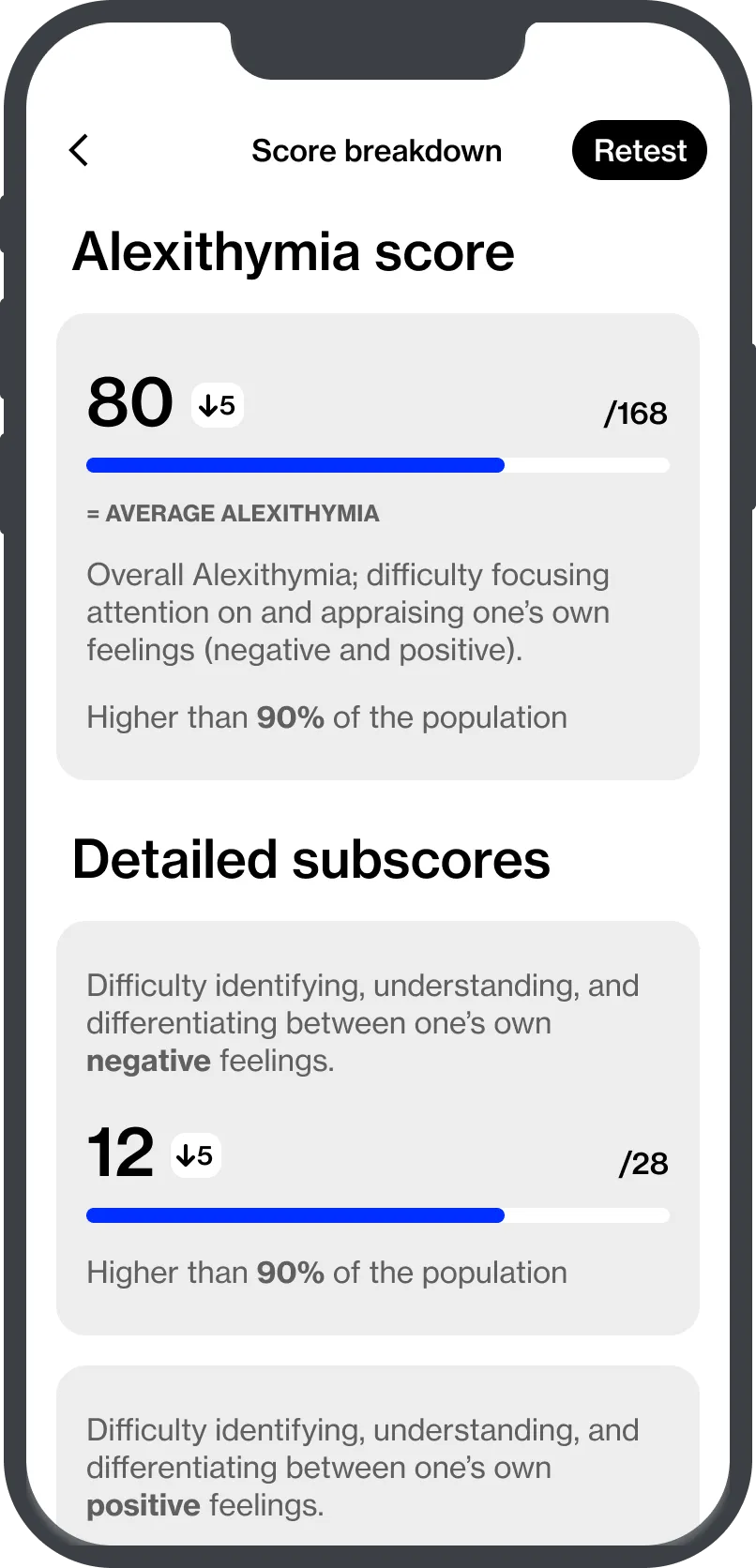
This guide is written for both partners, to help you understand each other rather than to diagnose the person you love. Alexithymia is a trait that varies in degree, usually measured with self-report questionnaires, and it overlaps with stress, low mood, and dissociation. It is especially common in autistic adults: across 15 small studies, about half of autistic participants scored above the usual cutoff, compared with about 5% of comparison groups.[11] If you suspect alexithymia in a partner, ask how they experience feelings instead of telling them what they have. If they’re open to it, they can take a test.
Bids for Connection and Why They Get Missed
Some of the most useful relationship research looks at tiny everyday moments. Psychologist John Gottman and his colleagues spent decades filming couples in conversation, at dinner, and during arguments, then following them for years to see who stayed together. Several of their ideas map closely onto what alexithymia makes hard.
What a bid is
A bid is any attempt to get a partner’s attention, interest, affection, or support. It can be a question, a comment, a touch, a sigh, or a look. “Your sister called.” “Look at that bird.” “Ugh, what a day.” In one study, researchers watched 49 newlywed couples during a ten-minute dinner in a lab apartment and coded every bid and every response.[2] Most bids are small, and many carry a second message under the words. “Did you see the email about the trip?” may really mean “I’m nervous about it, can we talk?”
Turning toward, away, or against
Each bid gets one of three kinds of response. Turning toward means acknowledging it, even briefly: looking up, answering, asking a follow-up question. Turning away means missing or ignoring it, such as staying on your phone. Turning against means responding with irritation or contempt.[2] The Gottman Institute reports that in a six-year follow-up of newlyweds, couples who stayed married had turned toward each other’s bids 86% of the time, while couples who divorced had done so only 33% of the time.[4] Responding to bids is one of the easiest relationship habits to practice.
The emotional bank account and the magic 5:1 ratio
Gottman uses the image of an emotional bank account. Each time you turn toward a bid, you make a deposit. Each time you turn away, you make a withdrawal. A healthy balance gives couples goodwill to draw on when they disagree, so they read each other’s words more generously during a hard moment.[6]
A related finding is often called the “magic ratio.” Gottman and Robert Levenson studied how couples balanced positive and negative behavior during conflict and followed them over four years.[3] According to the Gottman Institute, stable, happy couples showed about five positive interactions for every negative one during conflict, such as interest, a joke, a touch, an apology, or a moment of understanding. Couples whose ratio fell to about one to one were at much higher risk of breaking up.[5] Treat the number as a rough guide rather than a score to track. The dinner study adds a useful detail: couples who were playful and enthusiastic with each other in ordinary moments showed more humor and affection when they later argued.[2]
Why alexithymia makes bids easy to miss
There isn’t a study that tests bids directly in couples where one partner has alexithymia, but related research fits together. Many bids are nonverbal or carry their meaning under the words, and a review of 24 studies found that people with higher alexithymia are less accurate at labeling emotions in faces, partly because of co-occurring anxiety and low mood.[7] A partner with alexithymia can miss a sigh, a look, or a hopeful tone without meaning to turn away. Their own bids can be hard to read too. Instead of “I miss you,” a bid may come out as a fact about logistics or a link to an article.
Alexithymia also tends to go along with less affectionate communication. In a study of 921 young adults, mostly university students, people with higher alexithymia scores reported giving and receiving less affection, and that lower affection explained the link between alexithymia and both a lower need for intimacy and fewer close relationships.[8] In conflict, an urge to solve the problem can register as a withdrawal for the partner who wanted understanding, even when it was meant as help. Because bids are concrete behaviors, you can learn to spot them and respond whether or not you feel much in the moment.
Making bids easier to see
- Name your bids. “I’m asking for a bit of attention right now” or “This is me wanting a hug” removes the guesswork. Some couples agree on a word or emoji that means “this is a bid.”
- Respond small and often. Turning toward rarely needs a long conversation. “Oh, nice,” a hand on the shoulder or “Tell me more” all count.
- Assume more of your partner’s comments are bids than you notice. When unsure, answer the words and ask about the rest: “Do you want to talk about the trip?”
- Read your partner’s bids generously. A partner with alexithymia sharing an article or offering to fix something is often their way of reaching out.
”I have been married for 16 years now, my wife still has to tell me when she needs a hug, and knows if she doesn’t tell me she is just venting, I will go straight to a solution for her.”[13]
A Reddit commenter with alexithymia
Listening When Your Partner Is Upset
Turning toward matters most when a partner is upset. A 2026 study asked 279 Polish-speaking adults in romantic relationships how they help their partner feel better.[1] People with higher alexithymia scores reported listening less while their partner talked about emotions, telling their partner less often how much they valued them, and helping their partner see the situation differently less often. They more often asked their partner to hide or tone down the feeling, and they were somewhat less satisfied with their love life. The listening gap was largest for people who naturally focus on facts and practical matters over inner experience, which researchers call externally oriented thinking.
The differences were small to moderate, and alexithymia was more strongly tied to how people handled their own emotions than their partner’s. The authors note that listening, valuing, and helping someone see things differently are among the most helpful ways to support another person, and suggest that people higher in alexithymia might benefit from using them more often.[1] Treat the steps below as practical ways to act on its findings. Each is a behavior you can learn, and none requires you to know exactly what you feel first.
Listen before you fix
Solving the problem is a real way of caring. But it lands best after your partner feels heard. When your partner starts talking about something upsetting, let them finish, then ask “Do you want ideas, or do you want me to listen?"
"Sometimes when I tell you I’m thirsty, I don’t need you to bring me water, I want you to empathize with my drymouthedness.”[12]
A Reddit commenter with alexithymia, quoting what their partner says when they jump to fixing
The partner who wants to be heard can help by saying it up front: “I just need to vent for five minutes” or “I’d like a hug, not a plan.” A clear request takes the guessing out of it for both of you.
Reflect back what you heard
Reflective listening means repeating back, in your own words, what your partner said and how it seems to have landed for them, before you add your own view. Many conversations go back and forth with each person waiting for their turn to talk. In reflective listening you stay with your partner’s experience for a few rounds first. It shows that you heard them, lets them correct you when you got it wrong, and often calms things down on its own.
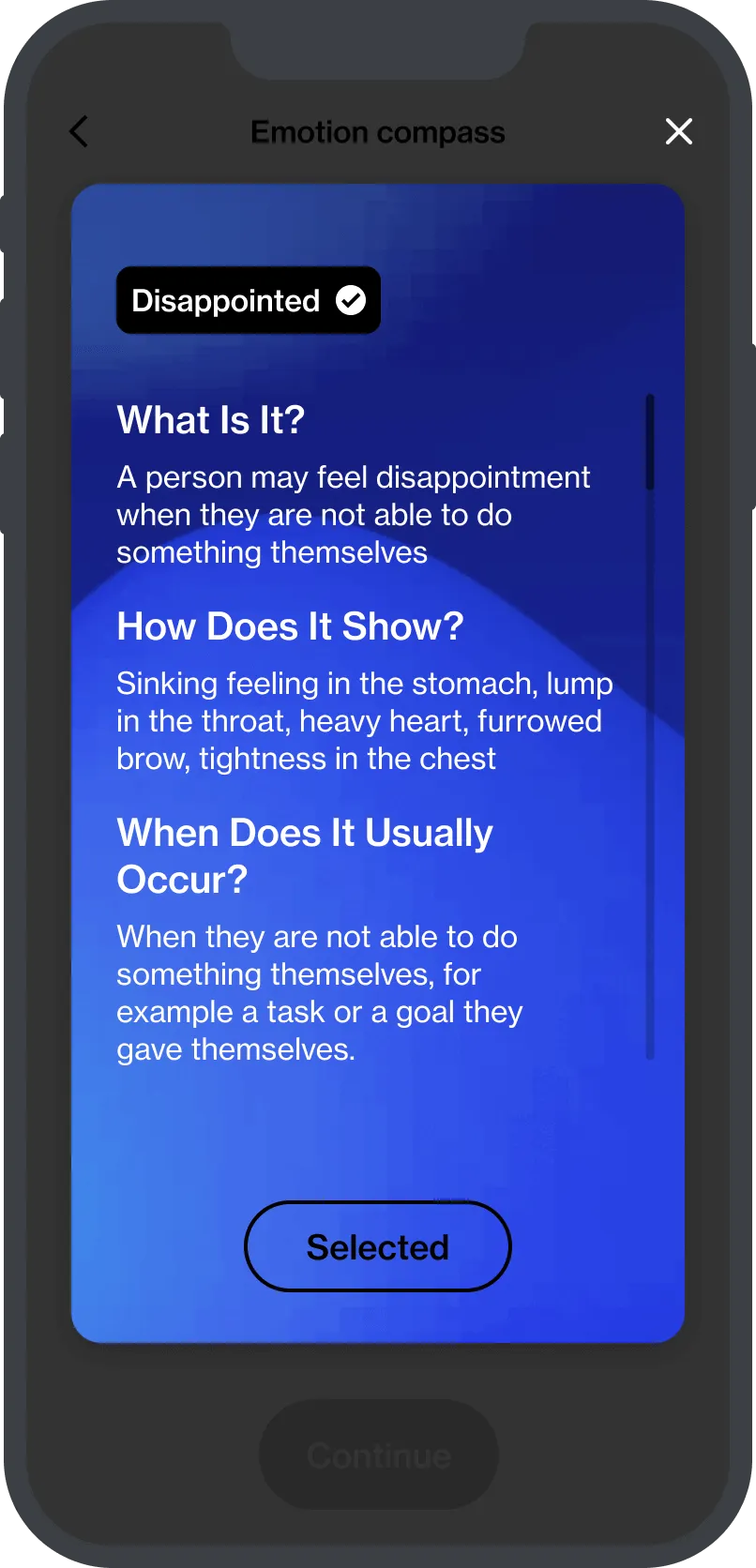
Reflective listening suits people with alexithymia well because it is a clear set of steps, and you don’t need to feel the emotion yourself to do it. Guessing what your partner feels is the hardest step, and for many people with alexithymia it is the very skill that is missing. Start with what you can reflect for sure: what happened and how much it seems to matter. When you do guess, use the situation as your clue. Most people feel embarrassed when they are criticized in front of others, and disappointed when a plan they looked forward to falls through. Each guess, right or wrong, is practice at reading emotions from context, and every correction from your partner teaches you something about how they work.
| Your partner says | Instead of | Try |
|---|---|---|
| ”My manager changed the plan again in front of everyone." | "Just email her and ask for it in writing." | "So she changed it again, and in front of the whole team. That sounds embarrassing as well as annoying?" |
| "I feel like I’m the only one who ever plans anything." | "That’s not true, I booked the restaurant last month." | "It sounds like you feel you carry most of the planning, and that’s tiring. Is that right?" |
| "I’m useless. I can’t get anything right." | "No, you’re amazing!" | "It sounds like you feel really low about yourself today." |
| "My mom made another comment about my weight." | "She’s from another generation, don’t take it personally." | "Another one. That must hurt, especially coming from her.” |
A simple sequence works for most conversations:
- Listen until your partner finishes, without planning your answer.
- Sum up what happened and why it matters to them: “So the trip got canceled, and you’d been looking forward to it for weeks.”
- Offer a guess about the feeling as a question: “It sounds like you’re disappointed?” Starters such as “It sounds like…” or “Am I right that…” make it easy to be corrected. If you have no idea, ask about the size of it instead: “Is that bothering you a lot?”
- Ask whether you got it right. If not, ask what you missed and reflect again.
- Once your partner feels understood, share your own view or ideas, if they want them.
When you can’t tell what your partner feels at all, you can still reflect what you notice and invite them to fill in the rest:
- Ask how big it is. “Is this a big deal for you, or more of an annoyance?”
- Name what you can see. “You’ve been quiet since that call.” “You sound tired.”
- Ask about the hardest part. “What’s the worst part of it for you?”
- Say it honestly. “I can tell this matters to you, even if I can’t tell exactly how it feels. Tell me more?”
Reassurance, advice, and pointing out the bright side are all well meant. Said too early, they can sound like “your feeling is wrong.” A partner with alexithymia can also ask for reflective listening in return. Having someone repeat back what you said and guess at the feeling can help you notice and name it.
Say what they mean to you
Valuing means letting your partner know they are important to you, especially while they are struggling. You don’t need to name your own feeling to do it. “I’m on your side,” “You matter more to me than this problem” or a hand on their shoulder all count. If words are hard to find in the moment, agree in advance on a few you can reach for, and use them.
Make sense of it together
Helping someone see a situation from another angle is a strength for many people with alexithymia, because it uses analysis. It works once your partner feels heard. Offer it as a question: “Could it be that she was rushed, and not angry at you?” The same idea can feel supportive or dismissive depending on when it arrives. “It’s not a big deal” in the first minute closes the conversation. “Want to look at it from another side?” after you have listened opens it up.
Let the feeling be shown
Asking a partner to hide what they feel (“Don’t cry,” “Calm down,” “Put a smile on”) was the partner-directed habit most clearly linked with higher alexithymia in the 2026 study.[1] If your partner’s tears or anger make you uneasy, treat that unease as information about you. You can say “I don’t fully understand this yet, and it’s okay that you’re upset,” and stay in the room. If you need a break, say so and name a time to come back, using the pause plan below.
Talking About Feelings You Can’t Name Yet
For the partner with alexithymia, “I don’t know” is often an honest answer. The feeling may be present as restlessness, tiredness, a tight stomach, or a rush of thoughts with no clear label. The aim is to share what you do notice and keep the conversation open while the rest becomes clearer.
Phrases for unclear feelings
| When | You could say |
|---|---|
| You sense something but can’t name it | ”I think I might feel something about this. Can I come back to you tonight?” |
| You only know whether it is good or bad | ”I’m not sure what it is, but it feels more off than okay.” |
| You notice your body more than the feeling | ”My chest is tight and I can’t focus. Something about that call got to me.” |
| You feel two things at once | ”Part of me is relieved and part of me is uneasy. I don’t know which is bigger yet.” |
| Nothing registers in the moment | ”Nothing is coming through right now. That’s normal for me, and I still care about this.” |
| You go blank when asked | ”Can you give me two or three options? It helps me notice which one fits.” |
The first phrase comes from a Reddit commenter who described learning it over two years as “the alexithymic partner.”[15] Rough reports count as well. “Bad vibe, not sure why” gives your partner real information, and every time you put words to a sensation you practice the skill alexithymia makes hard. A short list of emotion words on your phone, or a feelings wheel, lets you choose between options instead of searching from scratch.
Offer a proposal instead of an open question
Open questions about preference ask the other person to look inward and compare, which is the hard part. A proposal turns the question into a yes or no about an action.
”Not ‘would you like to go for a bike ride?’ - which is brain freeze and confusion for me.
A Reddit commenter explaining why “I don’t know” is often their most honest answer
Instead it is ‘Let’s go for a bike ride?’.”[14]
The same swap works for many everyday questions. “Did you sleep well?” can become “Were you awake much last night?” “Do you want help?” can become “I can help with that.” “How do you feel about moving?” can become “What would be easier about moving, and what would be harder?” The partner asking still gets useful information, and the partner answering doesn’t freeze.
Agree when you will come back to it
Delayed feelings are common with alexithymia. Something upsetting happens on Tuesday and the reaction arrives on Thursday, sometimes as irritability that seems to come from nowhere. Plan for the delay. After a hard conversation, agree on a time to check in, such as the next evening, and ask a simple question then: “Has anything come up about what we talked about?"
"It used to be that it took me 3+ days to even recognize that something upset me. Now I often recognize it after a few hours, so yay for progress!”[15]
A Reddit commenter with alexithymia who circles back with his wife after a day or two
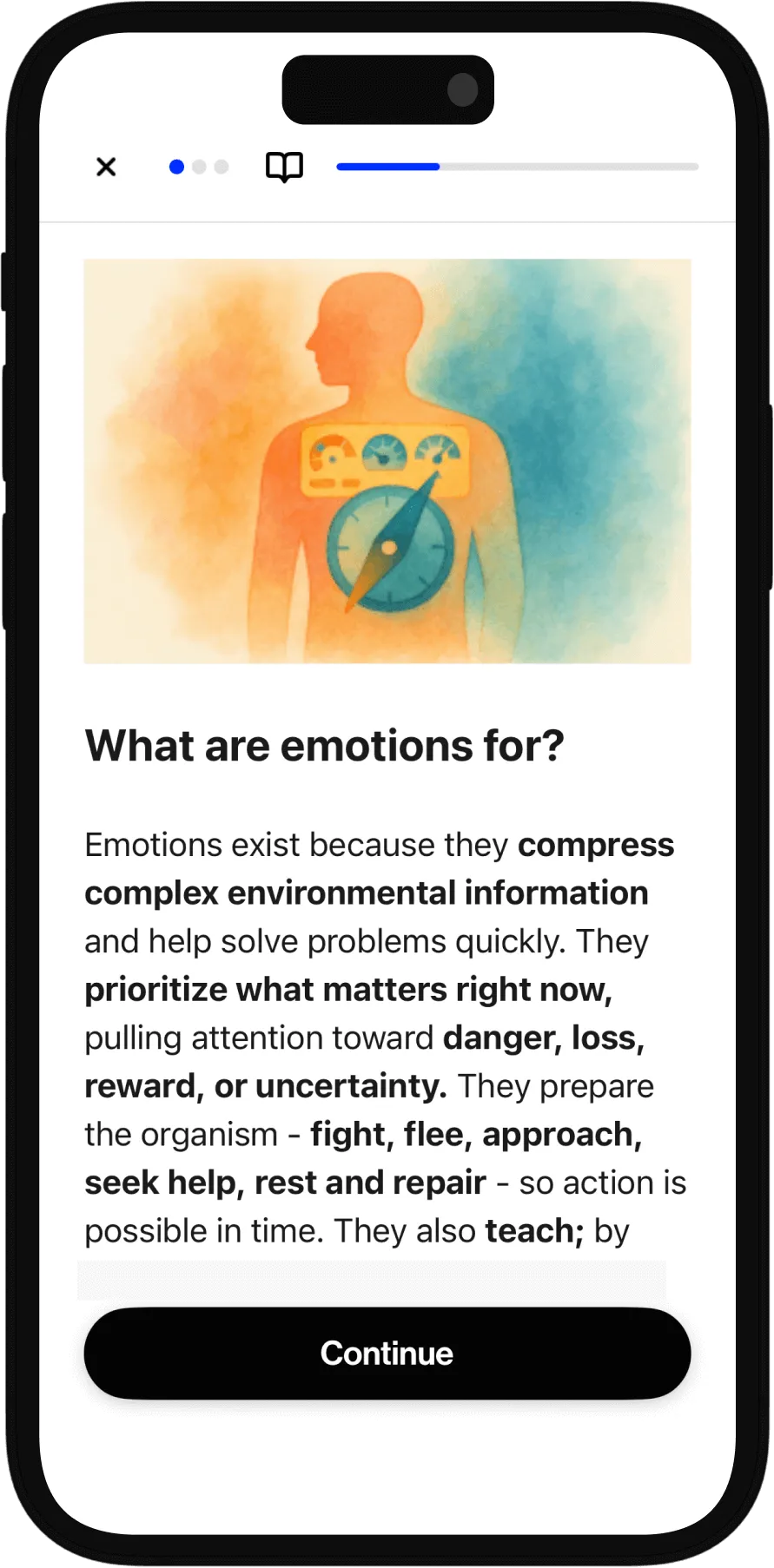
Noticing sooner is a skill you can build. Small, repeated check-ins help: pausing a few times a day to scan your body, writing one line in a journal about what happened and how you reacted, or asking yourself after a tense moment “What did my body just do?” Over weeks, you build a personal map of what your feelings look like from the inside, and the gap between event and recognition can shrink.
Agree what gestures mean
Many people with alexithymia show care through actions: fixing things, remembering practical details, simply being there. Their partners may also need some of that care in words or in particular gestures. Talk through which small acts carry emotional weight for each of you. A morning text, a hug when one of you gets home, or “I love you” before a trip can mean a great deal to one partner and seem minor to the other until it is spelled out. One commenter described agreeing with their partner that a morning heart emoji counts as a morning kiss, so he knows it hurts when he forgets.[17] Agreed gestures like this are easy bids to turn toward.
When a Conversation Gets Heated
Arguments are where alexithymia often shows most. Under pressure, a person who struggles to read their own state may go quiet, go blank, or leave the room. That can look like indifference. Often it is overload. Some discomfort during a hard talk is normal and worth staying with, because learning to tolerate it is part of how emotional awareness grows. Small positive moments still count during an argument. A joke, a touch or “I know we’ll sort this out” all add to the positive side of the ratio.
Manageable discomfort or overwhelm
Discomfort you can work with feels like unease, fidgeting, a hot face, or wishing the conversation were over, while you can still follow what is being said. Overwhelm is different: your mind goes blank, words stop going in, you feel detached or numb, your heart races, or you feel an urge to shout or run. When you notice discomfort, slow down. Breathe out for longer than you breathe in, feel your feet on the floor, and say “Give me a second.” When you notice overwhelm, stop and use your pause plan. Pushing on from that state rarely helps either of you.
A pause-and-return plan
- Agree on a pause phrase while you are both calm, such as “I need a pause, can we return to it later?”
- Either partner can use it. The person pausing says when they will come back: “Give me an hour, I need to process this.” or “Let’s pick this up after dinner.”
- During the pause, do something that settles your body: walk, shower, drink water, use your hands. Try not to rehearse the argument.
- Come back at the agreed time, even with very little to say. “I’ve noticed I’m more upset than I thought” is a good start.
- Try a side-by-side setting for the return, such as a walk, a drive, or washing up together. One commenter described having their best heart-to-hearts in the car, once the dust had settled.[18]
The return is what makes the plan work. A pause with a time attached tells your partner the conversation is important to you. A pause with no return feels like being left, and repeated walkouts without coming back wear down trust.
A Ten-Minute Weekly Check-In
A short, predictable check-in gives delayed feelings somewhere to land before the next argument. Pick a regular time, keep it brief, and take turns. Short answers are fine.
| Prompt | Example answer |
|---|---|
| How has your body been this week? | ”Tired, and my shoulders have been tense since Monday.” |
| One thing that felt good | ”Cooking together on Saturday.” |
| One thing that felt off, even if you can’t explain it | ”Something about the call with your mom. Not sure what.” |
| Anything from earlier that came back to you | ”I think I was more hurt about the party than I said.” |
| A bid you’d like more of | ”I’d love a hug when I get home, even if I look busy.” |
| One request for the coming week | ”Can we have one evening with no phones?” |
The partner with alexithymia can jot quick notes during the week so the check-in doesn’t depend on memory. If a topic needs a longer talk, schedule it for another time and keep the check-in short.
Limits That Protect Both of You
These habits help most when both people choose them. Neither partner has to accept less than they need, and each can decide what they can live with.
Limits for the partner with alexithymia
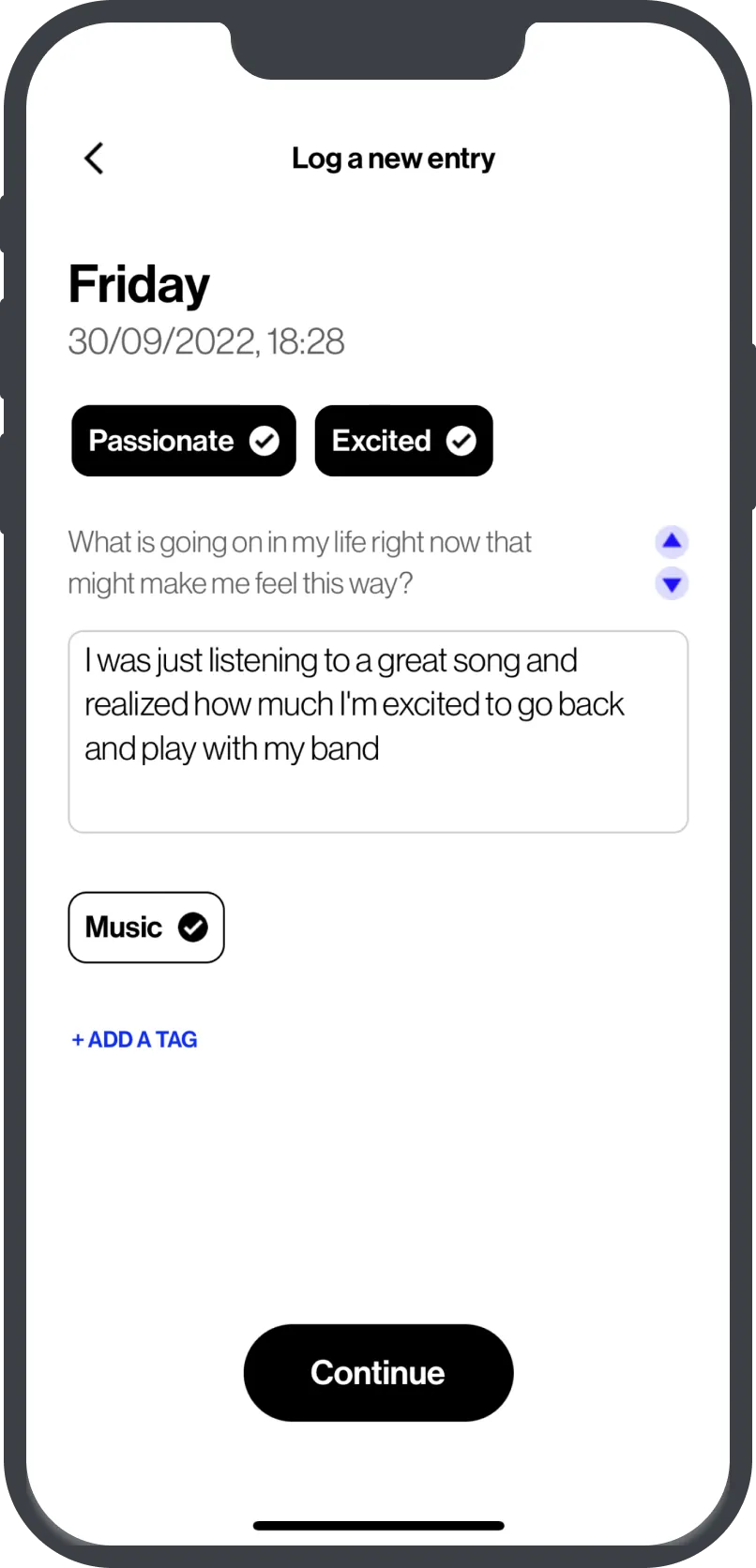
If small feelings don’t register, it is easy to agree to too much. Each compromise can seem fine in the moment, but the cost shows up later as exhaustion, resentment, or a sudden outburst. One commenter with alexithymia described it as “underacting” for a long time until the feelings break through all at once.[19] Treat small signals as data. If you notice reluctance, tiredness, or a vague “no” in your body, say “I’m not sure about this yet” before you agree. Checking with yourself before saying yes protects you and the relationship.
Where alexithymia ends and harm begins
Alexithymia explains difficulty noticing and naming feelings, and often less of a focus on emotions generally. But it does not explain completely refusing to care about them. Mocking a partner’s emotions, punishing them with silence for days, threats, control, and violence are behaviors a person chooses, whatever their emotional awareness. Commenters with alexithymia often say this themselves. One put it this way:
“As someone who has been this way for as long as I can remember, alexithymia is not an excuse or justification for dismissing anyone else’s emotions. Just because I do not understand what it is like to have genuine emotional reactions does not mean that I do not understand what emotions are or that they are important to other people. We do not get to neglect the emotions of others just because we cannot empathize with them.
If your partner does not care about your emotions that isn’t a symptom of his alexithymia, it is a choice he is making. He’s not trying to understand or care. A lack of knowledge and understanding can be corrected, a lack of caring cannot.”[16]
A Reddit commenter with alexithymia, replying to a partner asking for advice
A partner who is trying, even clumsily, is in a different place from a partner who is unwilling to try. If you have explained your needs clearly and your partner won’t work on them, you are allowed to decide the relationship isn’t right for you.
Next Steps
Pick one habit to try this week. If you are the partner who wants to support, try reflecting back before you respond, and notice one bid a day. If you are the partner with alexithymia, try one phrase from the table and one planned check-in. Some couples also work with a therapist who understands alexithymia, especially when the same conflict keeps repeating. The alexithymia treatment guide explains what to ask for.
- Read the full guide to alexithymia for what it is, where it comes from, and how people improve.
- Take the alexithymia test to get a baseline you can revisit.
- Work through the Emotions 101 course to build body awareness and emotion vocabulary at your own pace.
References
Show referencesHide references
- Larionow P, Mazur Serafin MM, Mudło-Głagolska K. Feeling without words: Alexithymia and regulation of romantic partners’ emotions, satisfaction with love life, and other affective outcomes. J Sex Ment Health. 2026;24:e03326015. doi:10.5603/jsmh.114591.
- Driver JL, Gottman JM. Daily marital interactions and positive affect during marital conflict among newlywed couples. Fam Process. 2004;43(3):301-314. doi:10.1111/j.1545-5300.2004.00024.x.
- Gottman JM, Levenson RW. Marital processes predictive of later dissolution: behavior, physiology, and health. J Pers Soc Psychol. 1992;63(2):221-233.
- The Gottman Institute. Turn towards instead of away.
- The Gottman Institute. The magic relationship ratio, according to science.
- The Gottman Institute. Invest in your relationship: the emotional bank account.
- Grynberg D, Chang B, Corneille O, Maurage P, Vermeulen N, Berthoz S, Luminet O. Alexithymia and the processing of emotional facial expressions (EFEs): systematic review, unanswered questions and further perspectives. PLoS One. 2012;7(8):e42429.
- Hesse C, Floyd K. Affection mediates the impact of alexithymia on relationships. Pers Individ Dif. 2011;50(4):451-456. doi:10.1016/j.paid.2010.11.004.
- Lyvers M, Pickett L, Needham K, Thorberg FA. Alexithymia, fear of intimacy, and relationship satisfaction. J Fam Issues. 2022;43(4):1068-1089. doi:10.1177/0192513X211010206.
- Frye-Cox NE, Hesse CR. Alexithymia and marital quality: the mediating roles of loneliness and intimate communication. J Fam Psychol. 2013;27(2):203-211. doi:10.1037/a0031961.
- Kinnaird E, Stewart C, Tchanturia K. Investigating alexithymia in autism: a systematic review and meta-analysis. Eur Psychiatry. 2019;55:80-89. doi:10.1016/j.eurpsy.2018.09.004.
- Reddit, r/Alexithymia. Comment in the discussion “How to talk to my partner with Alexithymia”. Individual experience, March 2026.
- Reddit, r/Alexithymia. Comment in the discussion “How to talk to my partner with Alexithymia”. Individual experience, March 2026.
- Reddit, r/Alexithymia. Comment in the discussion “Relationship with someone with undiagnosed alexithymia”. Individual experience, February 2022.
- Reddit, r/Alexithymia. Comment in the discussion “Being the partner with alexithymia”. Individual experience, September 2025.
- Reddit, r/Alexithymia. Comment in the discussion “How to talk to my partner with Alexithymia”. Individual experience, March 2026.
- Reddit, r/Alexithymia. Comment in the discussion “How to work with alexithymia in a relationship”. Individual experience, February 2023.
- Reddit, r/Alexithymia. Comment in the discussion “How to work with alexithymia in a relationship”. Individual experience, February 2023.
- Reddit, r/Alexithymia. Comment in the discussion “Being the partner with alexithymia”. Individual experience, September 2025.