
After trauma, many people say their feelings have gone numb. Someone asks how you feel and nothing comes to mind, or you only realize you were upset hours later, when you snap at someone or can’t sleep. Researchers separate two experiences that can both feel like this. With emotional numbing, feelings seem muted or far away. With alexithymia, something is going on inside, but you can’t tell what it is or put it into words. And alexithymia is very common in people with post-traumatic stress disorder (PTSD).[1] But emotional awareness can grow with practice, and you can work on it in small steps that stay within what you can manage.
How Trauma and Alexithymia Are Connected
A 2026 meta-analysis pooled studies of adults with PTSD and estimated that roughly half of them (53%) had alexithymia.[1] People with PTSD also scored higher on alexithymia than people who had been through trauma without developing PTSD, and the more severe someone’s PTSD symptoms were, the more alexithymia they tended to have.[1] The review looked at PTSD, so it doesn’t give a separate figure for complex PTSD (C-PTSD).
Earlier meta-analyses from 2008 and 2022 found the same link, and both found it was most pronounced among men and veterans.[2][3] The 2022 review also found that the part of alexithymia most tied to PTSD is identifying feelings, more than describing them or a habit of focusing on outside events.[3] Many people with PTSD can describe what happened in detail and still not know what they feel about it.
Childhood neglect and emotional abuse
Trauma doesn’t have to be a single event you can point to. In a large meta-analysis with more than 36,000 people, the childhood experiences most strongly linked to alexithymia in adulthood were emotional neglect, emotional abuse, and physical neglect.[5] A second meta-analysis agreed that these were more strongly linked than physical or sexual abuse.[6]
Children usually learn what a feeling is called, and what to do with it, from the adults around them. When nobody talks about or models feelings properly, or a child’s feelings are ignored, mocked, or punished, the child can learn to put them away. One commenter, who has PTSD from a later event, described how it started long before that:
“I didn’t have anyone to talk to about my feelings if I had any, or try to regulate them in a healthy way. I was on my own. If I got mad, I was alone. My reaction was my own to reap the consequences of. If I broke something, I didn’t have it. If I cried, my face just hurt and no one would be listening, so why do it? “Why display emotions if they only hurt me and no one else cares?” is what I guess I internalized. So I lost touch with my ability to understand negative emotions at all. “They don’t make logical sense, so put them away.” “Have some self-control.” So it doesn’t have to be a traumatic event, it can just be what you learned with what you had.”[17]
A commenter in r/Alexithymia, replying to someone who couldn’t remember a traumatic event
Some people were taught to distrust their body’s signals as well as their feelings:
“I definitely did. I had to relearn what all my bodily sensations mean as part of healing. My abusers gaslit me a lot, which mis-calibrated my nervous system."
"Healthy parents attune to their kid and help them learn to label their bodily signals. Mine told me I wasn’t feeling what I was feeling.”[16]
A commenter in r/CPTSDmemes, in a discussion about alexithymia
The good news is that even if nobody taught you words for feelings as a child, you can still learn them as an adult.
PTSD and C-PTSD
Complex PTSD (C-PTSD) is a diagnosis in the World Health Organization’s ICD-11, though not in the American DSM-5. It includes the core symptoms of PTSD plus lasting difficulties with regulating emotions, with how you see yourself, and with relationships. It often follows long or repeated trauma, but no particular kind of trauma is required.[14]
Alexithymia isn’t a listed symptom of either diagnosis, but it overlaps with the trouble regulating emotions that is part of C-PTSD, because it is hard to calm a feeling you can’t identify. In one study of 332 adults, more alexithymia went with more difficulty regulating emotions, and that difficulty went with more PTSD symptoms.[12] Repeated trauma seems to add up as well. In a survey of more than 2,500 adults in Germany, people who had been through five or more traumatic experiences had clearly higher alexithymia scores.[7]
Why Feelings Get Harder to Name After Trauma
When feelings are overwhelming and there is no safe way to deal with them, people find ways to feel less, such as avoiding anything reminding them of or triggering the feelings, pushing feelings away, or going numb. In the German survey, that avoidance and numbing helped explain why more trauma went with more alexithymia.[7] Feeling less can help you get through a hard moment. But if it becomes a habit, it can get harder to notice and name feelings in general, including pleasant ones.
Two trauma researchers reviewing work on emotional numbing argued that the feelings themselves don’t disappear. People with PTSD can still experience the full range of emotions they had before, but their emotional life becomes narrower and dominated by distress.[13]
What you feel and what your body does can also stop matching. In a lab study, 74 adults who had been through trauma listened to a trauma script while researchers measured how much they sweated, a sign of physical arousal. In people with alexithymia, how upset they said they felt and what their body was doing barely matched, and high distress went with low arousal.[8] So if you have been told to “check what you feel in your body” and found nothing useful there, this may be part of the reason, and it can help to start with what you did instead.
Alexithymia, Numbness, or Dissociation?
These three often come up together after trauma and can overlap, but they aren’t the same experience. A review of brain imaging studies found that alexithymia and PTSD-related emotional numbing involve partly different brain networks.[4]
| Experience | What it’s often like | A question to ask yourself |
|---|---|---|
| Alexithymia | Something is going on inside, but you can’t identify it or put it into words | Do I feel something but can’t say what it is? |
| Emotional numbing | Feelings seem muted or far away, especially pleasant ones such as joy or closeness | Do I feel less than I used to, even about things I care about? |
| Dissociation | Feeling detached from yourself or your surroundings, unreal, foggy, or losing track of time | Do I feel cut off from myself or the world around me? |
In PTSD, alexithymia and dissociation often go together, and the 2026 meta-analysis found a clear link between alexithymia and dissociative symptoms.[1] You can have more than one of these experiences at once, and the mix can change from day to day. If you often feel unreal or lose track of time, tell a doctor or therapist, because dissociation needs its own assessment.
Was It Always There?
Some people notice that their feelings became harder to read after a specific event. Others have had trouble naming feelings for as long as they can remember. Researchers sometimes call these secondary and primary alexithymia, and the main guide explains the difference. If your trauma started in early childhood, you may not be able to tell which one you have, but you can practice the same skills either way.
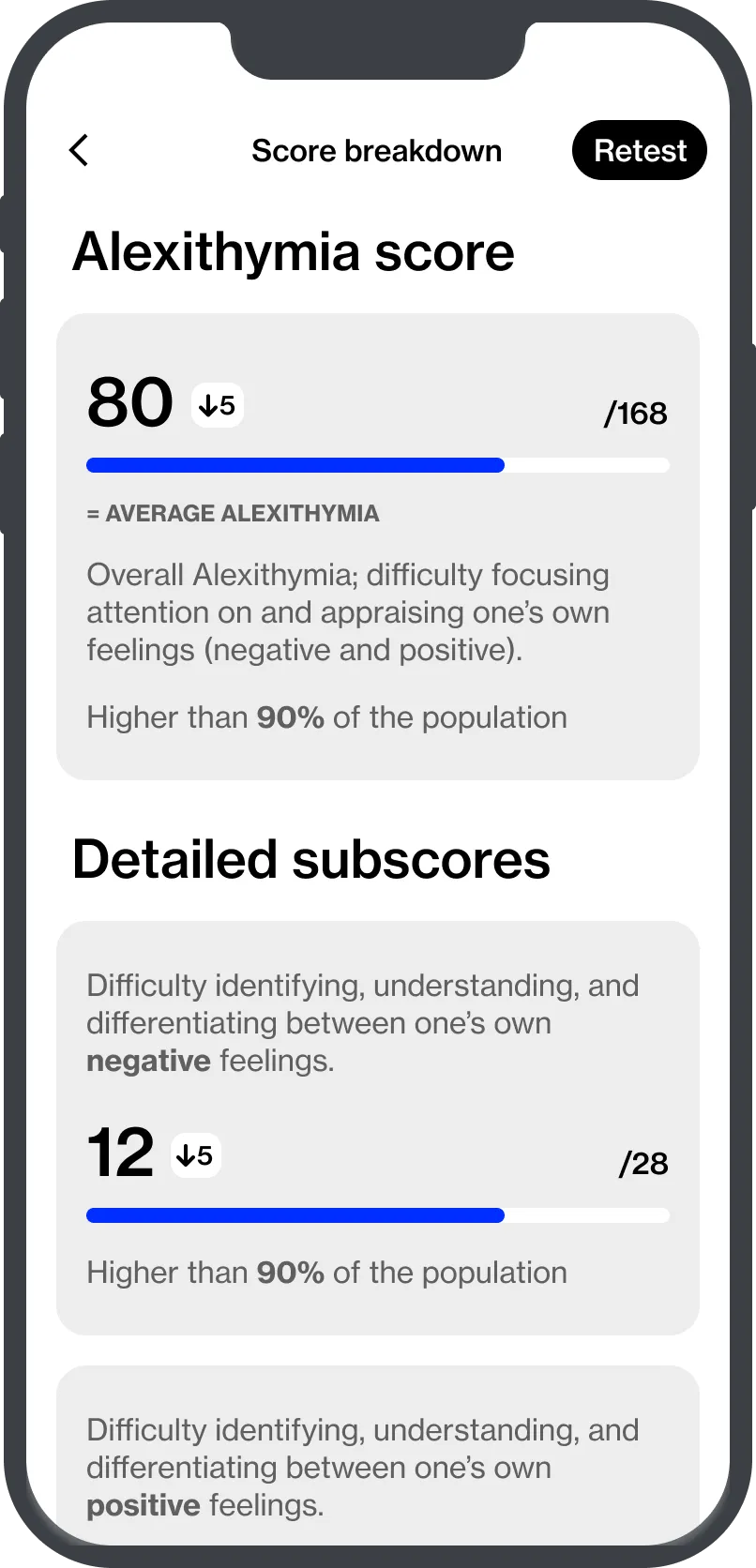
Alexithymia is also common in autistic people, and some people have both autism and trauma. If you are wondering about that, the alexithymia and autism guide covers what is different and what helps. To get a sense of where you are starting from, you can take a short self-check.
Alexithymia in Trauma Therapy
Many trauma therapies ask you to notice and talk about feelings, and so alexithymia can make therapy harder. Prolonged exposure is one example. In it, a trained therapist helps you gradually face memories and situations you have been avoiding, and like cognitive processing therapy and EMDR, it is meant to be done with a therapist rather than on your own. In a study of 68 people receiving prolonged exposure for PTSD, those with high alexithymia were more likely to still meet the criteria for PTSD after treatment and six months later, and their avoidance took longer to improve. People who had more trouble with emotional clarity were also more likely to drop out.[10]
So emotional awareness and recovery seem to be tied together. In an eight-week group program for 167 women with histories of severe childhood abuse, the women whose alexithymia improved also improved in PTSD symptoms, dissociation, and relationship problems, and the researchers recommended working on these emotional skills early in therapy.[9]
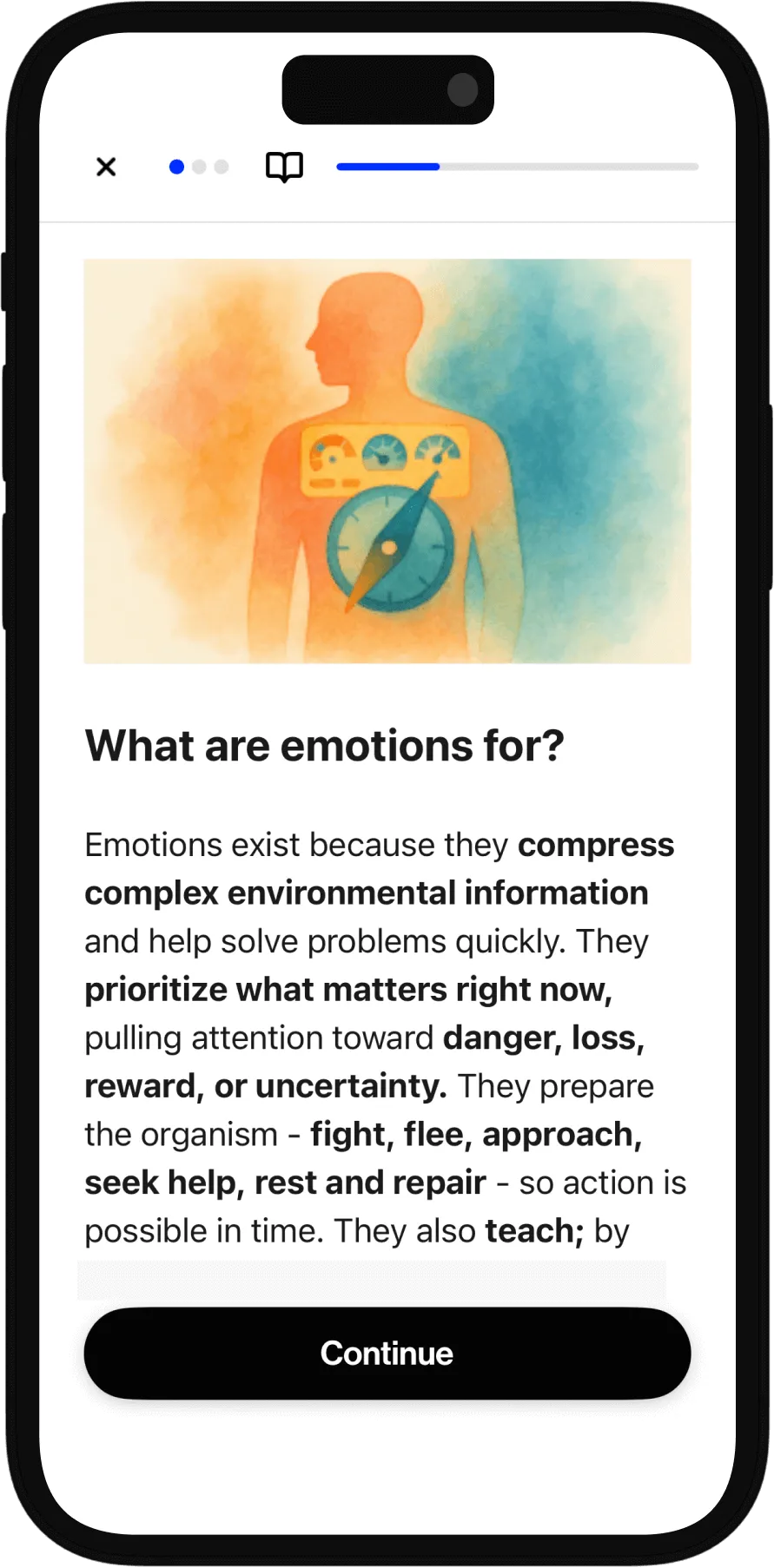
But a separate skills stage before trauma work isn’t necessary for everyone. In a trial with 96 adults who had PTSD from childhood abuse, one group did eight sessions of emotion skills training followed by eight sessions of prolonged exposure, and the other did 16 sessions of prolonged exposure. Both groups got better at managing emotions and had fewer PTSD symptoms, with no clear difference between them.[11] So the order can depend on the person, and you can decide it together with your therapist.
What to tell your therapist
If you are in therapy or about to start, say early on that you often can’t tell what you feel. That helps your therapist adjust the work, and it means a silence or “I don’t know” won’t be mistaken for not trying. A few things you can ask for:
- A list of feeling words, or a wheel, to choose from when you can’t find one yourself.
- Ratings instead of words, such as “How intense is this from 0 to 10?” or “Is it more pleasant or unpleasant?”
- Time to answer, or the chance to answer at the next session once you have thought about it.
- Help with noticing what you did or wanted to do, when you can’t name the feeling itself.
- A slower pace, or a pause, when things start to feel like too much.
The alexithymia treatment guide covers the therapies that target emotional awareness directly and how to choose a therapist.
Building Emotional Awareness at Your Own Pace
You can also build emotional awareness on your own, between sessions or without therapy. The practices below focus on the present rather than digging into memories. If you want to work on traumatic memories themselves, it’s better to do that with a trauma-trained therapist.
Work back from what you did
When you can’t tell what you feel, what you did is often easier to spot. Snapping at someone, scrolling for hours, cancelling plans, or replaying an argument in your head can all be clues. At the end of the day, pick one moment like that and ask what you were doing and what you wanted to do. Then guess at the feeling behind it. One commenter described how this works for them:
“Eg I can have a day where I feel emotionally numb, but I notice that I’m constantly picking fights in my head and defending myself in made up situations. This happens long enough and i know there is anger driving it, if I sit and try and feel it, sure enough it will come up, with more practice it’s gotten easier.”[18]
A commenter in r/CPTSD, in a discussion about chronic numbness
Over a few weeks, the same actions may keep pointing to the same unprocessed feelings that keep coming up, and then you can start to catch the pattern while it is happening and work on processing and addressing it.
Check in briefly, at calm moments
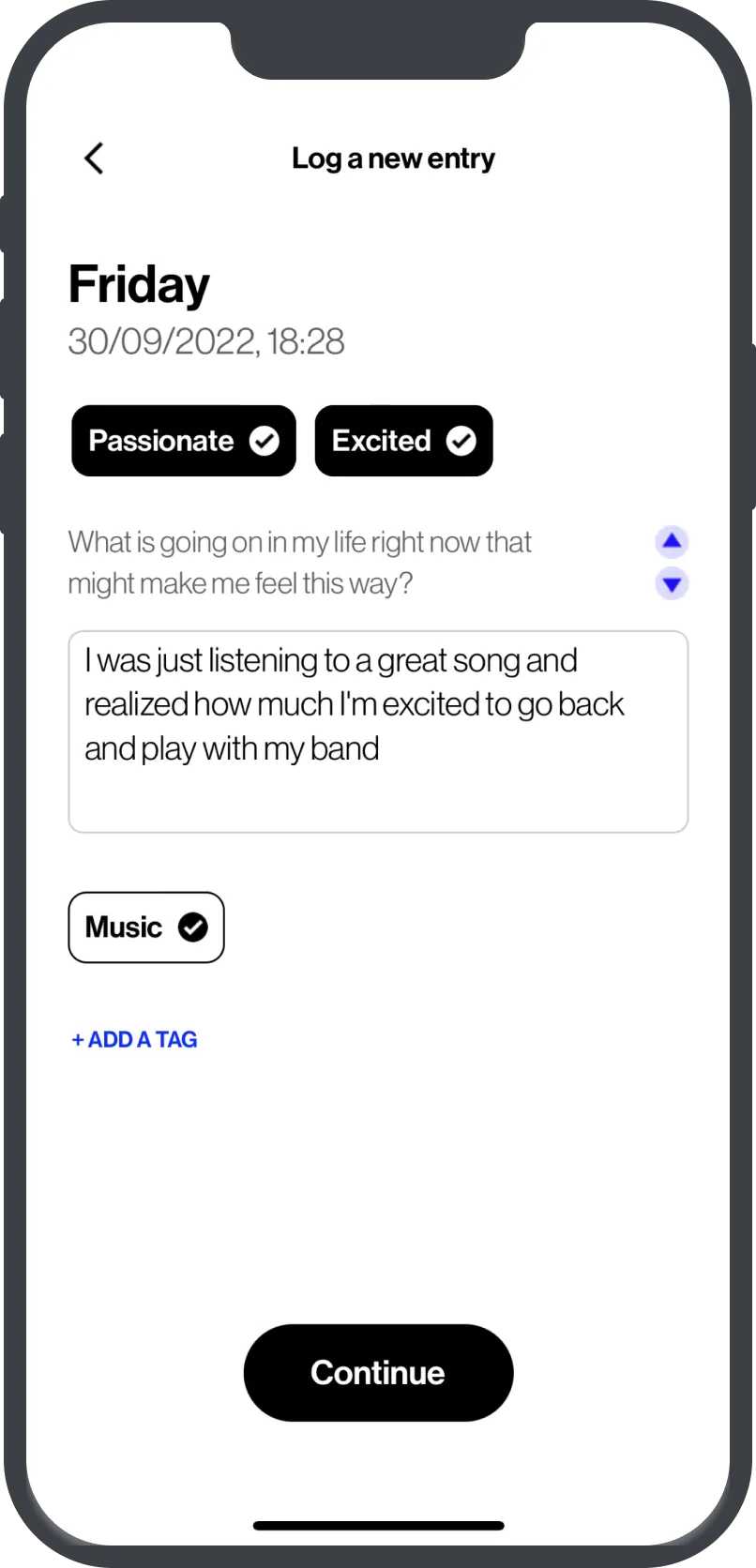
Two or three times a day, take a minute to check in. Ask how activated you are from 0 to 10, whether it feels more pleasant or unpleasant, and whether any word comes close, even a vague one like “off” or “flat”. Do this at ordinary, calm moments, not only when something big happens, so you learn what your usual state is like and can tell when it changes. Writing down what you notice gives you something to look back on as well.
Collect feeling words
If the only words you have are “fine”, “bad”, and “stressed”, it is hard to name anything more precise, so build a bigger vocabulary slowly. Look up one feeling word a day, such as “disappointed”, “resentful”, or “relieved”, and ask yourself when you last felt something like it. When you check in, pick two or three candidate words rather than hunting for the one right answer. A rough guess is better than nothing, and you can change your mind later.
Bring the body in lightly
Body signals can help you notice feelings, but after trauma, turning your attention inward can feel unsafe, so start small. Keep your eyes open and notice one easy, neutral area first, such as your feet on the floor or your hands on a cup. Notice temperature or pressure, then look around the room again. If inward attention feels like too much, turn to the outside world instead and name a few things you can see and hear. The interoception guide has more practices for reading body signals in context.
Answer yourself kindly
Some people who grew up with criticism freeze when asked how they feel, as if there were a correct answer they might get wrong. But “I don’t know” is a real answer, and so is “something like sad, maybe”. In the study of 332 adults, people with more alexithymia had less self-compassion, and less self-compassion went with more difficulty managing hard feelings.[12] So when you notice a feeling, try answering yourself the way you would answer a friend, with interest and without judging whether the feeling is allowed.
When Practice Brings Up Strong Feelings
As you notice more, you may also feel more. For some people that means crying more than usual, feeling angry about the past, or being moved by small things. It can be tiring and confusing, and it can also be a sign that you are noticing what was hard to reach before. Some people find themselves wanting to go back to feeling numb, because numbness felt safe.
”To be honest after I started to feel and name emotions I kind of wanted to pack them back away. But I do remember the numbing feeling and I think it’s mostly because it’s still safe. Baby steps”[19]
A commenter in r/CPTSD, in a discussion about chronic numbness
Go slowly enough to stay within your window of tolerance, the range where you feel some discomfort but still feel in control, and widen it a little at a time. Inward-focused practice can have side effects for some people, too. A review of 83 meditation studies found that about two-thirds reported at least one unwanted effect in some participants, most often anxiety or low mood.[15] So keep practices short and stop while they still feel manageable.
- Stop if you notice panic, flashbacks, feeling detached or unreal, or distress that doesn’t settle. Do something steadying, such as moving, getting outside, or talking to someone you trust.
- If you are working with a therapist, tell them what is happening, even between sessions.
- If you don’t have support yet, look for a therapist trained in trauma, and bring up your difficulty naming feelings at the first appointment.
- If you have thoughts of harming yourself, get help right away.
If you are in crisis, contact your local emergency number, or use Find A Helpline to reach a crisis line where you live.
Next Steps
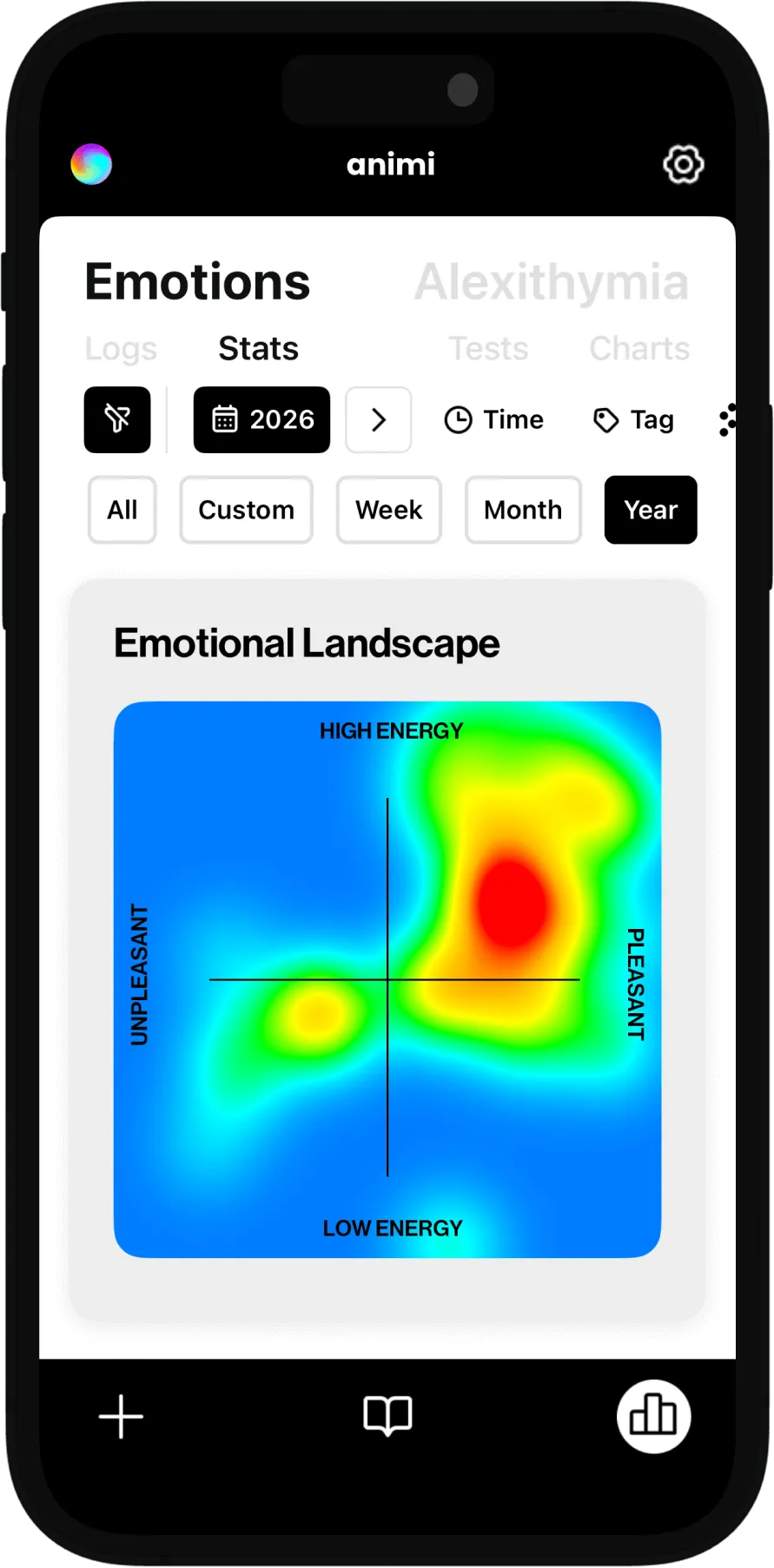
Pick one practice from this page, such as working back from what you did or short check-ins, and try it for a week. At the end of the week, read back what you noticed and look for one pattern.
- Read the alexithymia guide for the full picture of what alexithymia is and where it comes from.
- See the alexithymia treatment guide for therapies that work on emotional awareness.
- Try the alexithymia exercises for step-by-step ways to identify a feeling.
- Read about interoception and emotions when you are ready to work with body signals.
- Take the alexithymia test to see which part of emotional awareness is hardest for you.
References
Show referencesHide references
- Couette M, Cagnone V, Turc G, Johnson S, Mouchabac S, Ferreri F. Alexithymia in patients with posttraumatic stress disorder: a meta-analysis. Encephale. 2026;52(3):303-317. doi:10.1016/j.encep.2025.11.002.
- Frewen PA, Dozois DJ, Neufeld RW, Lanius RA. Meta-analysis of alexithymia in posttraumatic stress disorder. J Trauma Stress. 2008;21(2):243-246. doi:10.1002/jts.20320.
- Edwards ER. Posttraumatic stress and alexithymia: a meta-analysis of presentation and severity. Psychol Trauma. 2022;14(7):1192-1200. doi:10.1037/tra0000539.
- Putica A, Van Dam NT, Steward T, Agathos J, Felmingham K, O’Donnell M. Alexithymia in post-traumatic stress disorder is not just emotion numbing: systematic review of neural evidence and clinical implications. J Affect Disord. 2021;278:519-527. doi:10.1016/j.jad.2020.09.100.
- Ditzer J, Wong EY, Modi RN, Behnke M, Gross JJ, Talmon A. Child maltreatment and alexithymia: a meta-analytic review. Psychol Bull. 2023;149(5-6):311-329. doi:10.1037/bul0000391.
- Kick L, Schleicher D, Ecker A, Kandsperger S, Brunner R, Jarvers I. Alexithymia as a mediator between adverse childhood events and the development of psychopathology: a meta-analysis. Front Psychiatry. 2024;15:1412229. doi:10.3389/fpsyt.2024.1412229.
- Eichhorn S, Brähler E, Franz M, Friedrich M, Glaesmer H. Traumatic experiences, alexithymia, and posttraumatic symptomatology: a cross-sectional population-based study in Germany. Eur J Psychotraumatol. 2014;5. doi:10.3402/ejpt.v5.23870.
- Putica A, O’Donnell ML, Felmingham KL, Van Dam NT. Emotion response disconcordance among trauma-exposed adults: the impact of alexithymia. Psychol Med. 2023;53(12):5442-5448. doi:10.1017/S0033291722002586.
- Zorzella KPM, Muller RT, Cribbie RA, Bambrah V, Classen CC. The role of alexithymia in trauma therapy outcomes: examining improvements in PTSD, dissociation, and interpersonal problems. Psychol Trauma. 2020;12(1):20-28. doi:10.1037/tra0000433.
- Putica A, Van Dam NT, Felmingham KL, O’Donnell ML. Alexithymia and treatment response for prolonged exposure therapy: an evaluation of outcomes and mechanisms. Psychotherapy (Chic). 2024;61(1):44-54. doi:10.1037/pst0000512.
- Oprel DAC, Hoeboer CM, de Kleine RA, Schoorl M, van der Does W, van Minnen A. Phase-based treatment versus immediate prolonged exposure for childhood abuse-related PTSD: the role of emotion regulation improvement in predicting PTSD symptom reduction. J Anxiety Disord. 2026;121:103174. doi:10.1016/j.janxdis.2026.103174.
- Fedorov G, Bates G. Alexithymia and symptoms of post-traumatic stress disorder: the mediation roles of self-compassion and deficits in emotion regulation. Eur J Investig Health Psychol Educ. 2026;16(2):30. doi:10.3390/ejihpe16020030.
- Litz BT, Gray MJ. Emotional numbing in posttraumatic stress disorder: current and future research directions. Aust N Z J Psychiatry. 2002;36(2):198-204. doi:10.1046/j.1440-1614.2002.01002.x.
- US Department of Veterans Affairs, National Center for PTSD. Complex PTSD: history and definitions.
- Farias M, Maraldi E, Wallenkampf KC, Lucchetti G. Adverse events in meditation practices and meditation-based therapies: a systematic review. Acta Psychiatr Scand. 2020. doi:10.1111/acps.13225.
- Reddit, r/CPTSDmemes. Comment in the discussion “Anyone have/think they have alexythymia?”. Individual experience, October 2024.
- Reddit, r/Alexithymia. Comment in the discussion “Knowing trauma”. Individual experience, December 2025.
- Reddit, r/CPTSD. Comment in the discussion “Has anyone ‘fixed’ their chronic numbness/boredom?”. Individual experience, December 2024.
- Reddit, r/CPTSD. Comment in the discussion “Has anyone ‘fixed’ their chronic numbness/boredom?”. Individual experience, December 2024.