
Interoception is your sense of what is happening inside your body: your heartbeat, your breathing, hunger, a full bladder, a knot in your stomach, or warmth in your face. It is also one of the main ways people notice their feelings. When these signals are faint, confusing, or easy to mistake for something else, feelings get harder to name. That is one reason interoception comes up so often in conversations about alexithymia. The good news is that reading body signals is a skill, and it can be practiced.
What Is Interoception?
Researchers describe interoception as the way your nervous system senses, interprets, and integrates signals from inside your body, moment by moment, both consciously and outside awareness.[1] Most of it runs quietly in the background. You notice it when something changes: when you feel thirsty, when your heart speeds up on the stairs, or when your shoulders tighten in traffic.
The same sense carries emotional information too. Fear can speed up your heart and breathing. Sadness can feel heavy. Anger can bring heat and tension. Researchers have linked problems with interoception to anxiety, mood, eating, addictive, and somatic symptom disorders, which is part of why the topic gets so much attention in mental health.[1]
Three questions researchers ask
Interoception is not one yes-or-no ability. A widely used model splits it into three parts:[2]
| Part | Everyday question | How researchers measure it |
|---|---|---|
| Accuracy | Can I actually detect what my body is doing? | Tasks such as silently counting heartbeats and comparing the count with a monitor |
| Sensibility | Do I think I notice my body? | Questionnaires and interviews |
| Awareness | Do I know when I’m reading my body correctly? | How well people’s confidence matches their actual accuracy |
In a study of 80 adults, these three parts behaved as separate abilities. People’s own ratings and their confidence only partly predicted how accurate they really were.[2] So you might feel sure you know your body well and still miss signals, or feel out of touch and be more accurate than you think. Different labs use slightly different terms, so you’ll see “interoceptive awareness” used for more than one of these.
One sense or many?
Being good at sensing one signal doesn’t mean you are good at all of them. Some researchers argue that interoception is better understood as a group of related senses than as one ability, because people’s accuracy varies a lot from one body system to another.[6] You might notice hunger early and miss a racing heart, or feel tension clearly and barely register tiredness. That is useful to know when you practice, because it means you can start with whichever signal is easiest for you.
How Body Signals Become Feelings
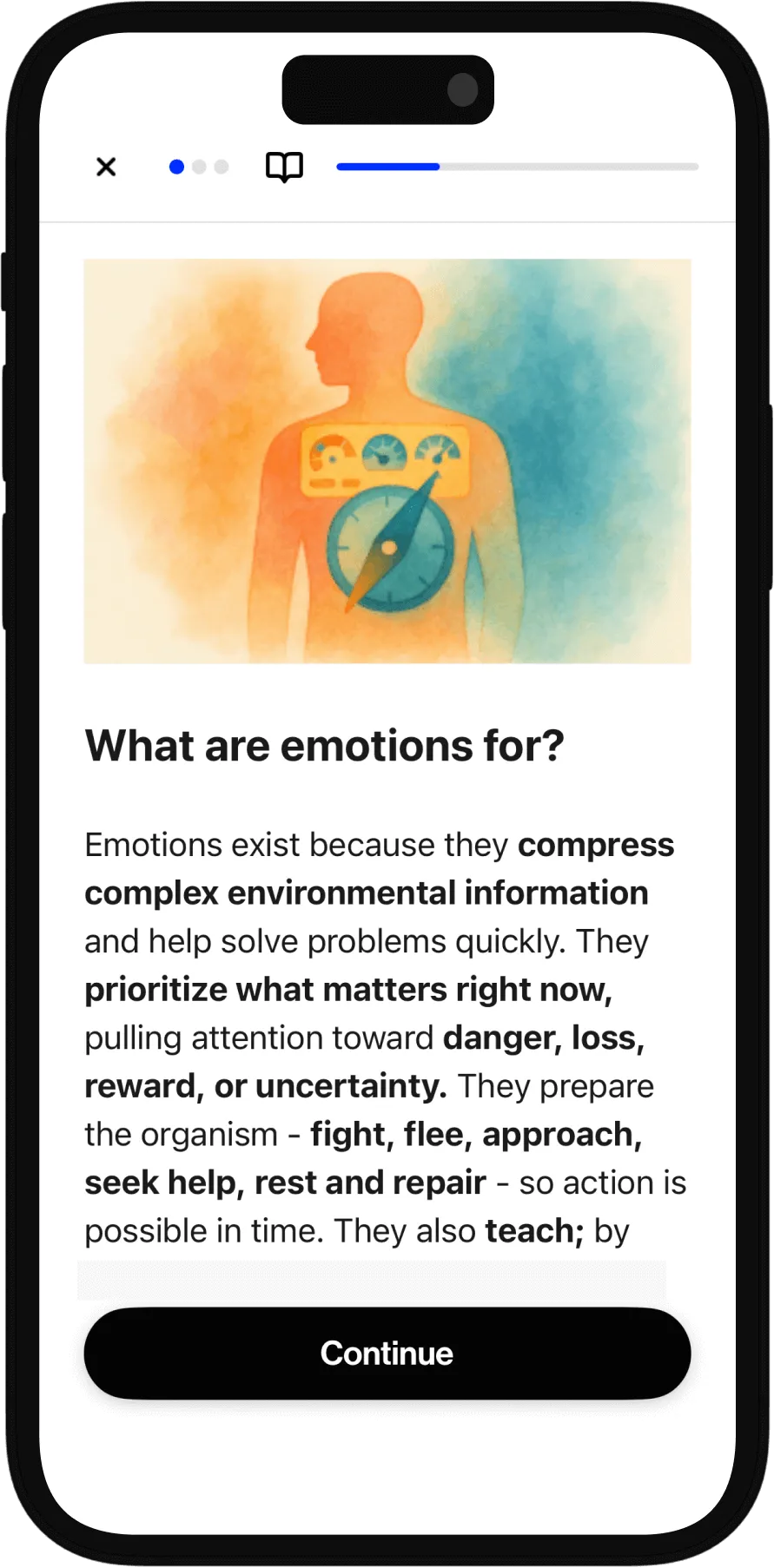
A body signal is not a feeling yet. A pounding heart can be fear before a talk, excitement before a date, or simply the coffee you just drank. What turns the sensation into a feeling is the meaning you give it, using the situation you are in and what you have learned from past experience.
One influential theory goes a step further. It proposes that the brain doesn’t just wait for body signals to arrive. It predicts what the body is about to feel, based on past experience, and then checks those predictions against what actually comes in.[8] On this view, learning to read your body also means building up better predictions, and that comes with practice and attention.
There are common patterns, though. When 701 people colored in body outlines to show where they felt different emotions, each emotion produced its own recognizable map, and the maps looked similar in West European and East Asian groups.[7] The pillar guide shows these body maps of emotions. They are averages across many people, though, so your own map can look different. Many people find their personal patterns become clear with time.
”The person that made it click for me was my brother, when he was talking about his stomach feeling anxious, and idk what happened but it clicked - recognizing what physiological effects my emotions had on me helped me distinguish what kind of “bad” I was feeling (eg. My ears get hot and my neck tingles when I am angry, my stomach churns and my heart pounds when I am anxious, my chest tightens and my throat hurts when I’m going to cry)“[16]
A commenter in r/therapy, in a discussion about where people feel emotions in their body
Interoception and Alexithymia
Alexithymia means having a hard time identifying and describing your own feelings. Since body signals are one of the main clues to what you feel, researchers have long suspected that alexithymia and interoception are connected. Many people with alexithymia recognize the experience of being asked where a feeling sits in their body and having no answer.
”I’ve never understood that either. Therapists have asked “Where do you feel that in your body?” and I have no idea what they mean.”[13]
A commenter in r/AuDHDWomen, in a discussion about not feeling emotions physically
The research supports a connection, and it also shows that the details depend on how you look. A 2019 meta-analysis pooled 66 samples with more than 7,000 people and found a small link overall between alexithymia and interoception. How strong the link looked, and even its direction, depended on which part of interoception a study measured and whether people rated themselves or took a test. The link was moderate in groups with psychiatric or developmental conditions and did not reach significance in samples of people without those conditions.[3]
A smaller, exploratory study offers one possible reason for those mixed results. Researchers asked 76 healthy young adults to silently count their heartbeats and compared each count with a heart-rate sensor. People with more alexithymia tended to land at either end: their counts were relatively far off or relatively close. That is a U-shaped pattern rather than a straight line, so a study that only tests for a straight-line link can miss it. The researchers suggest this could help explain why earlier studies found links in opposite directions or no link at all. How confident people felt about their counts did not show the U shape.[20] They called the result preliminary, because a heartbeat count can also reflect guessing, a sense of time passing, or beliefs about heart rate.[20] Still, it supports a practical point: picking up body signals is only part of understanding a feeling, and more inward attention is not the goal for everyone.
Other studies point to something broader than emotions. In one, adults with more alexithymia reported more trouble reading non-emotional body states such as hunger and tiredness, and they rated feelings and those states as more alike.[4] In another set of lab tasks, people with more alexithymic traits did less well at gauging their breathing, muscle effort, and taste, and this was not explained by autism, depression, or anxiety.[5] Researchers still debate how much of alexithymia comes from interoception, and the answer probably differs from person to person. For practice, the useful takeaway is that body signals can be a real way in, and that it helps to learn how to read them in context.
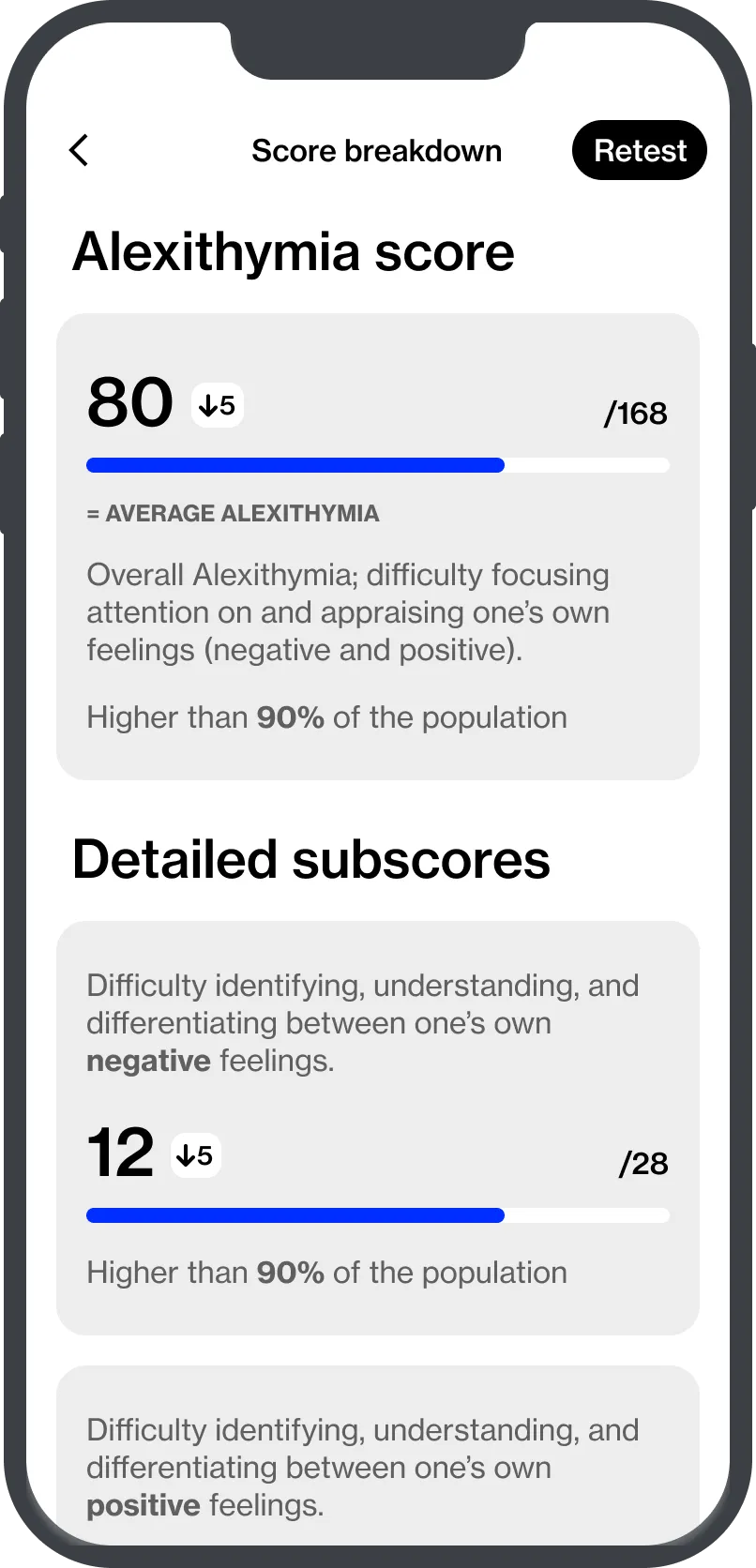
If you want a sense of which part of emotional awareness is hardest for you, the alexithymia test separates noticing, naming, and describing feelings.
Body Signals Need Context
Many body signals are general. Tension, restlessness, a fast heart, or a churning stomach can come from a feeling, but also from hunger, tiredness, cold, caffeine, or needing the bathroom. People with alexithymia often describe mixing these up.
”recently i realized i often feel anxious cause i actually just need to pee, but i don’t really realize i need to pee. i kind of have to figure it manually and even sometimes i still miss it”[14]
A commenter in r/autism, describing how body signals and feelings get mixed up
This kind of confusion is not unique to alexithymia. Anyone would struggle to read a vague sensation without more information, as one commenter put it in a thread about unexplained shaking.
”So sure, you may be alexithymic, but there are lots of bodily sensations that NOBODY interprets reliably without a longer observing pattern or without more situational information.”[15]
A commenter in r/Alexithymia, replying to someone confused by physical sensations
So instead of asking “What does this sensation mean?” on its own, pair it with a second question: “What has been going on?” The table shows a few common signals with some of their possible meanings.
| Signal | Possible body causes | Possible feelings | Context to check |
|---|---|---|---|
| Fast heart, shallow breathing | Exercise, caffeine, illness | Fear, excitement, anger | Did you just move or drink coffee? Is something coming up? |
| Restless, can’t sit still | Full bladder, too much sitting, overstimulation | Anxiety, impatience, anticipation | When did you last take a break or eat? |
| Heavy, slow, flat | Tiredness, low blood sugar, getting ill | Sadness, disappointment, discouragement | How did you sleep? Did you lose or miss out on something? |
| Tight jaw, shoulders, or fists | Cold, long screen time, pain | Anger, frustration, bracing for something | Did someone cross a line? Are you pushing through something? |
| Churning or knotted stomach | Hunger, food, illness | Nervousness, dread, guilt | When did you eat? Is there something you are worried about? |
If You Feel Emotions in Your Head, Not Your Body
Some people notice very little in their body when they feel something, or only notice it when the feeling is strong. If that is you, there is nothing wrong with starting somewhere else. One person described experiencing feelings “in my brain”, similar to thoughts but distinct from them. For them, knowing they were nervous about an audition explained the upset stomach, rather than the other way round.[18]
That two-way route works well in practice. You can start from what happened, or from what you did or wanted to do, and then check your body afterwards: “I’m dreading tomorrow’s meeting. Is anything going on in my stomach or shoulders?” Over time, the body side often gets easier to notice once you know what to look for. If body focus stays unhelpful or uncomfortable, situation-first and action-first routes are fully valid ways to identify feelings on their own.
Practices for Reading Body Signals
These practices go from light to more focused. Start with the first one or two, do them briefly and often, and add the others when they start to feel easy. Each one ends by connecting the signal back to context, because that is where body signals become useful.
A two-minute body check-in
Two or three times a day, pause and scan quickly from head to feet. Notice anything that stands out: temperature, tension, pressure, movement, or nothing at all. “Nothing much” is a fine answer. Then add one line about what has been going on. Short, regular check-ins at calm moments make it easier to notice changes later, when something stronger happens.
Check your basic needs first
When you feel “off” but can’t say why, run through basic needs before you look for a feeling. Am I hungry or thirsty? Tired? Too hot or cold? Do I need the bathroom? Have I been around people or noise for too long? Some people keep a short checklist like this on their phone or in their head.[19] If a need explains the signal, deal with it and check again. If nothing changes, a feeling is more likely.
Describe sensations in plain words
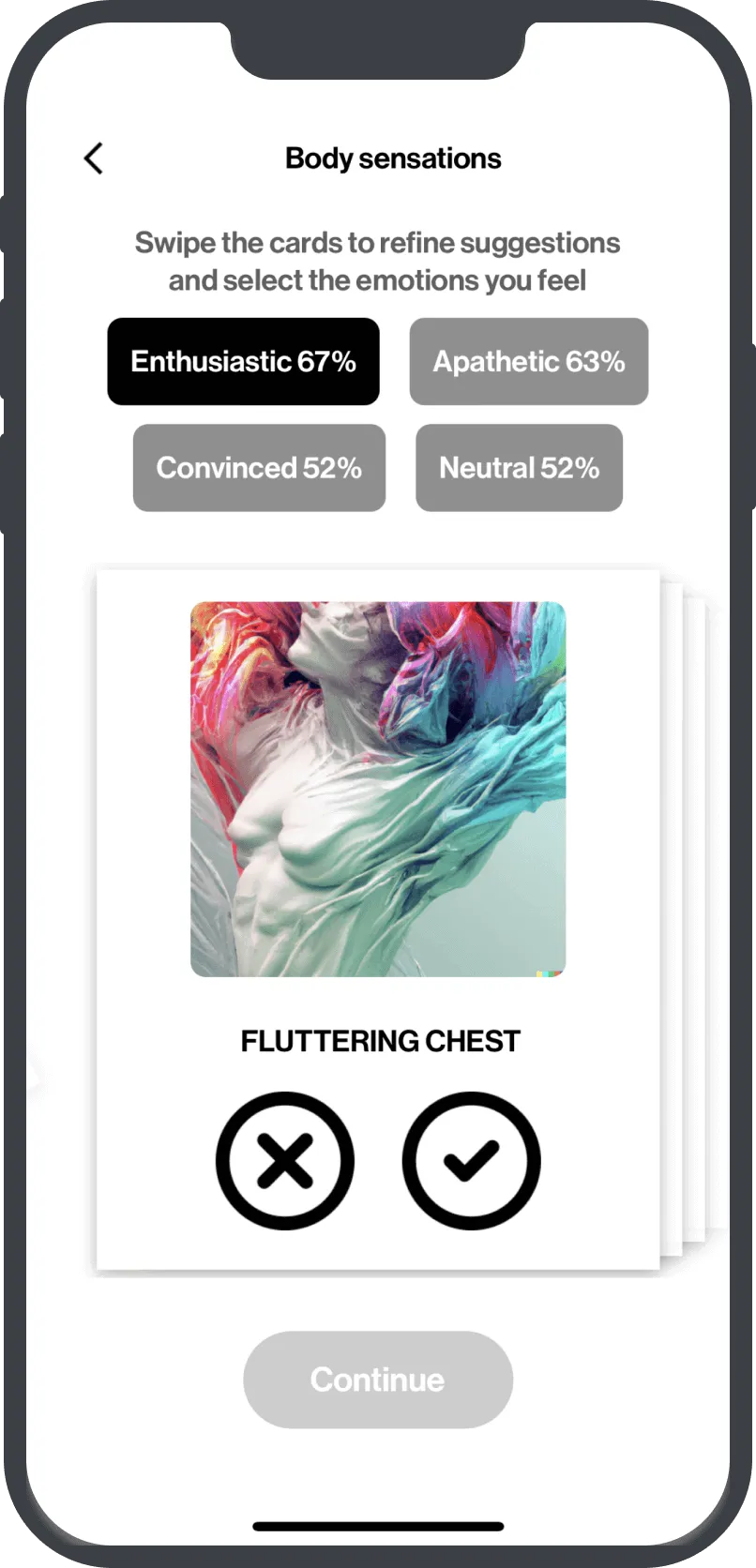
When you notice something, describe it the way you would describe a physical symptom to a friend: where it is, what it feels like (tight, warm, fluttery, heavy, buzzing), and how strong it is from 1 to 10. Describing a big feeling as a set of sensations can also make it feel more manageable, as a set of things you can observe instead of one overwhelming wave. Then ask which feeling words usually go with that description, and pick two or three candidates.
Build your own sensation dictionary
Keep a running note with three columns: the sensation, what was happening, and the feeling you settled on, with a confidence rating from 1 to 5. Read it back once a week. Patterns that are invisible in the moment often show up on the page. Maybe your neck gets hot when someone talks over you, or your chest goes heavy on Sunday evenings. That personal map is more useful than any general chart, because it is built from your own body.
Try a heartbeat practice
Sit quietly and try to sense your heartbeat for a minute without touching your pulse. Then check your pulse at your wrist or neck and compare. Try again after climbing some stairs, when your heart is easier to feel. A version of this, with feedback on accuracy, was part of a six-session training tested with 121 autistic adults. Afterwards, 31% of that group met the trial’s criteria for recovery from anxiety, compared with 16% of a group that practiced recognizing emotion in voices.[10] The alexithymia and autism guide describes that training in more detail. If attention on your heartbeat starts to feel alarming, switch to a gentler focus, such as your feet on the floor.
Body awareness grows with steady practice, though it takes time. In a large study, adults who did months of contemplative training that included body-focused exercises got steadily better at sensing their heartbeat, with measurable gains after six months. Their emotional awareness improved as their heartbeat sensing did. The researchers noted that the effect took longer than a typical eight-week mindfulness course to build.[9] Therapy approaches built around these skills, such as mindful awareness in body-oriented therapy, teach the same steps: finding body signals, staying with them, and working out what they mean.[11] Treat the practices above as practical ways to act on these findings, and give them weeks, not days.
Go Gently
Paying closer attention to your body can bring up sensations you usually tune out. That discomfort is often a sign that you are noticing more, and many people describe it as part of the process.
”Then after starting journaling, EMDR, SE, TRE and yoga now I am more in my body. For me sadness is heaviness in the chest, anger is burning in the chest and tight jaw and fists, shame is warmth in cheeks, anxiety is waves in the chest and waves going through whole body, dissociation is heaviness and fogginess in head. You can improve your current state but it takes time and it is not comfortable when you start feeling all of those sensations in your body.”[17]
A commenter in r/CPTSD, in a discussion about not feeling emotions in the body
More body attention isn’t always better, though. For some people, especially those prone to anxiety, watching the body closely can turn into worry about every sensation. A review of 83 meditation studies found that about two-thirds reported at least one unwanted effect in some participants, most often anxiety or low mood.[12] In the heartbeat training trial, one participant developed anxiety about their heart.[10] So aim for noticing with curiosity, not monitoring.
- Keep body-focused practice short, a minute or two, and stop while it still feels manageable.
- Keep your eyes open and part of your attention on the room if turning inward feels like too much.
- Stay within your window of tolerance, the range where you feel some discomfort but still feel in control, and widen it slowly.
- If you notice panic, feel detached or unreal, or the distress doesn’t settle, stop, do something that steadies you, and get support from a professional before you try again.
- If a new or unusual body symptom worries you, check it with a doctor rather than reading it as a feeling.
If you are in crisis, contact your local emergency number, or use Find A Helpline to reach a crisis line where you live.
Next Steps
Pick one practice from this page and do it once a day for a week. The two-minute check-in and the needs checklist are good places to start. At the end of the week, read back what you noticed and look for one pattern.
- Read the alexithymia guide for how interoception, emotion words, and beliefs about feelings work together.
- See alexithymia and autism and alexithymia and ADHD for practices adapted to those experiences.
- Take the alexithymia test to see which part of emotional awareness is hardest for you.
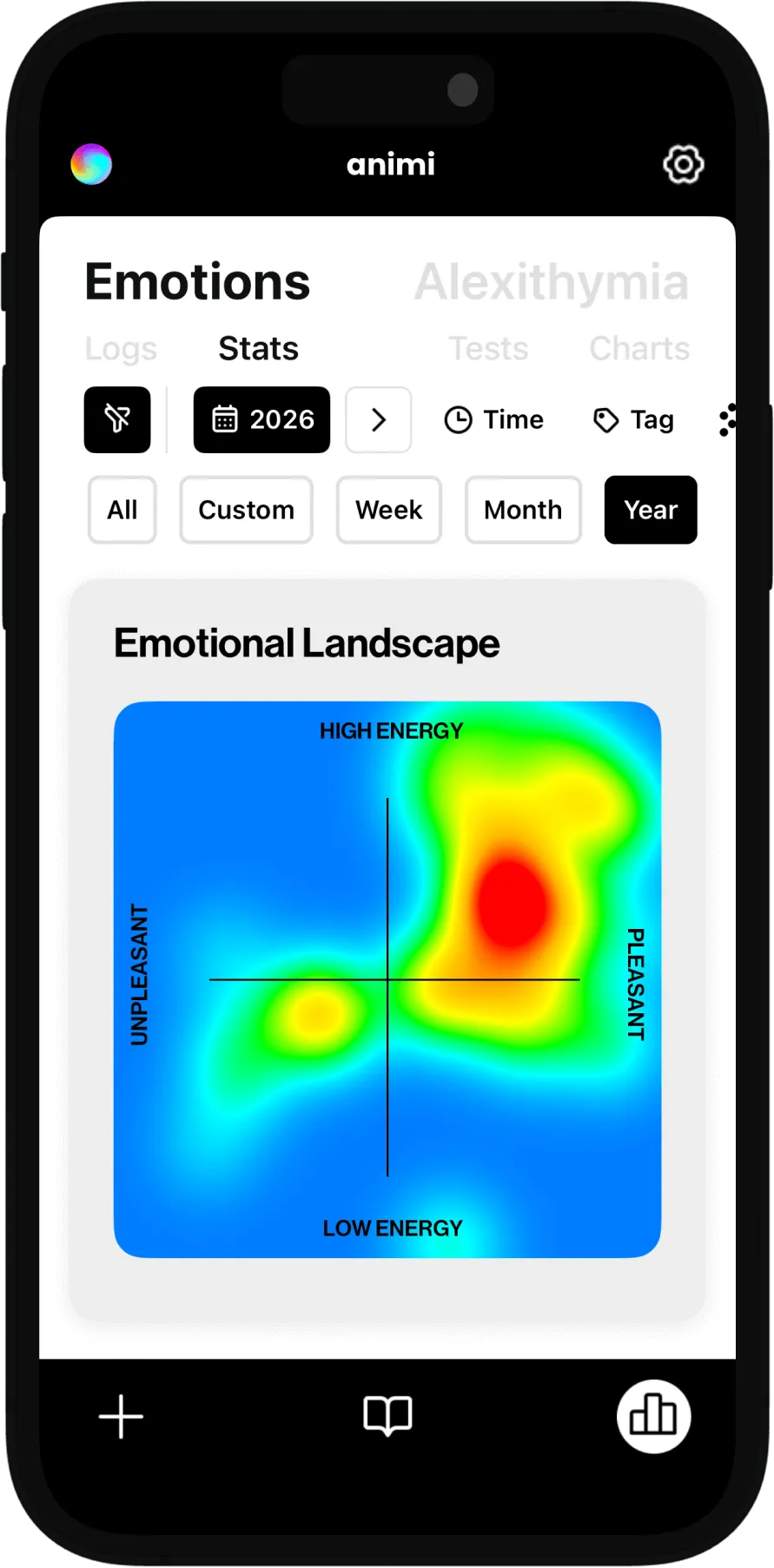
- Work through the Emotions 101 course for structured body awareness and vocabulary practice.
- Read the alexithymia treatment guide if you want to explore body-based therapy alongside self-practice.
References
Show referencesHide references
- Khalsa SS, Adolphs R, Cameron OG, et al. Interoception and mental health: a roadmap. Biol Psychiatry Cogn Neurosci Neuroimaging. 2018;3(6):501-513. doi:10.1016/j.bpsc.2017.12.004.
- Garfinkel SN, Seth AK, Barrett AB, Suzuki K, Critchley HD. Knowing your own heart: distinguishing interoceptive accuracy from interoceptive awareness. Biol Psychol. 2015;104:65-74. doi:10.1016/j.biopsycho.2014.11.004.
- Trevisan DA, Altschuler MR, Bagdasarov A, et al. A meta-analysis on the relationship between interoceptive awareness and alexithymia: distinguishing interoceptive accuracy and sensibility. J Abnorm Psychol. 2019;128(8):765-776. doi:10.1037/abn0000454.
- Brewer R, Cook R, Bird G. Alexithymia: a general deficit of interoception. R Soc Open Sci. 2016;3(10):150664. doi:10.1098/rsos.150664.
- Murphy J, Catmur C, Bird G. Alexithymia is associated with a multidomain, multidimensional failure of interoception: evidence from novel tests. J Exp Psychol Gen. 2018;147(3):398-408. doi:10.1037/xge0000366.
- Schoeller FA, Zhang B, Garcia T, Reggente N. There is no such thing as interoception. Front Psychol. 2025;16:1488415. Opinion article. doi:10.3389/fpsyg.2025.1488415.
- Nummenmaa L, Glerean E, Hari R, Hietanen JK. Bodily maps of emotions. Proc Natl Acad Sci U S A. 2014;111(2):646-651. doi:10.1073/pnas.1321664111.
- Barrett LF, Simmons WK. Interoceptive predictions in the brain. Nat Rev Neurosci. 2015;16(7):419-429. doi:10.1038/nrn3950.
- Bornemann B, Singer T. Taking time to feel our body: steady increases in heartbeat perception accuracy and decreases in alexithymia over 9 months of contemplative mental training. Psychophysiology. 2017;54(3):469-482. doi:10.1111/psyp.12790.
- Quadt L, Garfinkel SN, Mulcahy JS, et al. Interoceptive training to target anxiety in autistic adults (ADIE): a single-center, superiority randomized controlled trial. EClinicalMedicine. 2021;39:101042. doi:10.1016/j.eclinm.2021.101042.
- Price CJ, Hooven C. Interoceptive awareness skills for emotion regulation: theory and approach of mindful awareness in body-oriented therapy (MABT). Front Psychol. 2018;9:798. doi:10.3389/fpsyg.2018.00798.
- Farias, Maraldi, Wallenkampf, Lucchetti. Adverse events in meditation practices and meditation-based therapies: a systematic review. 2020. doi:10.1111/acps.13225.
- Reddit, r/AuDHDWomen. Comment in the discussion “Alexithymia but with interoception instead of words?”. Individual experience, April 2023.
- Reddit, r/autism. Comment in the discussion “I think I’m experiencing Alexithymia or Interoception”. Individual experience, June 2026.
- Reddit, r/Alexithymia. Comment in the discussion “Struggling with the physical feelings of emotions”. Individual experience, February 2022.
- Reddit, r/therapy. Comment in the discussion “How do you identify where in your body you feel a feeling?”. Individual experience, May 2024.
- Reddit, r/CPTSD. Comment in the discussion “Does anyone feel emotions in their body? Because I don’t.”. Individual experience, January 2022.
- Reddit, r/AuDHDWomen. Comment in the discussion “Alexithymia but with interoception instead of words?”. Individual experience, April 2023.
- Reddit, r/autism. Comment in the discussion “I think I’m experiencing Alexithymia or Interoception”. Individual experience, June 2026.
- Aaron RV, Blain SD, Snodgress MA, Park S. Quadratic relationship between alexithymia and interoceptive accuracy, and results from a pilot mindfulness intervention. Front Psychiatry. 2020;11:132. doi:10.3389/fpsyt.2020.00132.