
Alexithymia exercises are most useful when they give you something concrete to do in the moment you can’t tell what you’re feeling. This guide walks through one exercise you can repeat: notice that something changed, come in through whichever door is open, sort the feeling roughly, try a few words, and say how sure you are. You don’t need to feel your body clearly or find the perfect word on the first try. Naming feelings is a skill, and like any skill it gets easier with practice.
The Core Exercise in Five Steps
Use these five steps any time a moment leaves you unsettled, flat, or confused. The whole thing can take two minutes in your head or a couple more on paper.
Notice that something changed
The exercise starts before any feeling word. You notice that something shifted: you went quiet, your patience ran out, you keep replaying a conversation, or you just feel off. That is enough to begin. Many people describe exactly this starting point, a sense of being bothered without knowing by what.
”The thing about what bothers me at a given time is that it’s not super clear what exactly IS bothering me; the only thing I really know is that I’m being bothered and I don’t like it.”[9]
A commenter in r/Alexithymia, describing how they work through feelings
Choose a way in
Ask yourself which of three questions is easiest right now. What just happened? What did I do, or want to do? What is my body doing? Pick whichever one gives you something to work with, and leave the others. The section on three ways in covers each one.
Sort it roughly
Before looking for words, sort the feeling. Is it more pleasant or more unpleasant? Is it strong or mild? Does it pull you toward something or away from it? Two or three rough answers already narrow things down a lot, and plenty of people start right here.
”I still don’t know how to name emotions at 33. I can say if they belong in the mostly “good feeling” or mostly bad” feeling category but I have no names for them so any strategies for working these out would be interesting.”[10]
A commenter in r/CPTSD, in a discussion about learning to name emotions
If good or bad is all you have, that is your starting point. The practice ladder shows where to go from there.
Try two or three words
Now offer yourself a few candidates instead of hunting for the one right word. If the feeling is unpleasant, mild, and pulling you away, the candidates might be irritated, uneasy, or let down. Say each one to yourself and notice which seems closest. Choosing from a short list is often easier than producing a word from nothing, so keep an emotion list or wheel on your phone at first.
Rate how sure you are
Finish with a confidence rating from 1, a wild guess, to 5, definitely. Write down the word and the number. A 2 is a perfectly good result. You can come back to it later and change the word if a better one turns up. Looking back at your ratings over a few weeks is one simple way to see your own progress.
A Concrete Example
Here is the exercise applied to a made-up workday. After a meeting, you feel flat and keep rereading the email about your project moving to next quarter.
| Step | What you might think or write | What it suggests for now |
|---|---|---|
| 1. Notice | “I’ve barely spoken to anyone since the meeting. I feel flat, and I keep rereading the same email about the project moving to next quarter.” | Something about the meeting is still with you. |
| 2. Way in | “When did this start? I was fine this morning. It began when my manager announced the delay.” | The postponement is the likeliest starting point. |
| 3. Sort | “Mostly unpleasant, fairly mild, low on energy. But there’s something lighter in there too.” | Probably more than one feeling. |
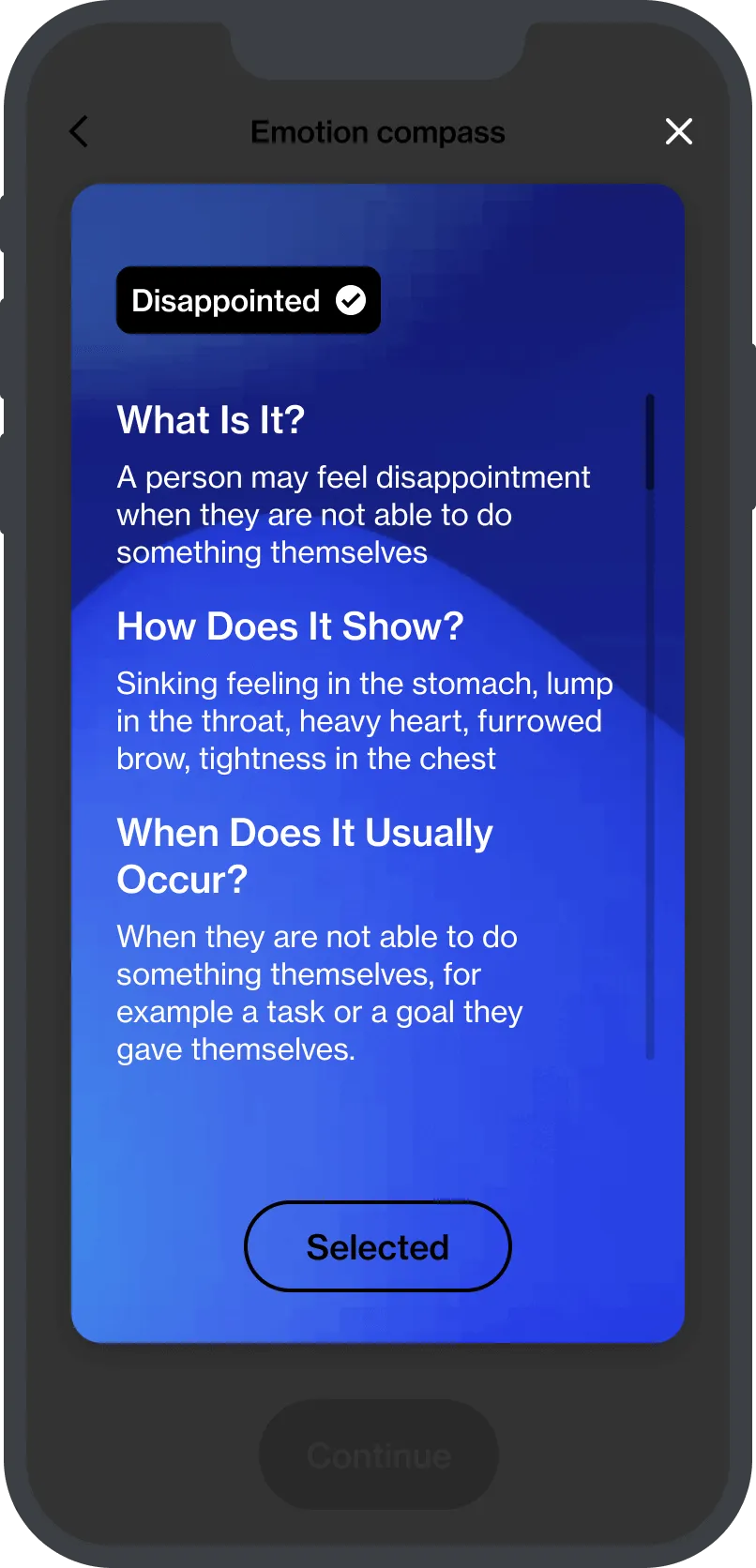
| 4. Words | “Disappointed? I’d been looking forward to presenting it, so yes. Discouraged? Maybe, though I still think the project is good. Relieved? A little. The deadline had been stressing me.” | Disappointed matches what you were looking forward to, and relief matches the deadline. Discouraged is possible but has fewer clues so far. |
| 5. How sure | “Disappointed, 4 out of 5. Relieved, 2 out of 5. Discouraged, 1 out of 5. I’ll ask my manager what the delay means for the project.” | A working answer, and a question that may add context. |
Your manager’s answer may shift the ratings. If the project could be cut, discouragement might grow. If it just needs more time, the relief may become clearer. Either way, notice how you react and adjust the words.
Three Ways In When No Word Comes to Mind
Different people reach their feelings by different routes, and the same person may need a different route on a different day. If one way in gives you nothing, try another.
Start from what happened
Write one sentence about the situation, facts only. Then ask what most people would feel in that situation. This is a reasoned guess, and reasoned guesses count. You can check it against your own reactions later, and over time your guesses and your felt sense tend to meet in the middle.
Start from what you did or wanted to do
Actions and urges often show up before feelings do. Wanting to leave the room can point to fear, overwhelm, or shame. Wanting to argue can point to anger or a sense of unfairness. Wanting to be near someone can point to loneliness or affection. Use these as starting points to check, not as rules.
Start from your body, if it helps
Some people notice physical changes first, such as a tight jaw, heat in the face, a heavy chest, or restless legs. If that sounds like you, describe the sensation in plain words and rate how strong it is from 1 to 10. Then ask which of your candidate words usually comes with it, or use the Animi app identification tools to filter that sensation and see which emotions usually come with it.
When the Answer Is Not Sure, Mixed, or Late
Three answers usually come up again and again:
Not sure. A guess with a low confidence rating is still information. Early labels can feel made up, as if you are writing down what you ought to feel.
”After that, I wrote a few emotions attached to those things and well… I kinda felt like I was lying. I think I recalled the logical situation, tried to remember if I felt good or bad at the moment, and then I dunno… Wrote what I thought I should feel?”[11]
A commenter in r/Alexithymia, after trying to write down feelings for the first time
That sense of guessing is common at the start. You are reasoning your way toward a label you can’t yet sense directly, and reasoning is a legitimate way in. Keep the guess, mark it as a guess, and check it later against what you did next.
Mixed. Two feelings at once are normal. Relief and sadness after an ending, or excitement and dread before a new job, can sit side by side. Write both words down, each with its own rating.
Late. Some feelings only become clear hours or days afterward. That still counts. A late answer can explain a pattern, and it gives you something to bring up next time, with the person involved or with a therapist.
A Practice Ladder From Rough to Precise
Naming feelings gets more precise in stages. There is no need to rush up the ladder. Move to the next level when the current one starts to feel easy.
| Level | What you practice | Example | Ready to move up when |
|---|---|---|---|
| 1. Rough sort | Pleasant or unpleasant, strong or mild | “Bad, fairly strong” | You can sort most moments without much effort |
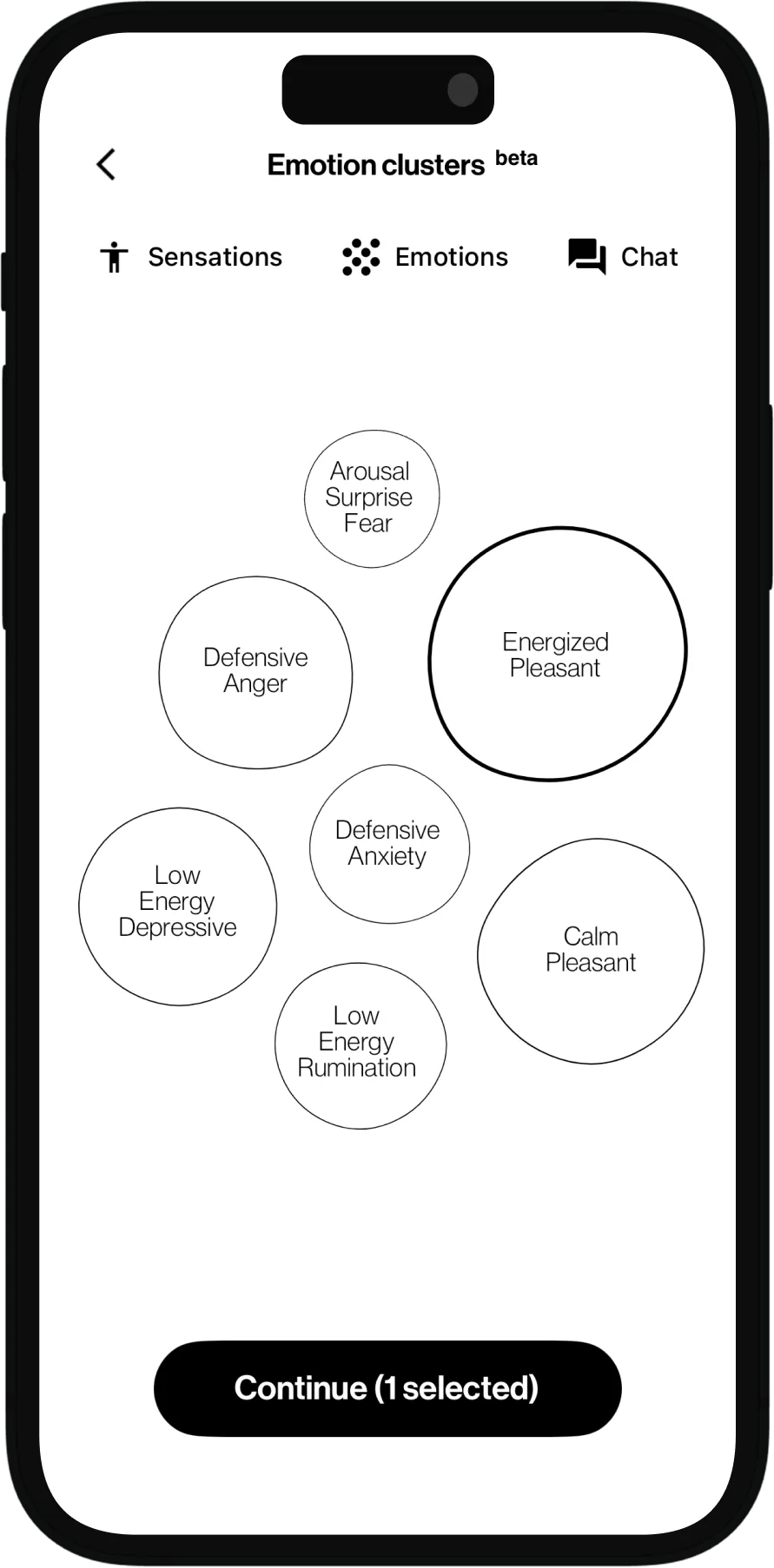
| 2. Feeling families | A handful of broad words, such as angry, sad, afraid, happy, ashamed, or disgusted | “Something in the sad family” | The family you pick usually still seems right later |
| 3. Neighbors | Two or three related words within one family | “Disappointed rather than sad” | Similar words start to feel different from each other |
| 4. Context and mix | The cause, what you need, and any second feeling | “Disappointed about the trip, a bit relieved too, and I need to say so” | You can explain the feeling to someone else |
Level 3 is where many people get stuck, because they know plenty of words but keep reaching for the same few.
”I had to realise that while I knew about all the emotions, I really only knew the words and kept cycling between only the “headline emotions”. And since they were really broad and not really accurate I couldn’t work through them properly. It felt weird in the beginning to look at the flashcards, like I was an adult in pre-school learning about shapes and colours 😅 but it really helped.”[12]
A commenter in r/CPTSD, in a discussion about learning to name emotions
Learning the neighbors of your usual word helps here. If you always say “stressed,” try “rushed,” “overloaded,” and “worried,” and see which one is true today. Progress at this level can look small from the inside, but it is important. One person in treatment for about two years said their alexithymia had changed only slightly, but they could now tell different kinds of sadness apart, where before sadness had been their only feeling besides “okay.”[14]
Why Practicing This Helps
Psychologists call the skill you are building emotional granularity: how precisely you can tell one feeling from another. Alexithymia sits at the low end of that range.[4] And granularity seems to protect people when things get hard. A review of this research found that people with more finely grained feelings are less likely to turn to binge drinking, aggression, or self-harm when they are very upset.[2]
Naming also helps in the moment. Lab studies on affect labeling show that putting a feeling into words can soften it, even though most people expect the opposite.[1] One detail is useful for practice. When people had to come up with their own words, the calming effect sometimes arrived later, and the feeling could briefly get stronger first.[1] So if naming a feeling stirs it up at first, that matches what researchers have seen.
The skill can grow with practice, too. In a study of 79 adults with depression, the people randomly assigned to rate their emotions ten times a day, three days a week for six weeks, got better at telling their negative feelings apart than people who didn’t.[3] A two-week study of healthy adults who described their feelings many times a day found the same kind of improvement, and people who answered more prompts tended to improve more.[4] Learning new words may help as well. An early study that taught adults specific emotion words for two weeks found that people who used more of them reported finer emotional distinctions and less trouble managing their emotions, though it has not yet been peer reviewed.[5]
For alexithymia specifically, a small trial found that 14 days of emotion-recognition practice on a phone app, together with one information session, improved people’s ability to recognize emotions and lowered their alexithymia scores.[6] And a 2026 meta-analysis that pooled 53 comparisons found that psychological interventions reduced alexithymia on average compared with control groups.[7]
More Ways to Practice
The five steps are the core, but you can train the same skill in other parts of your day.
- Guess what characters feel. Fiction shows emotions at a safe distance. Pause a show or a book, guess what a character is feeling, and then ask what you are feeling while you watch.
- Say one feeling sentence a day. One person described starting to sing small made-up songs through the day, each with a little about how they felt, such as being worried about their old dog or happy that work was over.[15] Saying or writing one short feeling sentence a day works on the same idea.
- Make quiet guesses about other people. In conversations, make a private guess about how the other person feels. You don’t need to be right. It trains the same categories you use on yourself.
- Learn words in pairs. Pick two words that seem the same to you, such as helpless and frightened, or disappointed and hurt, and look up how they differ. Then watch for each one during the week.
Keep It Safe and Sustainable
Most of this exercise works with events, actions, and words rather than the body. Body-focused practice can feel different. Turning toward sensations you usually tune out can bring discomfort, and that discomfort can be a sign that you are noticing more. For some people it is a lot to handle at first.
”I admit, I did it only once on a day where I felt “baseline” and I can’t even explain how anxious it made me by the end. I thought my chest was going to explode.”[13]
A commenter in r/Alexithymia, after trying a slow body-focused practice
A review of 83 meditation studies found that about two-thirds reported at least one unwanted effect in some participants, most often anxiety or low mood.[8] That is a good reason to go gently with anything that turns your attention inward.
- Keep body-focused practice short, a minute or two, and stop while it still feels manageable.
- Keep your eyes open and part of your attention on the room if turning inward feels like too much.
- Stay within your window of tolerance, the range where you feel some discomfort but still feel in control, and widen it slowly.
- If you notice panic, feel detached or unreal, or the distress doesn’t settle, stop, do something that steadies you, and get support from a professional before you try again.
A Check-In Sheet You Can Copy
Copy these prompts into your notes app or a notebook. Fill in whatever you can and leave the rest blank.
Next Steps
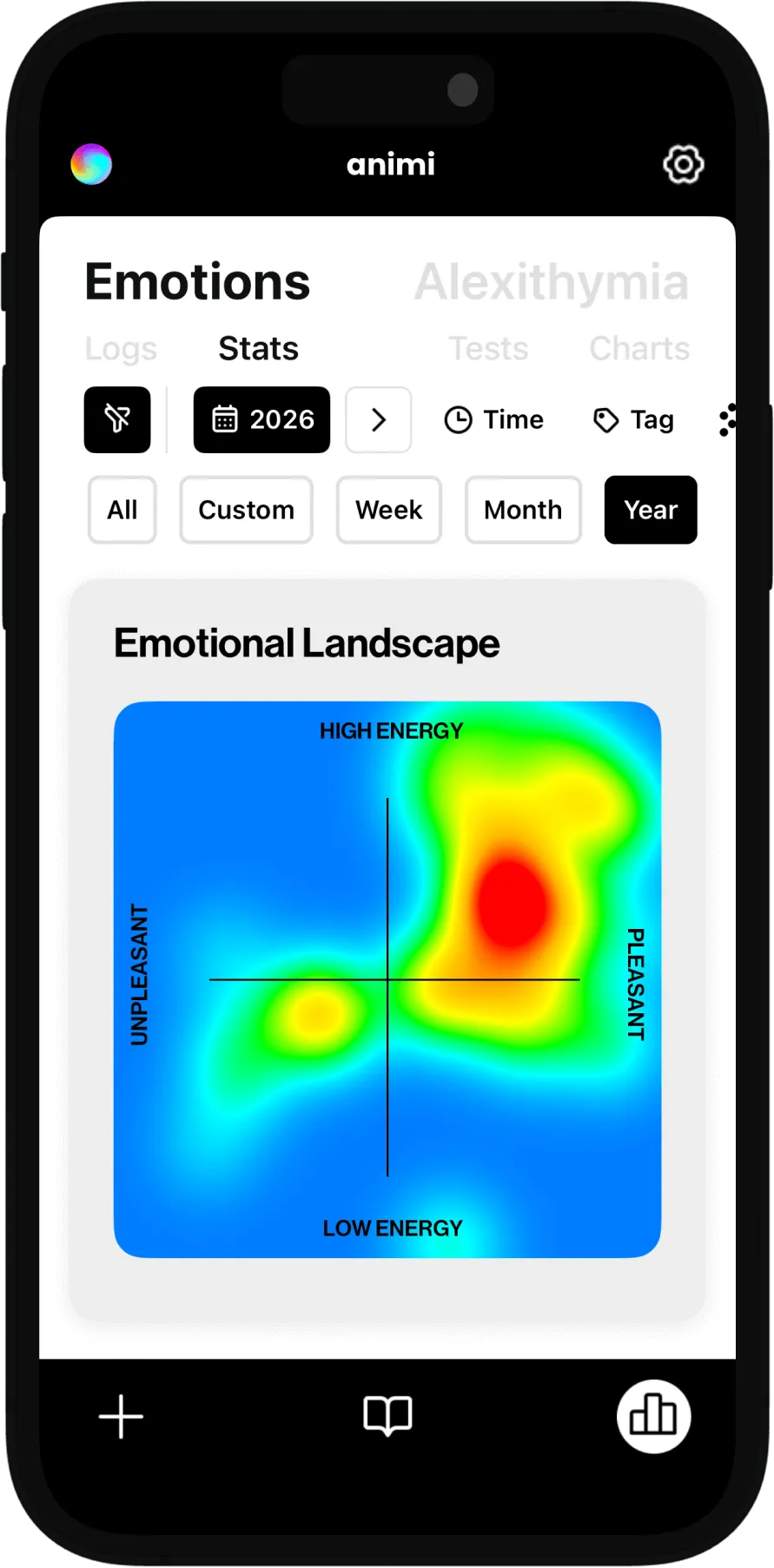
Try the five steps once today, on any moment that seemed off. Then do it once a day for a week and read your notes back at the end. Patterns that are invisible in the moment often show up on the page.
- Work through the Emotions 101 course for structured practice with emotion words and body awareness.
- Take the alexithymia test to see which part of emotional awareness is hardest for you right now.
- Read the alexithymia treatment guide if you want to explore therapy alongside self-practice.
- See alexithymia and autism for practices adapted to autistic adults.
- Read alexithymia in relationships for ways to talk about feelings that arrive late.
References
Show referencesHide references
- Torre JB, Lieberman MD. Putting feelings into words: affect labeling as implicit emotion regulation. Emot Rev. 2018;10(2):116-124. doi:10.1177/1754073917742706.
- Kashdan TB, Barrett LF, McKnight PE. Unpacking emotion differentiation: transforming unpleasant experience by perceiving distinctions in negativity. Curr Dir Psychol Sci. 2015;24(1):10-16. doi:10.1177/0963721414550708.
- Widdershoven RLA, Wichers M, Kuppens P, et al. Effect of self-monitoring through experience sampling on emotion differentiation in depression. J Affect Disord. 2019;244:71-77. doi:10.1016/j.jad.2018.10.092.
- Hoemann K, Barrett LF, Quigley KS. Emotional granularity increases with intensive ambulatory assessment: methodological and individual factors influence how much. Front Psychol. 2021;12:704125. doi:10.3389/fpsyg.2021.704125.
- Fugate JMB, Kalmus S, Shcherbinin H, et al. The effects of teaching emotion words on emotional granularity, emotion regulation/dysregulation, and satisfaction with life. bioRxiv preprint, not peer reviewed. 2026. doi:10.64898/2026.08.12.744382.
- Lukas CA, Trevisi Fuentes H, Berking M. Smartphone-based emotion recognition skills training for alexithymia: A randomized controlled pilot study. Internet Interv. 2019;17:100250. doi:10.1016/j.invent.2019.100250.
- Mazza A, Davis P, Johnson L, Larkin F, Cole SN. Identifying therapies to effectively reduce alexithymia: A systematic review and meta-analysis. J Affect Disord. 2026;400:121167. doi:10.1016/j.jad.2026.121167.
- Farias, Maraldi, Wallenkampf, Lucchetti. Adverse events in meditation practices and meditation-based therapies: a systematic review. 2020. doi:10.1111/acps.13225.
- Reddit, r/Alexithymia. Comment in the discussion “How do I work on repairing this?”. Individual experience, January 2022.
- Reddit, r/CPTSD. Comment in the discussion “How did you learn how to name you emotions”. Individual experience, January 2025.
- Reddit, r/Alexithymia. Comment in the discussion “How do I work on repairing this?”. Individual experience, December 2021.
- Reddit, r/CPTSD. Comment in the discussion “How did you learn how to name you emotions”. Individual experience, January 2025.
- Reddit, r/Alexithymia. Comment in the discussion “How do I work on repairing this?”. Individual experience, December 2021.
- Reddit, r/Alexithymia. Comment in the discussion “What has been helping you to overcome alexithymia and connect with you feelings and emotions?”. Individual experience, December 2024.
- Reddit, r/Alexithymia. Comment in the discussion “What has been helping you to overcome alexithymia and connect with you feelings and emotions?”. Individual experience, December 2024.