
“Emotionally unavailable” is usually uttered as a verdict from someone else. A partner says it during an argument, a date says it by text, or a friend says it after you changed the subject one too many times. The label describes what other people see from outside: distance, short answers, and a feeling that they can’t reach you. It doesn’t say why, though. For some people the reason is guardedness or exhaustion. For others the feelings are hard to find in the first place, which corresponds with a trait called alexithymia. Knowing what exactly is going on changes what will likely help, and what kind of practice makes the most sense.
What People Mean by “Emotionally Unavailable"
"Emotionally unavailable” isn’t a diagnosis, and there is no test that clearly tells. People use the phrase for a recognizable set of behaviors. When conversations stay on the surface, hard topics get deflected with a joke or a change of subject, and comforting always defaults to advice. The person may pull back after a close moment, keep plans vague, or answer “How are you feeling?” with “Fine.” Over time the other person feels lonely in their company, even when they are together.
But the same outward pattern can come from very different places inside. That is why so many people who are told they are emotionally unavailable feel confused rather than caught. In a Reddit post, one person described hearing the label after years of trying and failing to say what they felt:
“I’ve been called avoidant, withholding, and emotionally unavailable because of it. People assume that when I can’t talk about my feelings that it’s because I want to push them away or that I don’t desire connection like everyone else, but that couldn’t be farther from the truth. I want to let people in, but it’s just really hard to do when I don’t even really understand myself.”[3]
A post in r/Alexithymia, written after a therapist explained alexithymia
Four Reasons Someone Can Seem Unavailable
Most people recognize more than one row, and the rows can feed into each other. Someone who can’t find their feelings may also have learned to keep quiet about them. Use the table to work out where to start, not to give yourself a label.
| Pattern | What it can look like | What is going on inside | A question to ask yourself |
|---|---|---|---|
| Guarded | Saying “fine,” changing the subject, and sharing only facts | You know roughly what you feel, but showing it feels risky | Do I know what I feel but decide not to say it? |
| Depleted | Cancelling plans, short replies, and little energy for others | Stress, grief, burnout, or low mood leave little room for closeness right now | Was I more open before things got this hard? |
| Not looking for closeness | Keeping things casual and avoiding talk about the future | You don’t want a deeper relationship with this person, at least not now | If I could feel and say anything, would I want more with them? |
| Can’t find the feeling | ”I don’t know” answers, feelings that show up days later | Something is happening inside, but it is hard to notice, name, or describe | When someone asks how I feel, do I truly not know? |
When “I don’t know” is the true answer
The last row is the one most articles about emotional unavailability leave out. Alexithymia means difficulty identifying and describing your own feelings, often with attention turned toward outside events rather than inner experience. It isn’t a diagnosis per se, but rather a trait and transdiagnostic factor. In a survey of 1,285 Finnish adults, scores spread across the population in a normal curve, and about 13% scored in the high range.[4] Men in that study scored high almost twice as often as women,[4] which ties in with the way many boys are taught to hold feelings back. The guide to normative male alexithymia covers that side of the story.
When you have trouble finding your feelings, “I don’t know” is a full and accurate answer. But to someone who finds their own feelings easily, it can sound like a door closing. In the same discussion, another person put it plainly:
“Same! And people who are able to easily identify their emotions think that it’s code for “I don’t want to tell you” when I just genuinely don’t know.”[5]
A commenter in r/Alexithymia, replying in the same discussion
When you know but keep it to yourself
Guardedness works differently. You can tell you’re upset, or hurt, or hoping for more, but saying so feels like handing someone a weapon. Many people learned that early, in families where feelings were mocked, ignored, or punished. In a Reddit discussion with someone who had just been called emotionally unavailable, one person described how the habit plays out:
“You don’t feel fine but you say “I’m fine” because it skips to the part of the conversation that is about work or football or whatever.”[6]
A commenter in r/emotionalintelligence, replying to someone told they were emotionally unavailable
That shortcut has a cost. In a study that followed students through their first term at college, those who habitually hid their emotions had less social support, felt less close to others, and were less satisfied with their social lives. Their peers noticed the difference too.[2] Guardedness and alexithymia often go hand in hand. If you rarely say what you feel, you get less practice noticing it, and if you rarely notice it, there is less to say.
How Alexithymia Can Look Like Distance
Research on couples links alexithymia with exactly the experiences people describe as emotional unavailability. In a study of 155 married couples, higher alexithymia went with more loneliness, which went with less intimate conversation and, in turn, lower marital quality. The pattern held for husbands and wives alike.[1] In a study of 158 adults in ongoing relationships, people with higher alexithymia were less satisfied with their relationships, and fear of intimacy and low mood explained part of that link.[7]
Attachment comes into it as well. In a survey of 410 adults in romantic relationships, people with higher alexithymia tended to be more uncomfortable with closeness and depending on a partner, that discomfort accounted for the link between alexithymia and how well their relationship was going.[8] A study of 921 adults found something similar with affection. People with higher alexithymia scores expressed less affection, and that explained part of the link with anxious or avoidant attachment and all of the link with having fewer close relationships.[9]
Put together, the research describes a loop. When feelings are hard to find, there is less to share, so conversations stay practical and affection gets shown less often. Both people end up lonelier, and closeness starts to feel risky or pointless. The loop can run in reverse, though. Each feeling you notice gives you something to share, and each small share makes the next one easier.
Caring without the feeling
Some people with alexithymia care deeply about others but don’t experience that care as a warm feeling. It shows up as a sense of duty, a wish to help, or simply wanting to be around someone. In a Reddit thread, a parent wrote that they cared about people but that it “doesn’t feel like anything.”[10] Another person replied with a way of seeing love that doesn’t depend on the feeling:
“So to me that’s my definition of love. Things that I would prefer to do over anything else, people that I would prefer to see over anyone else.”[11]
A commenter in r/Alexithymia, replying to a parent who cares without feeling love as a sensation
Choices like that are a form of availability. Telling someone “I chose to spend tonight with you because you’re the person I most wanted to see” is a real disclosure, even if you can’t describe a feeling behind it. And many people find that the feelings themselves become easier to notice once they start paying attention to these choices.
Questions to Ask Yourself
These questions can help you work out which patterns are strongest for you. Answer them about a specific moment, such as the last time someone said you were hard to reach.
- In that moment, could I have named what I felt if I had wanted to?
- Did I notice a feeling later, after the conversation was over?
- Was I holding something back because I was afraid of how they would react?
- Was I already worn out before the conversation started?
- Do I want more closeness with this person, even if it scares me?
- Do I notice changes in my body, such as a tight chest or a hot face, without knowing what emotion they belong to?
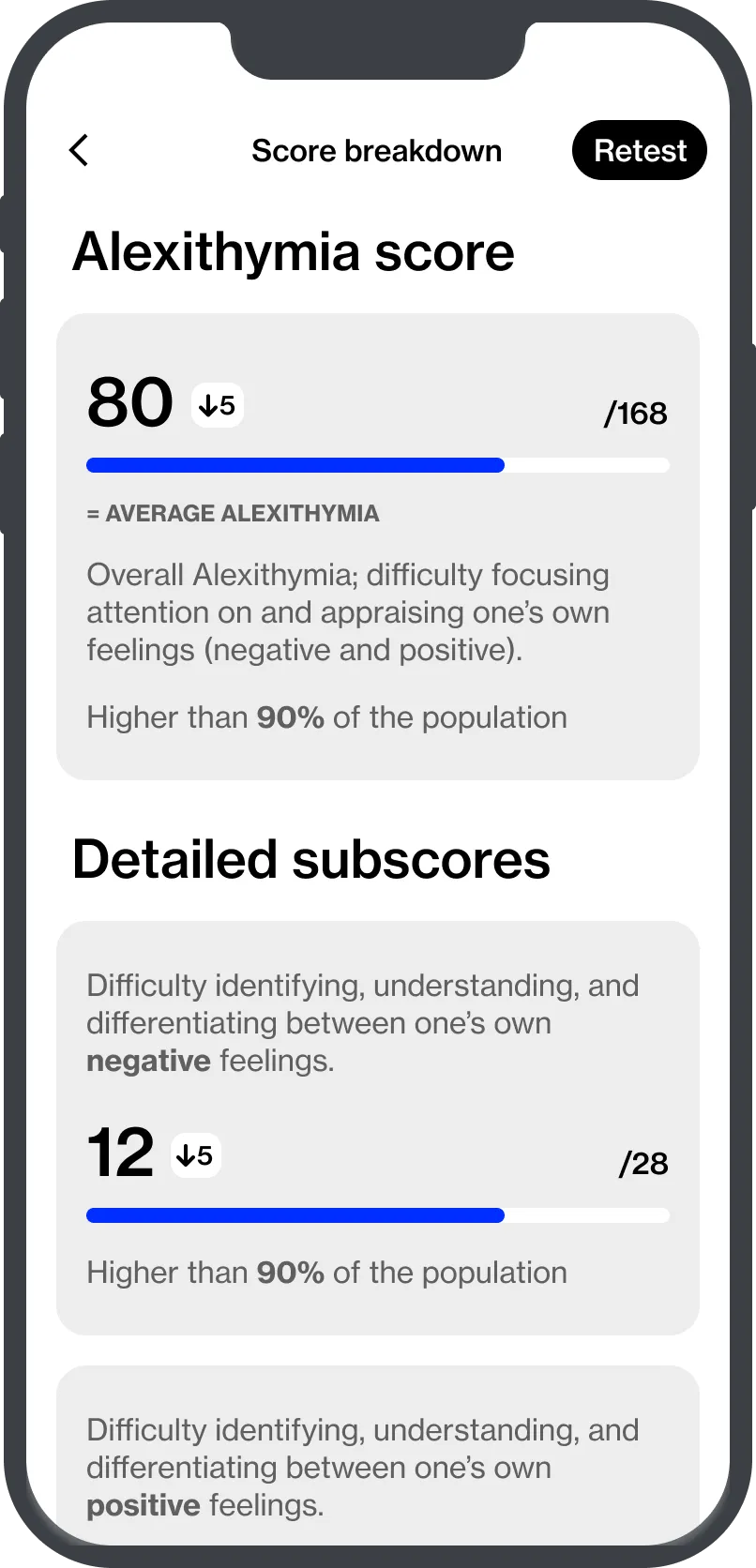
If the first, second, and last questions sound most like you, trouble finding feelings is probably a big part of the picture. If they ring true, a test can show you which parts of emotional awareness feel hardest right now.
First Steps Toward Being More Available
A common piece of advice is to “be more vulnerable.” But vulnerability is hard to practice when you don’t know what you would be sharing. In a Reddit thread from someone who wanted to change without being in a relationship, one reply turned the question around: “Are you emotionally available to yourself?”[12] The steps below start there and work outward. Go at a pace you can manage. Noticing feelings you have kept at a distance can be uncomfortable at first, but that discomfort often means the practice is working. If it tips into panic, numbness, or feeling detached from yourself, stop, ground yourself, and get support.
Check in with yourself first
Pick two or three fixed moments a day, such as after lunch, on the way home, and before bed. Each time, ask: what am I feeling right now, and what happened just before? A one-word answer counts, and so does “something, not sure what” - just paying attention is a good start. One person in a Reddit thread listed this among the steps that helped most after a partner said he barely knew her:
“I had to learn how to check in with myself. Ask myself, what am I feeling? Why? Journaling helps.”[13]
A commenter in r/datingoverthirty, sharing steps after realizing they were emotionally unavailable
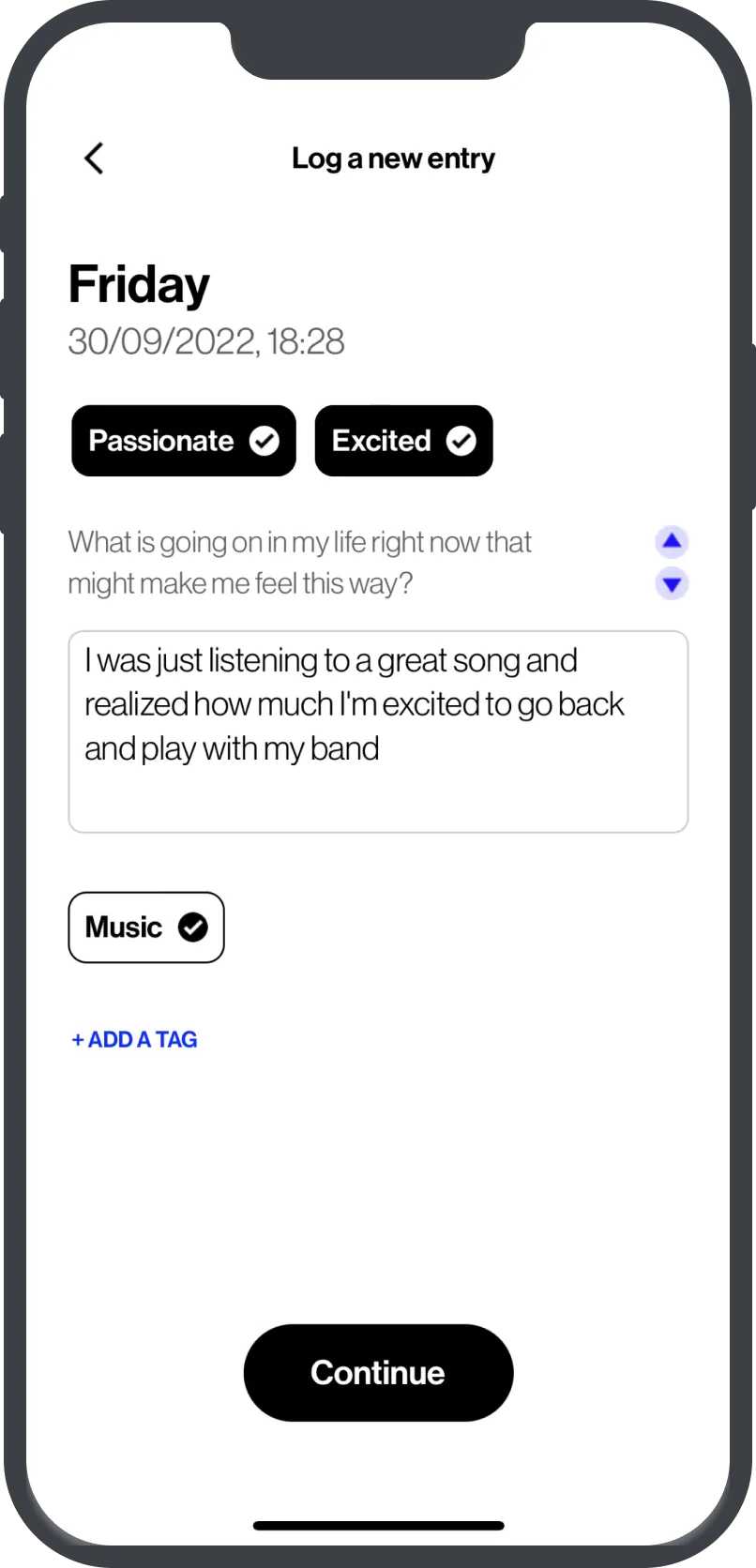
Name it roughly, then refine
You don’t need the perfect word. Start with something broad, such as good or bad, calm or stirred up. Then try a family of feelings, such as anxious, sad, angry, or happy. If you can, go one step further, for example from “anxious” to “dreading” or “unsure.” Putting even a rough word to a feeling seems to help in its own right. In a brain imaging study, labeling the emotion in an upsetting picture reduced the brain’s alarm response to it.[14] The more words you know, the easier this step gets, and you can build that vocabulary on calm days.
Use your body as a clue
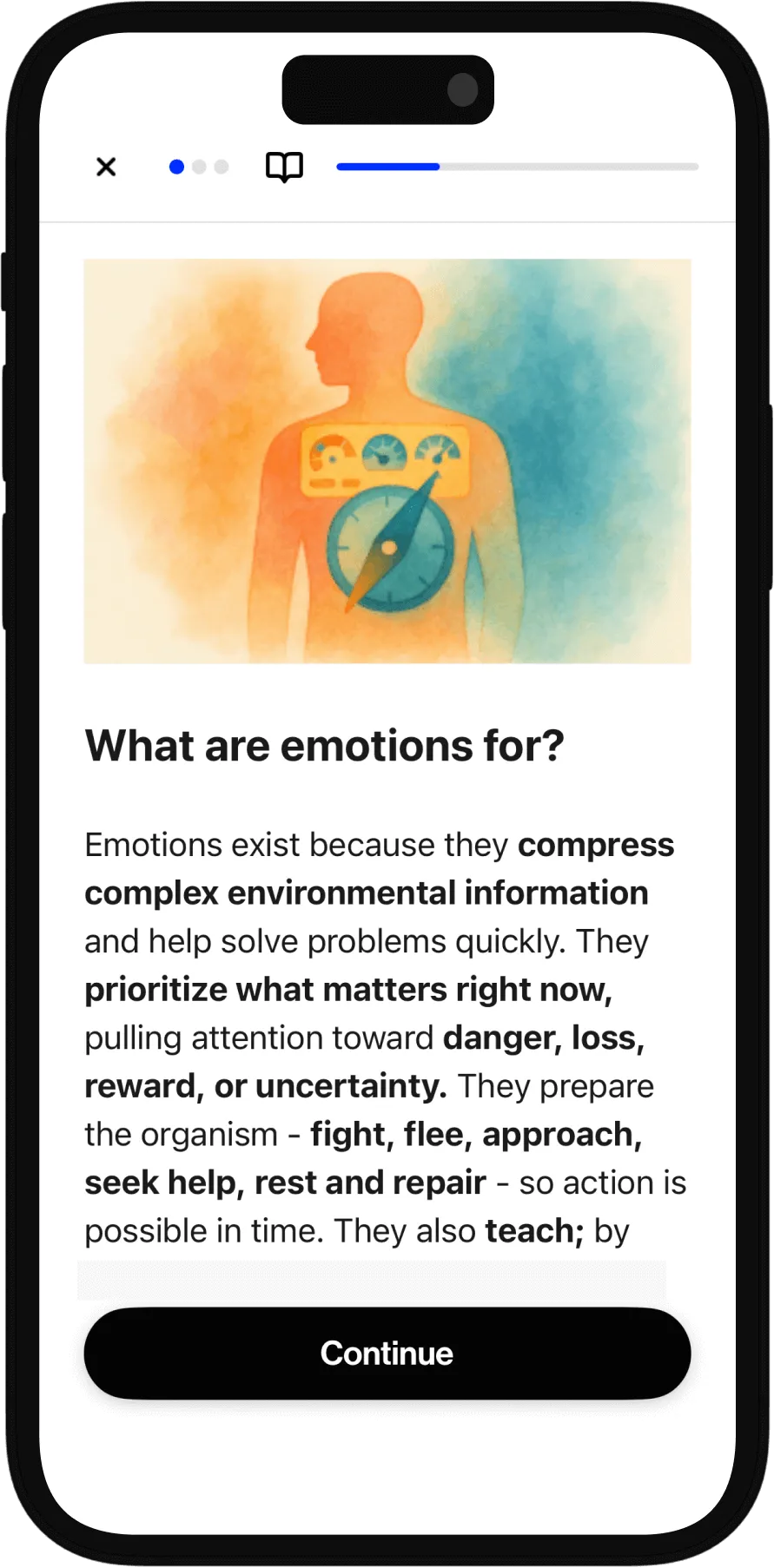
When no word comes to mind, describe what your body is doing. A tight throat, a heavy chest, restless legs, or a hot face are all information. Saying “my stomach is in knots” is a real answer, and it often leads to a feeling. The guide to interoception explains how body signals and feelings connect, and the five-step exercise for identifying a feeling shows how to start from your body when no word comes.
Share one small thing
Once you notice something, share a little more than you usually would. If you normally answer “What are you up to?” with “Not much,” try “Watching an old film, I felt nostalgic.” You don’t need to tell anyone your deepest secrets. The aim is to let people see a bit of what is going on underneath. Start with people who feel safe, such as a close friend or a sibling, before trying it in higher-stakes moments with a partner.
Ask for time instead of going quiet
If you need time to work out what you feel, say so, and say when you will come back. “I don’t know yet. Can I think about it and tell you tonight?” keeps the conversation open where silence would close it. Then follow through. The guide to alexithymia in relationships has more phrases for unclear feelings and a pause-and-return plan you can agree on together.
Where Accountability Comes In
Alexithymia explains why feelings can be hard to find and share. It doesn’t excuse ignoring a partner’s needs, refusing to try, or treating someone badly. If your partner tells you they feel lonely, “I have alexithymia” is the start of a conversation, not the end of one. You can still listen, ask what would help, show care through actions, and keep working on the steps above. If you notice contempt, control, or cruelty in how you respond, that needs its own attention, whatever the cause.
When the label doesn’t match
Sometimes “emotionally unavailable” isn’t a fair description. Two months into dating, it is normal not to share everything yet. People also use the label for anyone who doesn’t meet their needs, or when the relationship simply isn’t right. It is worth asking whether the comment describes a long-running pattern that other people have noticed too, or one moment with one person. If several people who know you well have said something similar, take it seriously. If not, you can still learn from it without accepting it as the whole story.
Next Steps
If you have been called emotionally unavailable and part of you agrees, you are already doing the first thing that helps, which is looking inward. Pick one step from this page, such as a daily check-in or one small share, and try it for a week. If trouble finding your feelings sounds familiar, the guide to alexithymia explains the trait in more depth, and the alexithymia test gives you a starting point to measure progress against. A therapist can help too, especially if old hurts make closeness feel unsafe, but you can make real progress on your own as well.
References
Show referencesHide references
- Frye-Cox NE, Hesse CR. Alexithymia and marital quality: the mediating roles of loneliness and intimate communication. J Fam Psychol. 2013;27(2):203-211. doi:10.1037/a0031961.
- Srivastava S, Tamir M, McGonigal KM, John OP, Gross JJ. The social costs of emotional suppression: a prospective study of the transition to college. J Pers Soc Psychol. 2009;96(4):883-897. doi:10.1037/a0014755.
- Reddit, r/Alexithymia. Post “My therapist explained Alexithymia to me today, and I broke down crying.”. Individual experience, June 2026.
- Salminen JK, Saarijärvi S, Aärelä E, Toikka T, Kauhanen J. Prevalence of alexithymia and its association with sociodemographic variables in the general population of Finland. J Psychosom Res. 1999;46(1):75-82. doi:10.1016/s0022-3999(98)00053-1.
- Reddit, r/Alexithymia. Comment in the discussion “My therapist explained Alexithymia to me today, and I broke down crying.”. Individual experience, June 2026.
- Reddit, r/emotionalintelligence. Comment in the discussion “Was told I am emotionally unavailable”. Individual experience, January 2025.
- Lyvers M, Pickett L, Needham K, Thorberg FA. Alexithymia, fear of intimacy, and relationship satisfaction. J Fam Issues. 2022;43(4):1068-1089. doi:10.1177/0192513X211010206.
- Romeo A, Benfante A, Castelli L, Di Tella M. The role of adult attachment and alexithymia in dyadic adjustment. J Affect Disord Rep. 2024;16:100743. doi:10.1016/j.jadr.2024.100743.
- Hesse C, Floyd K. Affection mediates the impact of alexithymia on relationships. Pers Individ Dif. 2011;50(4):451-456. doi:10.1016/j.paid.2010.11.004.
- Reddit, r/Alexithymia. Post “Is this alexithymia? I have emotions, but I don’t feel love, or care, and I don’t miss people”. Individual experience, April 2025.
- Reddit, r/Alexithymia. Comment in the discussion “Is this alexithymia? I have emotions, but I don’t feel love, or care, and I don’t miss people”. Individual experience, April 2025.
- Reddit, r/dating_advice. Comment in the discussion “How to stop being emotionally unavailable?”. Individual experience, October 2021.
- Reddit, r/datingoverthirty. Comment in the discussion “I’ve Come To The Realization I Am Mostly Emotionally Unavailable… How do I fix this?”. Individual experience, May 2022.
- Lieberman MD, Eisenberger NI, Crockett MJ, et al. Putting feelings into words: affect labeling disrupts amygdala activity in response to affective stimuli. Psychol Sci. 2007;18(5):421-428. doi:10.1111/j.1467-9280.2007.01916.x.