
“Numb” is often the only word people have for it. You know something should be there, sadness at a funeral, excitement about good news, warmth toward someone you love, but you find very little. Numbness isn’t one thing, though. Sometimes feelings really do go quiet for a while, because you are overwhelmed, low, or on a medication that flattens them. And sometimes the feelings are there, but they are hard to notice and put into words, a pattern called alexithymia. If you’ve felt numb since something painful happened and you struggle to say what you’re feeling, those experiences may be connected. This guide aims to help you work out what’s happening for you and what might help.
What Emotional Numbness Feels Like
People describe emotional numbness as flatness, fog, or watching life through a window. Good news lands with a shrug. Bad news doesn’t hurt the way you expect. You might laugh at a joke without feeling amused, or cry at a film without knowing why. Some people mostly lose the pleasant feelings, like joy, excitement, and closeness, while others feel muted across the board.
Numbness can also feel safer than the alternative. In a Reddit thread about why being numb can feel good, one person described it like this:
“there’s a special kind of “safety” in feeling numb. I tend to describe it as a wall of glass between me and the emotions I should be feeling. Sometimes the glass is clear, sometimes it’s not. Sometimes I can clearly see what I should be feeling but don’t actually experience that emotion on my side of the glass.”[3]
A commenter in r/Alexithymia, in a discussion about why numbness can feel good
That sense of safety is a useful clue. It suggests numbness often has a job, and knowing what that job is tells you a lot about what will help.
Five Things That Can Feel Like Numbness
Each row below can feel like “nothing” from the inside. Most people recognize more than one row, and it can change over time. Use the table to choose where to start, not to give yourself a diagnosis.
| Source | What it is often like | A question to ask yourself |
|---|---|---|
| Shutting down under stress | Feelings switch off during or after overwhelm, grief, anxiety, or trauma | Did this start when life got too much? |
| Medication blunting | Highs and lows both feel flatter, often weeks after starting a medicine | Did this begin or get worse after a new prescription or dose? |
| Low mood and lost pleasure | Things you used to enjoy feel pointless, with low energy and poor sleep | Have I stopped wanting the things I used to love? |
| Feeling unreal | You feel detached from yourself or your surroundings, as if in a dream | Do I feel cut off from my body or the world around me? |
| Alexithymia | Something is going on inside, but it is hard to notice, name, or describe. This can feel familiar or be a change from how things used to be | Do I notice body changes but not know which feeling they belong to? |
Shutting down under stress
When feelings get too big, the mind can turn the volume down. People describe this after a death, a breakup, a long stretch of anxiety, or a traumatic event. One person in a Reddit thread about numbness after anxiety wrote: “The feelings and emotions just shut off and I become robotic.”[4] Trauma researchers have found that people with PTSD can still experience a range of emotions even when they report feeling numb.[5] If shutting down keeps happening, you may find it hard to notice and name what you feel as well. The guide to alexithymia and trauma goes deeper into numbing after trauma.
When it might be your medication
Many antidepressants can flatten emotions, an effect usually called emotional blunting. In a survey of 669 people being treated for depression, 46% said they experienced it, and it showed up across the common types of antidepressant.[1] In a placebo-controlled study, healthy volunteers who took escitalopram for about a month became less responsive to reward and punishment, which the researchers suggest may partly explain the blunting patients describe.[6] The NHS lists feeling “emotionally numb” among possible side effects as well.[7]
In a Reddit discussion about the study, two people described painful feelings getting quieter:
“Sure, I no longer felt sad or anxious, but I felt absolutely no joy or pleasure, either. Life was grey with no ups or downs.”[8]
A commenter in r/science, in a discussion about antidepressants and emotional blunting
”I can still recognize when circumstances are sad or similar, but I’m physiologically cushioned from being engulfed by them.”[9]
A commenter in r/science, in the same discussion, describing medication that helped
The first person also lost the ability to enjoy things. The second described relief from being overwhelmed. If you notice changes like these, tell your prescriber what’s easier and what you miss.
Low mood and lost pleasure
Depression often brings a loss of interest and pleasure, so the world feels grey and nothing seems worth doing. This can overlap with alexithymia, too. In a year-long study of outpatients with major depression, alexithymia scores rose and fell along with depression scores.[10] So if trouble reading your feelings began during a low period, it may ease as your mood lifts. The guide to alexithymia and depression explains how to check for depression when feelings are hard to read.
Where Numbness and Alexithymia Overlap
Alexithymia means difficulty identifying and describing your own feelings. It isn’t a diagnosis, and it isn’t an absence of emotion. Something is happening inside, often as a body change like a tight chest, a hot face, or a knot in the stomach, but it is hard to connect to a feeling word. In a Reddit discussion about common misunderstandings of alexithymia, one person summed it up in a line:
“This is weird because I feel everything and can express nothing.”[11]
A commenter in r/Alexithymia, in a discussion correcting the idea that alexithymia means having no feelings
Some people have found feelings hard to identify for as long as they can remember. In a study that followed 3,083 Finnish adults for 11 years, alexithymia scores were generally stable.[2] But trouble reading feelings can also get better or worse over time, as it did for people being treated for depression.[10][12] When you first noticed it is a useful clue, not a way to rule alexithymia in or out.
When it is both
If you already find feelings hard to read, a numb period can make them harder to notice. And after trauma, difficulty recognizing your feelings may be part of what numbing feels like, as one study of veterans suggested.[15] Both can happen together without being the same thing. Another study of veterans found that numbing and alexithymia were closely related but could still be measured separately.[13] A review of brain imaging research also found some differences between them.[14]
One possible explanation comes from the attention-appraisal model. If your mind repeatedly turns away from painful emotions, you get fewer chances to notice what you feel and make sense of it. In a survey of 444 people, those who reported more avoidance of difficult inner experiences also tended to report more alexithymia.[20] In a follow-up study of refugees, trouble identifying feelings increased alongside PTSD symptoms. The researchers suggested this might reflect secondary alexithymia, meaning difficulties that develop after trauma in this case. The study began after the trauma, so it couldn’t establish which came first.[19]
You don’t have to sort out which came first to start reconnecting. When things feel safe enough, you can notice a small change in your body or mood without having to name it right away.
A Quick Self-Check
Answer these about the last few weeks. There are no scores, only patterns to notice.
- Can I remember a time when I felt things more strongly, or has it always been like this?
- Did the numbness start around a loss, a crisis, a long stretch of stress, or a new medication?
- Have I lost interest in things I used to enjoy, along with my energy or sleep?
- Do I feel detached from myself, as if I am watching from outside or living in a dream?
- Do I notice changes in my body, like a racing heart or a heavy chest, without knowing what feeling they belong to?
- When someone asks how I feel, do I go blank or reach for words like “fine” or “tired”?
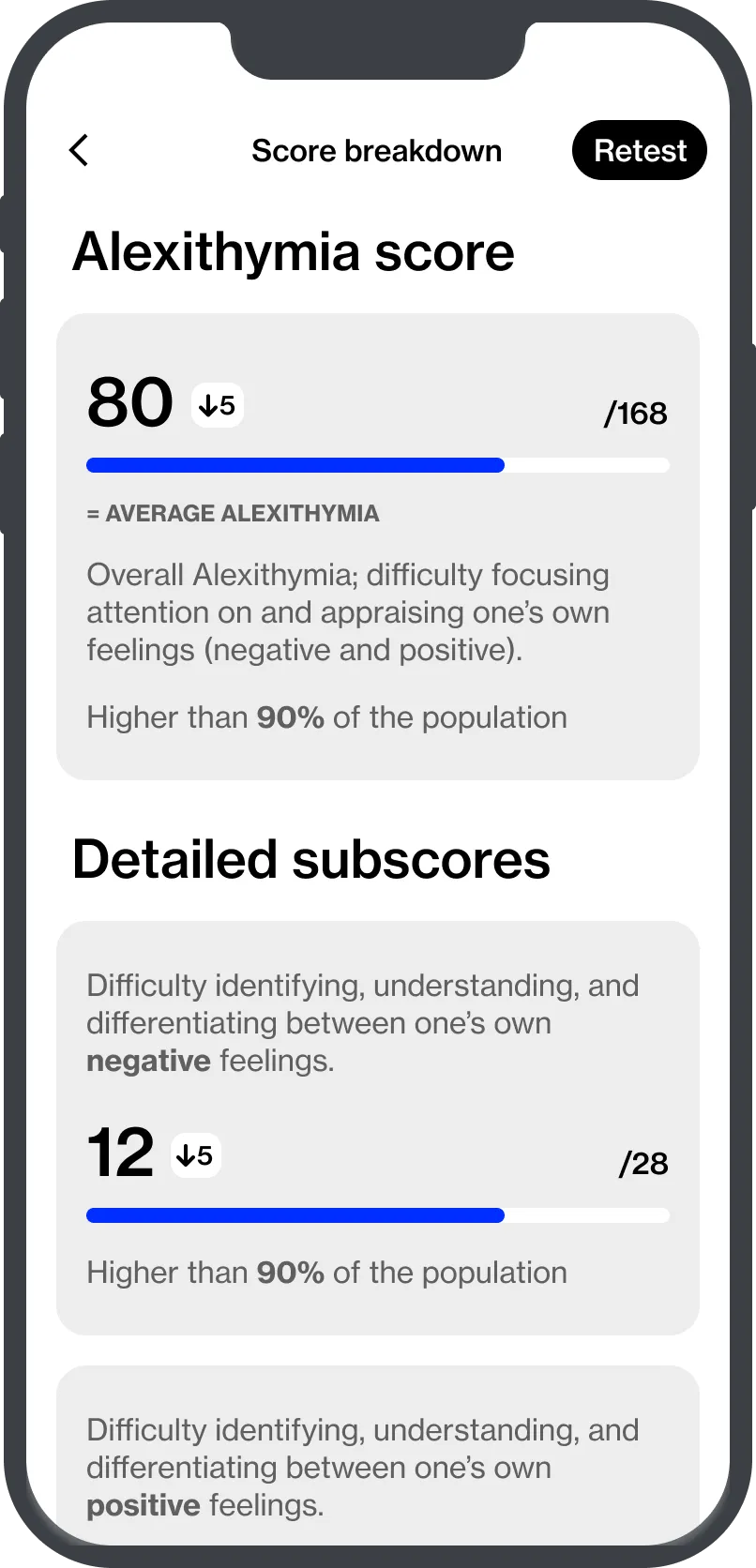
Questions 1 and 2 help you look back at when things changed. If you answered yes to question 5 or 6, you may also be having trouble making sense of the feelings you do notice. That can happen whether the numbness is new or familiar. A test can show which parts of emotional awareness feel hardest for you right now.
What Helps Each Kind of Numbness
Feelings usually come back gradually, and the first ones can be uncomfortable. Many people notice irritation, sadness, or crying before they notice joy, and that can be a sign that things are thawing. Go at a pace you can manage. If returning feelings tip into panic, feeling unreal, or overwhelm, stop, ground yourself, and get support.
If you shut down under pressure
Start by lowering the load rather than pushing for feelings. Protect your sleep and meals, cut what you can from a packed schedule, and spend time somewhere that feels safe. Then let feelings back in a little at a time. Music, films, or time in nature can give feelings something to latch onto, and to process and express subconsciously. One person who regained feeling after years of numbness wrote that slow, gentle attention brought feelings back “within a few months, even without a tail to start with.”[16] If the numbness followed a trauma, a trauma-focused therapist can help you take this at the right pace.
If it started with a medication
Tell your prescriber what you have noticed, using concrete examples such as “I didn’t feel much at my friend’s wedding” or “nothing seems funny anymore.” They may suggest changing the dose, the timing, or the medicine. Don’t stop an antidepressant suddenly or without talking to them first.[7] Stopping abruptly can cause withdrawal effects and bring symptoms back, and for many people the medicine is doing important work.
If your feelings are there but hard to read
This is where you can build a skill step by step. Check in with yourself at a few set moments each day and ask what you notice in your body and what happened just before. A rough answer counts, and so does “something, not sure what” - even just paying attention at all is a good first step.
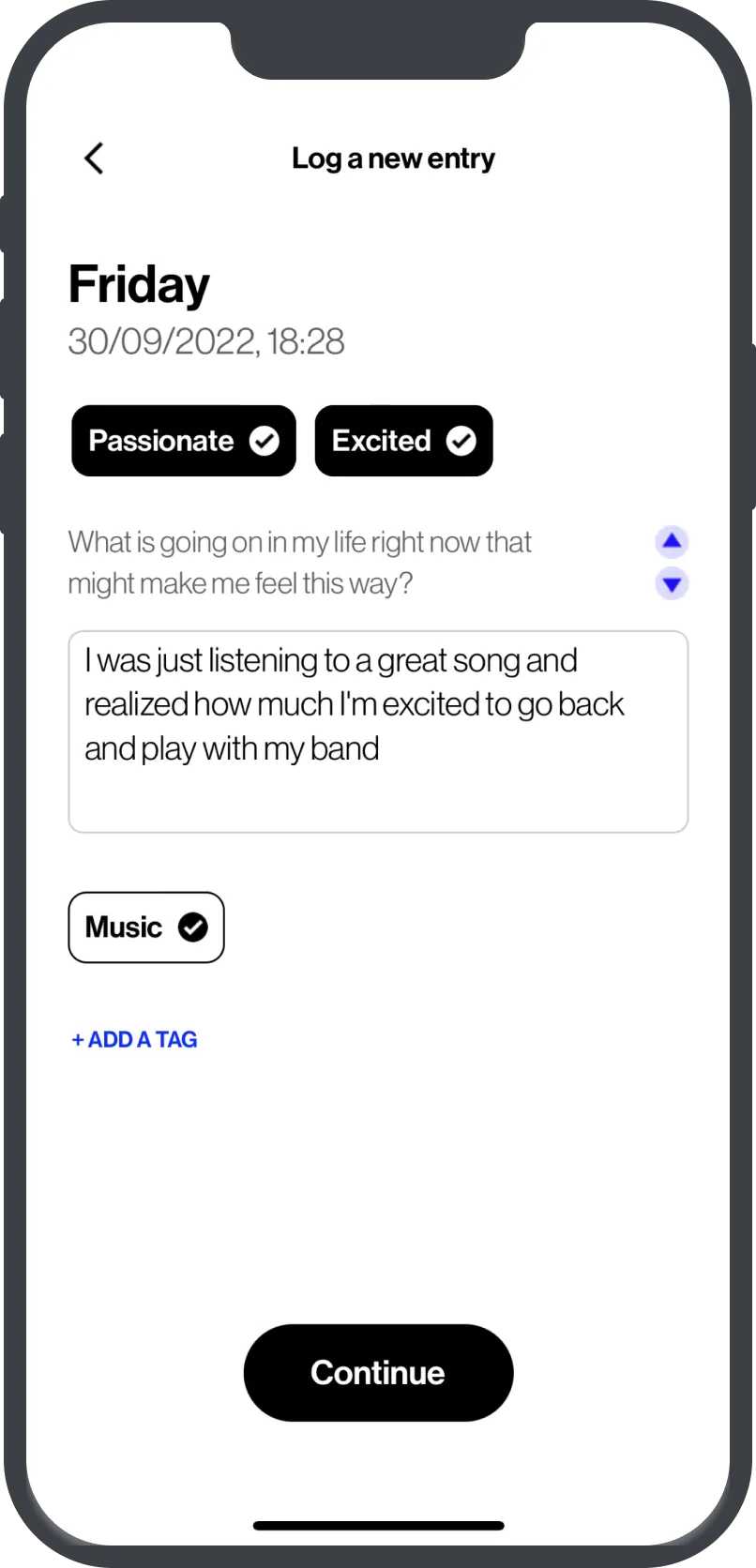
When no words come to mind, start from the body. A clenched jaw, a heavy chest, or restless legs are information you can describe even when you can’t name the feeling. Then try a broad word, such as good or bad, calm or stirred up, and narrow it down over time. Putting even a rough word to a feeling seems to help on its own. In a brain imaging study, labeling the emotion in an upsetting picture reduced the brain’s alarm response to it.[17] One person who described themselves as “extremely alexithymic” put the progress like this:
“I’ve gone from being extremely alexithymic “emotionally numb” to being aware that I am feeling stuff most of the time. I still have to go do inner detective work (observing sensations etc) to figure out exactly what I’m feeling but I’ve progressed leaps from where I was!”[18]
A commenter in r/CPTSDNextSteps, replying to someone who still felt numb after treatment
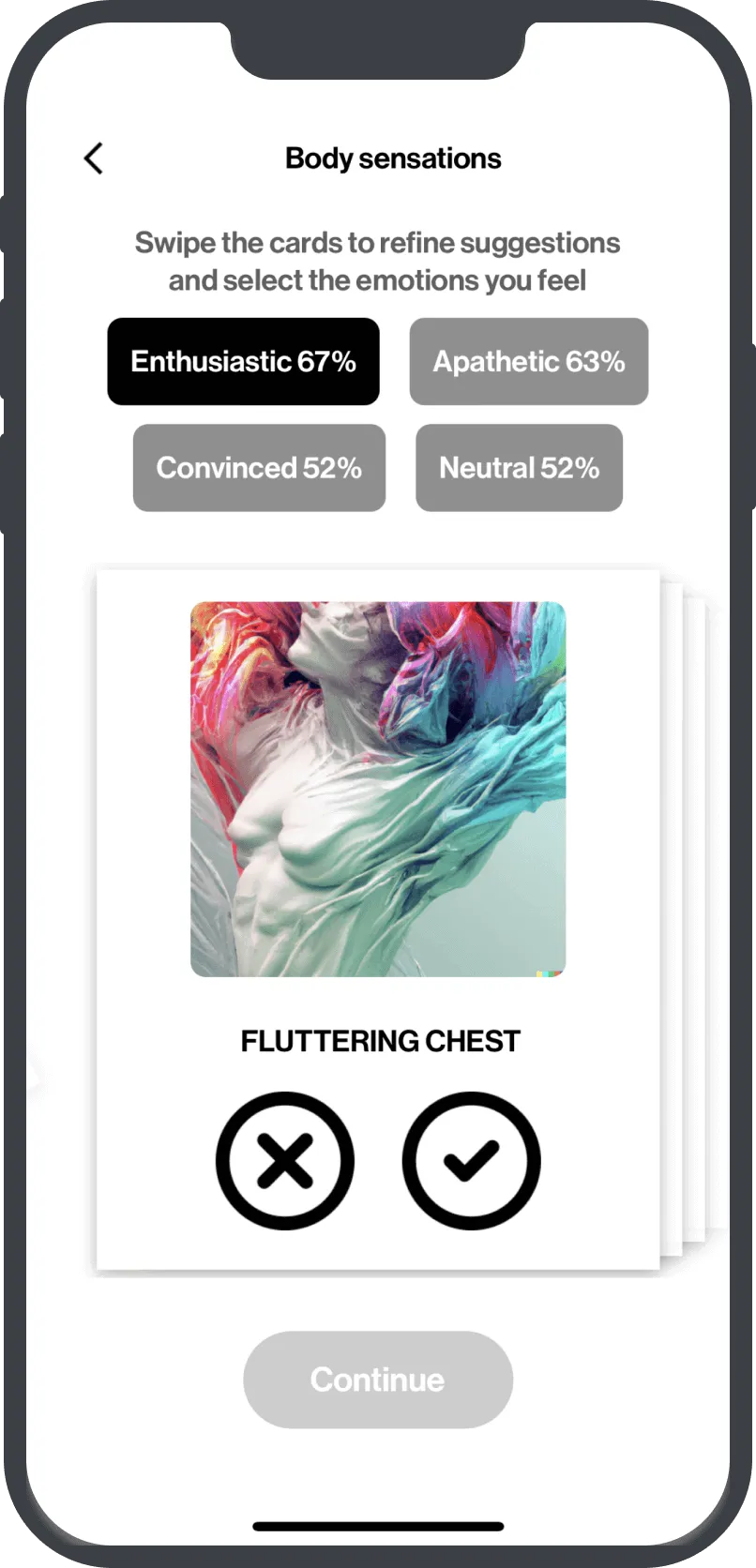
The guide to interoception explains how body signals and feelings connect, and the alexithymia exercises walk you through naming a feeling from its body clues.
When to Get Help
Talk to a doctor or mental health professional if numbness has lasted more than a couple of weeks, if it is getting in the way of work, school, or relationships, or if it came with low mood, poor sleep, or lost interest in things. Get help soon as well if you often feel unreal or detached from your body, or if you are using alcohol or drugs to feel something or to feel less. Numbness can also make thoughts of suicide feel calm and matter-of-fact rather than upsetting. Take those thoughts seriously, however they feel.
If you are thinking about ending your life, or you are not sure you can keep yourself safe, get help now:
- Call your local emergency number if you are in immediate danger.
- In the US, call or text 988, the Suicide and Crisis Lifeline.
- In the UK and Ireland, call Samaritans on 116 123, free at any time.
- Elsewhere, use Find A Helpline to reach a crisis line where you live.
Next Steps
Pick the row from the table that sounds most like you and try one step from its section for a week. If your feelings seem to be there but out of reach, the guide to alexithymia explains the trait in depth, and the alexithymia test gives you a starting point to measure progress against. Feelings that have gone quiet can come back, and feelings that are hard to read can become clearer with practice, so don’t lose hope!
References
Show referencesHide references
- Goodwin GM, Price J, De Bodinat C, Laredo J. Emotional blunting with antidepressant treatments: a survey among depressed patients. J Affect Disord. 2017;221:31-35. doi:10.1016/j.jad.2017.05.048.
- Hiirola A, Pirkola S, Karukivi M, et al. An evaluation of the absolute and relative stability of alexithymia over 11 years in a Finnish general population. J Psychosom Res. 2017;95:81-87. doi:10.1016/j.jpsychores.2017.02.007.
- Reddit, r/Alexithymia. Comment in the discussion “why do I love being numbed”. Individual experience, March 2022.
- Reddit, r/Alexithymia. Comment in the discussion “Emotional numbness and loss of feelings after anxiety started”. Individual experience, October 2026.
- Litz BT, Gray MJ. Emotional numbing in posttraumatic stress disorder: current and future research directions. Aust N Z J Psychiatry. 2002;36(2):198-204. doi:10.1046/j.1440-1614.2002.01002.x.
- Langley C, Armand S, Luo Q, et al. Chronic escitalopram in healthy volunteers has specific effects on reinforcement sensitivity: a double-blind, placebo-controlled semi-randomised study. Neuropsychopharmacology. 2023;48(4):664-670. doi:10.1038/s41386-022-01523-x.
- NHS. Antidepressants. Page last reviewed 12 June 2025.
- Reddit, r/science. Comment in the discussion “Widely used antidepressants cause “emotional blunting””. Individual experience, January 2023.
- Reddit, r/science. Comment in the discussion “Widely used antidepressants cause “emotional blunting””. Individual experience, January 2023.
- Honkalampi K, Hintikka J, Laukkanen E, Lehtonen J, Viinamäki H. Alexithymia and depression: a prospective study of patients with major depressive disorder. Psychosomatics. 2001;42(3):229-234. doi:10.1176/appi.psy.42.3.229.
- Reddit, r/Alexithymia. Comment in the discussion “Hello, I’ve noticed there is a misunderstanding on what Alexithymia is”. Individual experience, May 2024.
- Luminet O, Bagby RM, Taylor GJ. An evaluation of the absolute and relative stability of alexithymia in patients with major depression. Psychother Psychosom. 2001;70(5):254-260. doi:10.1159/000056263.
- Ramirez SM, Glover H, Ohlde C, et al. Relationship of numbing to alexithymia, apathy, and depression. Psychol Rep. 2001;88(1):189-200. doi:10.2466/pr0.2001.88.1.189.
- Putica A, Van Dam NT, Steward T, Agathos J, Felmingham K, O’Donnell M. Alexithymia in post-traumatic stress disorder is not just emotion numbing: systematic review of neural evidence and clinical implications. J Affect Disord. 2021;278:519-527. doi:10.1016/j.jad.2020.09.100.
- Badura AS. Theoretical and empirical exploration of the similarities between emotional numbing in posttraumatic stress disorder and alexithymia. J Anxiety Disord. 2003;17(3):349-360. doi:10.1016/s0887-6185(02)00201-3.
- Reddit, r/CPTSDNextSteps. Comment in the discussion “How can one learn to feel emotions again?”. Individual experience, January 2021.
- Lieberman MD, Eisenberger NI, Crockett MJ, et al. Putting feelings into words: affect labeling disrupts amygdala activity in response to affective stimuli. Psychol Sci. 2007;18(5):421-428. doi:10.1111/j.1467-9280.2007.01916.x.
- Reddit, r/CPTSDNextSteps. Comment in the discussion “How can one learn to feel emotions again?”. Individual experience, January 2021.
- Söndergaard HP, Theorell T. Alexithymia, emotions and PTSD; findings from a longitudinal study of refugees. Nord J Psychiatry. 2004.
- Stiller MC, et al. Understanding alexithymia: the role of experiential avoidance. Cogn Emot. 2026.