
Childhood emotional neglect means growing up without enough people noticing, naming, or responding to your feelings. Nobody has to have been cruel. You may have had food, a home, and parents who worked hard for you. But if your sadness, fear, or excitement mostly went unseen, you missed the practice most children get in working out what they feel. Many adults who grew up this way find feelings hard to identify and describe, which is what researchers call alexithymia. However, don’t lose hope - you can still learn that skill now. Neglect can happen between adults too, and this guide covers that as well, though most of the research on its link with alexithymia is about childhood.
What Childhood Emotional Neglect Is
Emotional neglect happens when a child’s emotional needs, like comfort, attention, and someone taking their feelings seriously, are not met often enough. It usually isn’t one moment. It is the pattern of being upset and having nobody ask why, of bringing home good news that nobody seemed to care about, or of learning that crying, anger, or fear were best kept to yourself. In a Reddit discussion with someone who had just realised this about their own childhood, one person summed it up in a sentence:
“It’s not about what happened necessarily, but what didn’t happen.”[6]
A commenter in r/Alexithymia, replying to someone who realised they were probably neglected as a child
That is why emotional neglect is easy to miss, both for the people around a child and for the adult the child becomes. It is also common. In a review of studies covering almost 60,000 people, about 18% reported emotional neglect in childhood.[1]
When nothing bad happened
Many people who recognise themselves in descriptions of emotional neglect push back straight away. Nothing terrible happened, so it can’t count. And because neglect is an absence, there is often no memory to point to. One person, asked how they could identify emotional neglect without clear memories of childhood, described what they did remember:
“I don’t remember the events very well, but I remember having a weird feeling that I was just lonely. Like, I existed but not acknowledged, I was allowed to do what I wanted but no one would be there to see it.”[7]
A commenter in r/emotionalneglect, answering how to identify emotional neglect without clear memories
Recognising emotional neglect doesn’t mean deciding your parents were bad people. Many parents who miss their children’s feelings were never shown how to notice feelings themselves, and they were often doing their best with what they had. Researchers who study how children learn about emotions also point out that it runs both ways between parent and child.[8] So it is rarely the story of one person failing another. In a Reddit discussion about why emotional neglect is so often dismissed, one person put both truths side by side:
“The dismissal isn’t always even by other people. It’s so easy to convince yourself that your parents were trying their best and loved you in their own way and you’re just making something out of nothing. Afterall you never went hungry and weren’t beaten so they weren’t total shit, right? Parents can love you and do their best and still be neglectful.”[9]
A commenter in r/CPTSD, in a discussion about why childhood emotional neglect is so traumatic
If the description sounds familiar to you, that is enough reason to start practising the skills that may have been missed - you don’t need to settle on a verdict about your childhood.
How Childhood Emotional Neglect Leads to Alexithymia
Children aren’t born knowing what “frustrated”, “embarrassed”, or “lonely” feel like. They learn it from the adults around them. A parent sees a child’s face fall and says “you look disappointed”, the child links the word to the feeling, and over thousands of moments like that a vocabulary forms. Reviews of this research describe three main routes: how parents react when a child shows a feeling, how much the family talks about feelings, and how openly the adults show their own.[8] Children also learn by watching how the adults around them handle feelings and copying what they see.[10]
When those moments are rare, a child gets far less practice. And if showing a feeling brings no response, or a bad one, putting feelings away can become the safest habit. Someone in a Reddit discussion about alexithymia and childhood described how that habit grows into something bigger:
“You shut down because someone has bullied you to shut down or you are so scared to express yourself that you shut down. When you shut down as a child, you don’t get the opportunity to know yourself. Your vocabulary is limited because you don’t know what feelings are.”[11]
A commenter in r/Alexithymia, in a discussion about alexithymia and childhood abuse
Seen this way, alexithymia after emotional neglect is often a skill that never had the chance to develop, but skills can still be learned.
Learning to read the body
Feelings aren’t the only signals children learn to read with help. A baby feels hunger, tiredness, and discomfort long before they have words for any of them, and from the inside these states can be hard to tell apart. When a caregiver notices the fussing and responds to what is actually going on, feeding them when they’re hungry or settling them when they’re tired, the baby gets a little more context each time for what that state of their body means. A 2026 article on how interoception, the sense of what is happening inside the body, develops proposes that timely responses that match what the child needs, along with adults helping to calm them, are gradually taken over by the child as their own way of reading and settling their body.[17] The authors present this as a model to test. It doesn’t prove that neglect changes how someone reads their body, or that this is how neglect leads to alexithymia. It does help explain why the practice later in this guide starts with your body.
What the research shows
The link between childhood maltreatment and adult alexithymia has been studied many times. A 2023 meta-analysis pooled studies of more than 36,000 people and found that emotional neglect, emotional abuse, and physical neglect were the strongest childhood predictors of alexithymia in adulthood.[2] A second meta-analysis of 88 studies found the same pattern, with neglect more strongly linked to alexithymia than physical or sexual abuse.[3] A third suggested that alexithymia may be part of the reason childhood abuse and neglect are tied to mental health problems later in life.[12]
Neglect seems to affect one part of alexithymia in particular. In a study of 500 young adults, emotional neglect went with difficulty identifying feelings, while emotional abuse went more with difficulty describing them.[4] The link shows up outside clinics too. In a group of healthy adults recruited from the community, early emotional neglect was linked to alexithymia, while physical or sexual trauma was not.[13]
The links in these reviews are modest, so neglect makes alexithymia more likely without making it certain.[3] One finding offers some reassurance as well. In a study of adults in outpatient mental health care, good care from one parent appeared to soften the effect of less than ideal care from the other.[14] One attentive adult can make a real difference, and as an adult you can learn to be that person for yourself.
Signs It May Have Started in Childhood
There is no checklist that proves where someone’s difficulty with feelings came from. But these patterns come up again and again among adults who grew up with their feelings unnoticed:
- You can explain a situation in detail but struggle to say how it made you feel.
- Your feelings seem to run on a narrow scale, often sitting at “fine” or neutral, with occasional sudden bursts that are hard to explain.
- You notice stress in your body, like a tight stomach or a headache, before you notice any emotion.
- When someone asks how you are, “fine” comes out automatically, and a genuine question can feel strange or even overwhelming.
- You are very aware of other people’s moods and much less aware of your own.
- You rarely ask for help, and you feel uneasy when someone offers it.
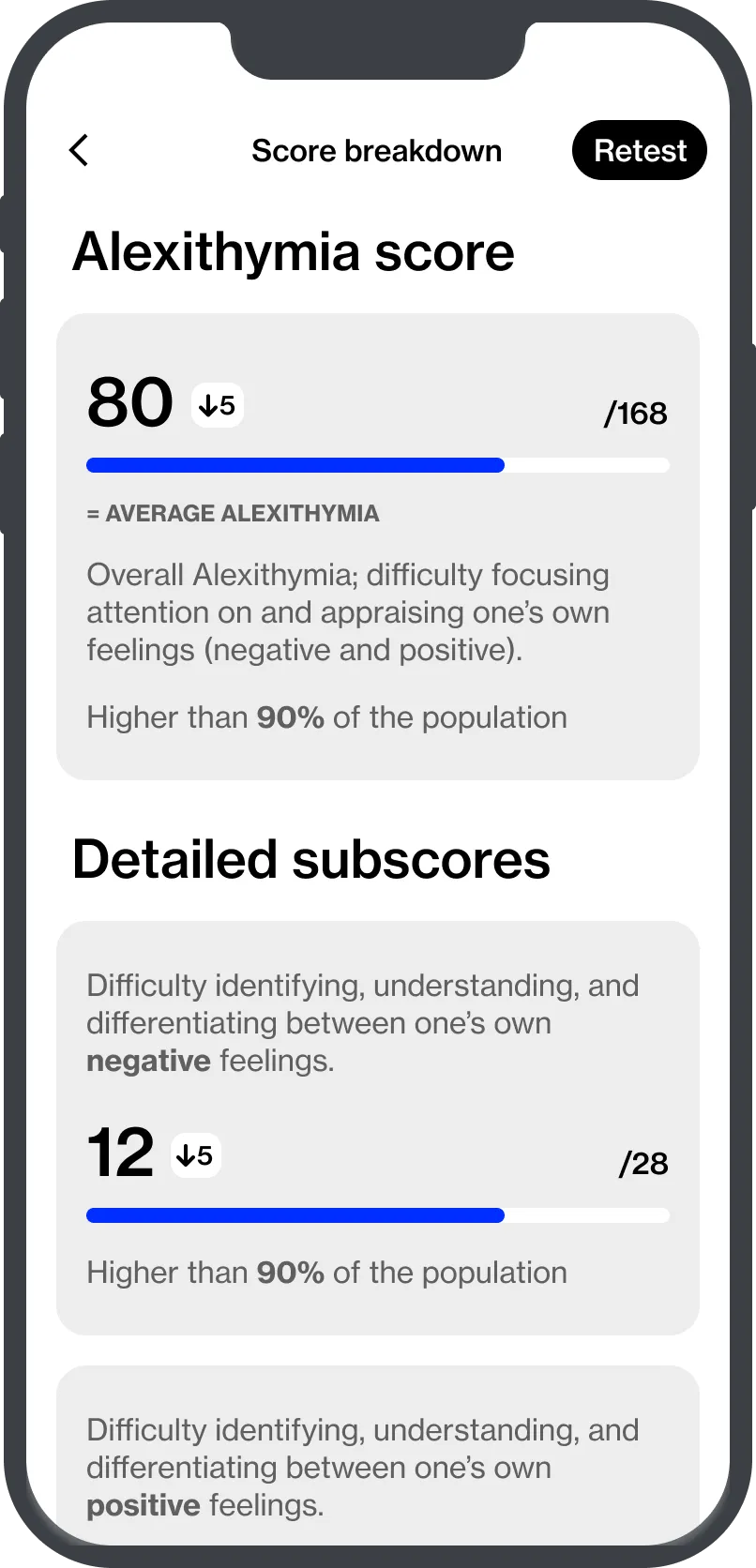
If several of these sound familiar, it can help to get a clearer picture of which part of feelings is hardest for you, finding them, describing them, or paying attention to them at all.
Emotional Neglect in Adult Relationships
Emotional neglect doesn’t only happen to children. Adults can live with it too, most often with a partner, but also with relatives or the people they share a home with. The pattern is similar: your feelings and needs keep going unnoticed or brushed aside, and over time you stop bringing them up.
Picture telling your partner that a hospital appointment has you worried. They say “you’ll be fine” and go back to their phone. When the results come in, nobody asks. A few weeks later you say you’ve been feeling lonely, and the subject changes. Any one of those moments could mean very little. Together, over months, they teach you that your feelings won’t get a response, and you may start keeping them to yourself.
That is different from an occasional miss. Everyone sometimes overlooks a cue when they are tired, distracted, or dealing with something of their own. The difference is usually what happens next: they notice later, ask about it, or respond when you point it out. It is also different from having a partner who is emotionally unavailable. Some people find it hard to open up about their own feelings, whether from guardedness, exhaustion, or alexithymia, and still show up when you need them. Neglect is about your needs going unanswered again and again, whatever the reason behind it.
Research on emotional neglect and alexithymia has looked almost entirely at childhood, so the studies above don’t tell us what neglect between adults does to emotional awareness, and it shouldn’t be assumed to cause alexithymia. Living with it can still make the practices below harder, because there is nobody around who asks. If this sounds like your relationship, start with the steps below, and the guide to alexithymia in relationships has ways to raise it with a partner.
Learning to Name Feelings as an Adult
Learning this as an adult can feel slow and a little strange, because you are practising something most people picked up without noticing. In a Reddit discussion about what emotional neglect had led to, one person described what that is like:
“I, too, have been working on how to bring together the memories/experiences and the attendant emotions—i.e., how to feel what I am feeling instead of thinking it. I’m 30, and I feel like I’m just now learning the self-management skills that a decent parent teaches a toddler. It’s exhausting and frustrating, and yet I am so grateful to have the awareness that I have.”[15]
A commenter in r/CPTSD, in a discussion about what childhood emotional neglect led to
Research supports the idea that this can change. A review of treatment studies found that alexithymia is partly changeable, and that the programs aimed directly at it tended to show the clearest improvements.[5] The steps below give you the practice you may have missed, one small piece at a time.
Start with your body
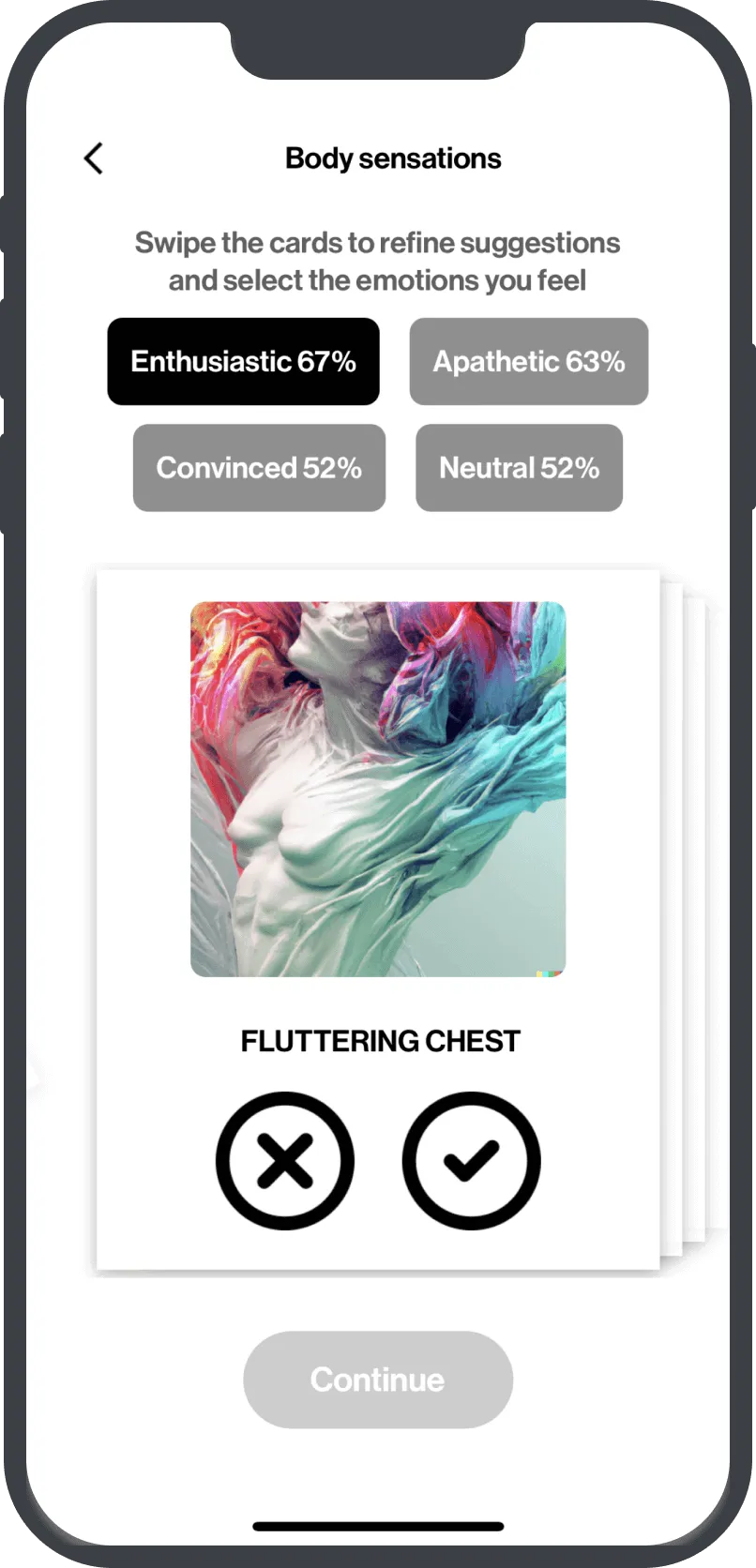
If you can’t tell what you feel, start with what you can notice. A few times a day, pause and check in with your body: your jaw, shoulders, chest, and stomach. Is anything tight, heavy, warm, buzzing, or hollow? You are not trying to work out the emotion yet, just collecting clues. The guide to interoception explains why these body signals are such a useful starting point.
Give it a rough name
Once you have a clue, try a rough label. “Something unpleasant”, “a bit low”, or “on edge” all count. Putting feelings into words, even simple ones, seems to calm the brain’s alarm system: in a brain imaging study, naming the feeling in an upsetting picture dampened activity in the amygdala, a region involved in threat and fear.[16] Over time you can get more specific. The alexithymia exercises include feeling-word lists and short practices to build on.
Ask yourself the question nobody asked
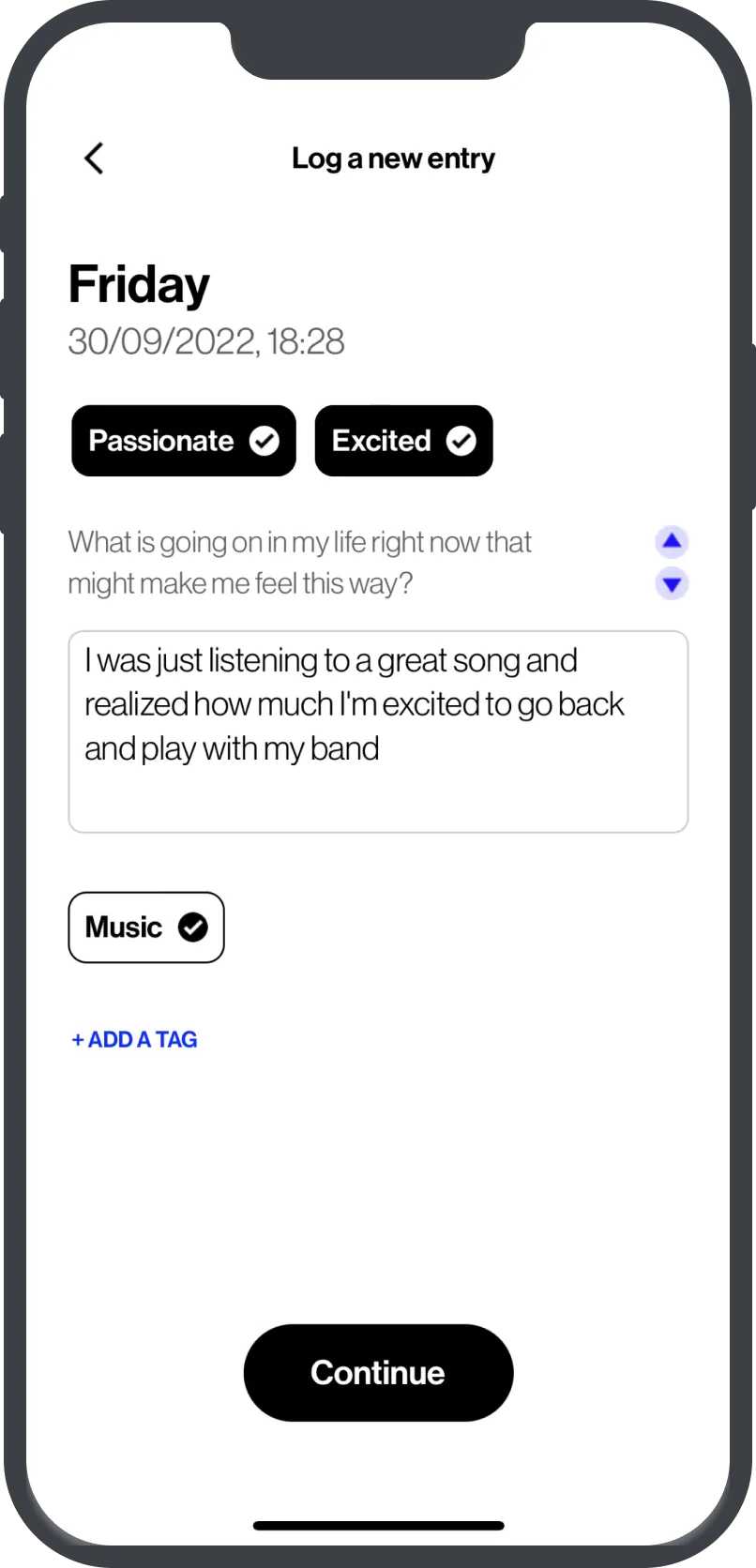
Many people who grew up with emotional neglect were rarely asked how they felt and actually listened to. You can start asking yourself. At the end of the day, look back at one moment that stood out and ask: what did I feel then, and what did I need? Write down whatever comes, even if it is only a body clue or a guess. Regular check-ins give you the steady attention that was missing, and patterns start to show after a few weeks.
Answer yourself kindly
Notice how you talk to yourself when a feeling shows up. If the first thought is “stop being dramatic” or “that’s stupid”, you may be repeating what you learned to expect. Try answering the way a patient friend would: “That makes sense, you were left out.” Many people find this hard at first, so start with small feelings. Understanding that the neglect wasn’t caused by anything wrong with you often makes kindness towards yourself easier to practise.
Spend time with people who ask
Feelings are easier to learn around people who are curious about them. If you have friends, a partner, or colleagues who ask how you are and wait for a real answer, try giving them one, even a short one. Watching how other people talk about their feelings counts as practice too. If closeness is where this shows up most, the guide to alexithymia in relationships covers it in more depth.
When Grief or Anger Comes Up
As feelings get easier to notice, old ones can come with them. Many people feel grief for the childhood they didn’t have, or anger at the people who missed what they needed, sometimes years after they thought they had moved on. That is a common part of the process, and it can be a sign the practice is working. You can feel angry and still care about your family.
Go at a pace you can manage. Keep practice sessions short, stop when you feel panicky, detached, or overwhelmed, and come back to it another day. Grounding yourself in something steady, like your feet on the floor or a familiar object in your hand, can help you stay in the present. If you also hid feelings for years, the guide to suppressing emotions explains what tends to happen as they return.
When to Get Help
A therapist who works with childhood trauma can help if memories come back strongly, if grief or anger feels too big to handle on your own, or if you have been low, anxious, or numb for weeks. If your childhood also involved abuse or frightening events, the guide to alexithymia and trauma explains how that can affect feelings and what to tell a therapist.
Next Steps
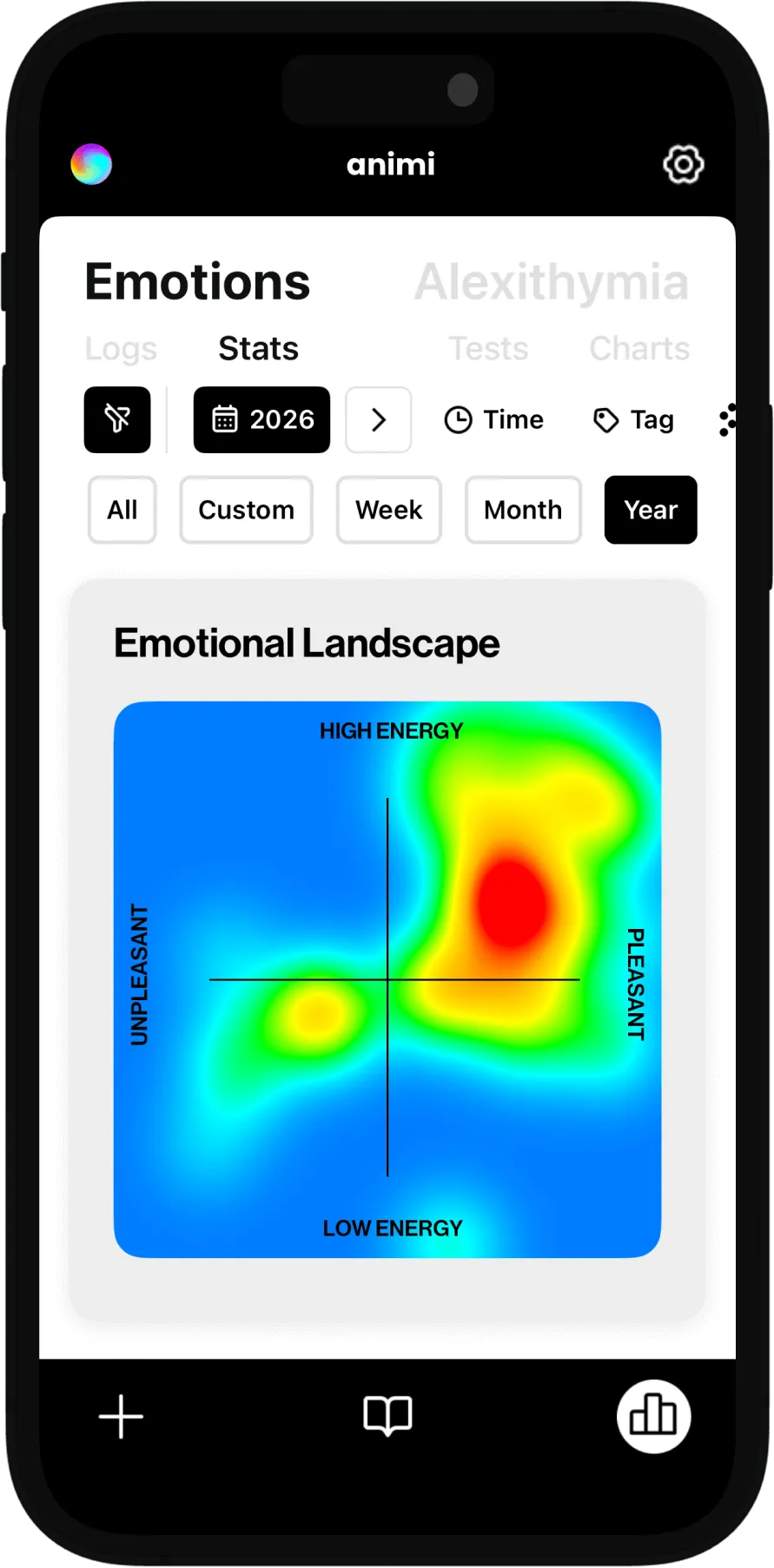
Pick one practice from this guide, like a daily body check-in or an evening question, and try it for the next two weeks. If you want to understand alexithymia more broadly, the guide to alexithymia covers what it is and how it changes, and the alexithymia test gives you a baseline to look back on. Your feelings may not have been noticed when you were young, but you can learn to notice them now.
References
Show referencesHide references
- Stoltenborgh M, Bakermans-Kranenburg MJ, van IJzendoorn MH. The neglect of child neglect: a meta-analytic review of the prevalence of neglect. Soc Psychiatry Psychiatr Epidemiol. 2013;48(3):345-355. doi:10.1007/s00127-012-0549-y.
- Ditzer J, Wong EY, Modi RN, Behnke M, Gross JJ, Talmon A. Child maltreatment and alexithymia: a meta-analytic review. Psychol Bull. 2023;149(5-6):311-329. doi:10.1037/bul0000391.
- Khan AN, Jaffee SR. Alexithymia in individuals maltreated as children and adolescents: a meta-analysis. J Child Psychol Psychiatry. 2022;63(9):963-972. doi:10.1111/jcpp.13616.
- Brown S, Fite PJ, Stone K, Richey A, Bortolato M. Associations between emotional abuse and neglect and dimensions of alexithymia: the moderating role of sex. Psychol Trauma. 2018;10(3):300-308. doi:10.1037/tra0000279.
- Cameron K, Ogrodniczuk J, Hadjipavlou G. Changes in alexithymia following psychological intervention: a review. Harv Rev Psychiatry. 2014;22(3):162-178. doi:10.1097/HRP.0000000000000036.
- Reddit, r/Alexithymia. Comment in the discussion “It finally hit me that I was probably neglected as a child”. Individual experience, February 2023.
- Reddit, r/emotionalneglect. Comment in the discussion “How do you identify your emotional neglect when you don’t remember your childhood?”. Individual experience, April 2025.
- Eisenberg N, Cumberland A, Spinrad TL. Parental socialization of emotion. Psychol Inq. 1998;9(4):241-273. doi:10.1207/s15327965pli0904_1.
- Reddit, r/CPTSD. Comment in the discussion “Why is childhood emotional neglect so traumatic?”. Individual experience, November 2022.
- Morris AS, Silk JS, Steinberg L, Myers SS, Robinson LR. The role of the family context in the development of emotion regulation. Soc Dev. 2007;16(2):361-388. doi:10.1111/j.1467-9507.2007.00389.x.
- Reddit, r/Alexithymia. Comment in the discussion “Alexithymia and childhood abuse?”. Individual experience, April 2019.
- Kick L, Schleicher D, Ecker A, Kandsperger S, Brunner R, Jarvers I. Alexithymia as a mediator between adverse childhood events and the development of psychopathology: a meta-analysis. Front Psychiatry. 2024;15:1412229. doi:10.3389/fpsyt.2024.1412229.
- Aust S, Alkan Härtwig E, Heuser I, Bajbouj M. The role of early emotional neglect in alexithymia. Psychol Trauma. 2013;5(3):225-232. doi:10.1037/a0027314.
- Kooiman CG, van Rees Vellinga S, Spinhoven P, Draijer N, Trijsburg RW, Rooijmans HGM. Childhood adversities as risk factors for alexithymia and other aspects of affect dysregulation in adulthood. Psychother Psychosom. 2004;73(2):107-116.
- Reddit, r/CPTSD. Comment in the discussion “Childhood emotional neglect. What did it lead you to?”. Individual experience, August 2023.
- Lieberman MD, Eisenberger NI, Crockett MJ, Tom SM, Pfeifer JH, Way BM. Putting feelings into words: affect labeling disrupts amygdala activity in response to affective stimuli. Psychol Sci. 2007;18(5):421-428. doi:10.1111/j.1467-9280.2007.01916.x.
- Tünte MR, et al. Developing interoception: from caregiving to clinical outcomes. Child Dev Perspect. 2026. Advance article. doi:10.1093/cdpers/aadag020.