
Dissociation and alexithymia can both leave you feeling cut off from your emotions, but in different ways. Dissociation is feeling detached from yourself, your body, or the world around you, and it tends to come and go, often under stress.[1] Alexithymia is a steady difficulty noticing, naming, and describing what you feel, even when you are fully present. The two often go together, most of all in people receiving mental health care, and many people have both.[2] Knowing which one is happening tells you where to start: coming back to the present, learning to name what you feel, or both in that order.
Cut Off or Can’t Name It?
The quickest way to tell them apart is to ask what is missing. In dissociation, your sense of being here goes missing: you feel far away, foggy, or like you are watching yourself. In alexithymia, you are here, but the meaning of the feeling is missing: something is going on inside, and you can’t say what it is.
| Dissociation | Alexithymia | |
|---|---|---|
| What it is often like | Feeling detached from yourself, your body, or your surroundings, as if in a dream or behind glass | Something is going on inside, but you can’t identify it or put it into words |
| When it happens | Usually in episodes, often under stress, in conflict, or when reminded of something painful | A steady pattern across ordinary days, whether you are calm or stressed |
| Your body | It may feel numb, far away, or not quite yours | You may notice a tight chest or a racing heart without knowing which feeling it belongs to |
| Where to start | Come back to the present through your senses | Practice noticing and naming feelings |
Many people have both, and from the inside they feel different. In a Reddit thread where people with alexithymia described what dissociation is like for them, one person put the difference this way:
“For me, I normally feel numb. But when I dissociate, it’s like a black hole? I go on autopilot, become physical numb, my thoughts go to mush and are no longer my own, etc.”[5]
A commenter in r/Alexithymia, in a thread about what dissociation feels like with alexithymia
So a muted, hard-to-read inner life can be the everyday starting point, and dissociation a deeper drop on top of it. If “numb” is the word you use most, the guide to emotional numbness covers other reasons feelings go quiet, like low mood and medication.
What Each One Feels Like
When you are dissociating
Mind describes dissociation as feeling detached from your body, your mind, or the world around you, and notes that many people dissociate at some point in their lives.[1] The NHS calls it a way the mind copes with too much stress.[6] Two forms are especially close to feelings. In depersonalisation, you feel outside yourself, watching your own actions, feelings, or thoughts from a distance. In derealisation, the world seems unreal, and the people and things around you can look lifeless or foggy.[6]
Feelings are usually turned down in these states. People with depersonalization describe their emotions as “damped down,” and in imaging studies their brains and bodies reacted less to emotional pictures.[7] One person in the same thread about dissociation and alexithymia described it like this:
“like my body and brain are in autopilot and my “self” is tucked away in a corner of my brain observing the situation from behind a window. this “self” is not sure which one is reality: the outside world feels fake like a movie or something like that.”[8]
A commenter in r/Alexithymia, in a thread about what dissociation feels like with alexithymia
Dissociation itself isn’t a disorder, and an occasional episode may not be a problem for you at all.[1] But if it happens often, lasts a long time, or comes with memory gaps, it is worth having it assessed, and the section on getting help below explains when.
When it is alexithymia
Alexithymia isn’t a state you drop into. It is a steady difficulty identifying feelings, describing them, and paying attention to them, and it shows up on calm days as well as hard ones. You are present, and you might even notice your heart racing or your stomach knotting, but you can’t tell whether it is anxiety, anger, or excitement. Someone asks how you feel and no word comes to mind. The main guide to alexithymia explains these traits and how they change.
When thinking takes the place of feeling
There is a also another process that can look like alexithymia from the outside. Some people go over a situation in great detail, analyzing what happened and why, and never let the feeling itself unfold. In a Reddit discussion about the many forms emotional dissociation can take, one person described realizing they did exactly that:
“It took me forever to realize that intellectualization is how I disassociate. Instead of just feeling the emotions and letting through pass through me, I would dig into what I was feeling and why as a way to avoid actually feeling it.”[9]
A commenter in r/CPTSDNextSteps, in a discussion about forms of emotional dissociation
This pattern is insidious, because it looks like working on your feelings. One way to check is whether you can name the feeling in a word or two, or only explain the situation around it.
Why They So Often Go Together
Researchers have found a steady link between the two. A review of 19 studies with 4,664 people found moderate to strong connections between alexithymia and dissociation, strongest in people receiving mental health care and in younger adults.[2] The authors suggest both involve a disconnection between what you experience and what you are aware of, in the mind and in the body.[2]
The link is tightest for one part of alexithymia. In a study comparing people with depersonalization disorder, people with PTSD, and healthy volunteers, only the depersonalization group scored high on alexithymia, and the difference was in difficulty identifying feelings.[3] A 2026 review of 30 studies found that people with dissociative disorders had much more trouble both identifying and describing feelings than people without these conditions.[10] And in a general population study, people with more depersonalization had more alexithymia, but they didn’t simply feel less. Some strong emotions showed up spread across the body for them, rather than in one clear place.[11]
Trouble managing strong emotions is part of the picture too. A review of 120 studies found dissociation was more closely tied to difficulties regulating emotions than to alexithymia alone.[12] In a study of 154 adults with a lot of trauma, alexithymia and not being able to use ways of calming strong feelings both predicted dissociation.[13]
Trauma researchers describe one form of PTSD, the dissociative subtype, as emotions being turned down too far rather than flooding in.[14] Roughly 15 to 30% of people with PTSD have this pattern of depersonalization and derealization, and these states usually come with weaker feelings.[15] So if your feelings both go missing and are hard to read, it may be both: a mind that turns emotions down under threat, and little practice naming them when they do come through. The guide to alexithymia and trauma covers how PTSD and alexithymia connect.
A Quick Self-Check
These questions can help you notice which pattern is more familiar. They are not a diagnosis, and many people answer yes to both sets.
- Do you sometimes feel unreal, far away, or like you are watching yourself from outside?
- Do these moments come and go, often when you are stressed, in conflict, or reminded of something painful?
- Do you lose track of time or find gaps in your memory you can’t account for?
- On ordinary, calm days, do you notice something going on inside but can’t say what it is?
- When someone asks how you feel, do you describe what happened instead of naming a feeling?
- Do you notice body changes, like a tight chest or a racing heart, without knowing which feeling they belong to?
If questions 1 to 3 sound most like you, dissociation may be the bigger part, and grounding is the place to start. If questions 4 to 6 sound most like you, alexithymia may be the bigger part, and naming practice is where to begin. If you recognize both, start with grounding, then practice naming. Memory gaps (question 3) are worth raising with a doctor or therapist in their own right.
What Helps
Because dissociation takes you out of the present, it usually works best to come back to the present first and name feelings second. It is hard to name a feeling from far away, and much easier once you feel more here.
Come back to the present first
Grounding uses your senses to help you feel more connected to the present. Mind suggests things like breathing slowly while counting, listening carefully to the sounds around you, holding an ice cube, or touching something with a strong texture.[16] Keep your attention on the sensations you feel right now.[16] One person who used to dissociate most of the time described how they built this up with a trauma therapist:
“I started off by focusing on “associating” (how I thought of it) in 1 to 3 minute chunks when completely alone. My therapist told me to hold an object or taste a food and really, really try to focus on my senses in as much detail as possible on that thing. What does it look like? What is the texture? Feel it. Smell it. Taste it. Whatever. I would set a timer and try to be insanely detailed. It was almost impossible at first. It got easier until I could do 5-7 minutes.”[17]
A commenter in r/CPTSD, answering someone who asked how to stop dissociating all the time
Start with short, timed practice at a calm moment, rather than waiting for a hard one. Being fully present can feel strange if you are used to being far away, so a minute or two is plenty at first.
Then name what is there
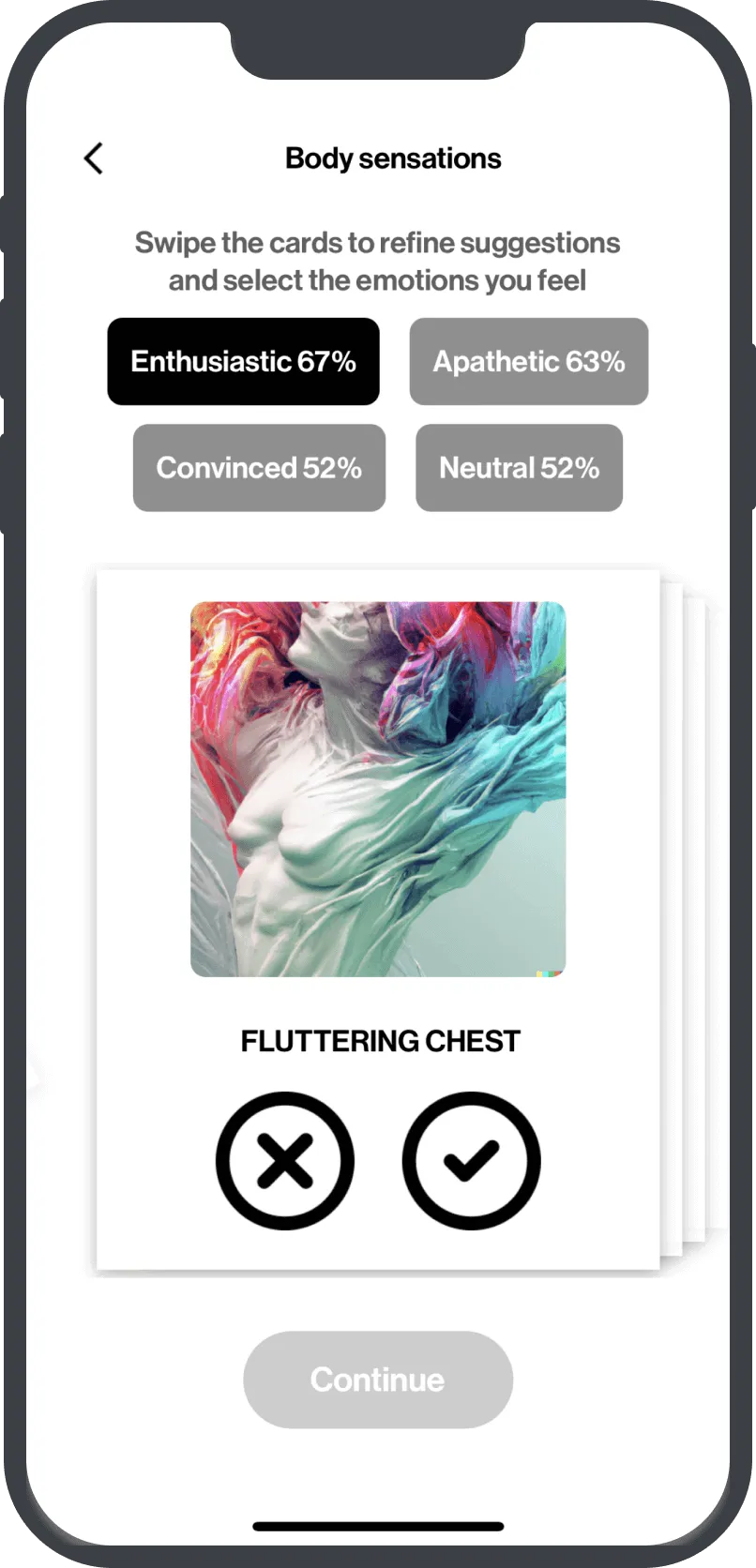
Once you feel more here, check what is going on in your body and try a rough word for it. “Tense,” “heavy,” “on edge,” or “flat” are good enough. Body awareness is a natural bridge between the two. In imaging studies of depersonalization, damped-down feelings went with lower activity in the insula, a brain area involved in sensing your body and creating feelings, and improvement went with more activity there.[7] The guide to interoception has more ways to practice reading body signals.
Go in small doses
As dissociation eases, feelings that were held back can arrive all at once. People often describe grief, fear, or anger that is hard to bear at first. That can be a sign of progress, and it is also a reason to go slowly. Work within your window of tolerance, the range where you can feel something without shutting down or panicking. If you start to feel panic, detachment, or overwhelm, stop, ground yourself, and come back to it another time, with support if you need it.
In a discussion about therapy for people who dissociate, one person explained what helped them:
“if you are exposed to ‘small doses’ of being in your body that feel safe over time, you can build ‘tolerance’ and start establishing a sense of connection, so that dissociation feels more like a ‘choice’ rather than ‘an automatic response in which I have no say’.”[18]
A commenter in r/EMDR, replying to someone worried that EMDR wouldn’t work because they dissociate
If you work with a therapist
Tell your therapist both things: that you sometimes feel unreal or far away, and that you often can’t tell what you feel. Early research summarized by the VA’s National Center for PTSD suggests that people with the dissociative subtype of PTSD do better when treatment adds work on unhelpful thoughts and skills training in managing emotions and relationships to exposure work.[15] In an eight-week trauma program, women whose alexithymia improved also showed less dissociation.[4] And a review of treatment studies found that alexithymia is partly changeable with therapy.[19] The trauma guide lists things you can ask your therapist for.
When to Get Help
Talk to a doctor, or a therapist who understands trauma and dissociation, if you often feel unreal or cut off, if you lose time or find memory gaps, if dissociation gets in the way of work, relationships, or staying safe, or if the feelings that come back feel too big to manage. According to the NHS, many people with a dissociative disorder make a full recovery with treatment and support.[6]
If you are thinking about ending your life, or you are not sure you can keep yourself safe, get help now:
- Call your local emergency number if you are in immediate danger.
- In the US, call or text 988, the Suicide and Crisis Lifeline.
- In the UK and Ireland, call Samaritans on 116 123, free at any time.
- Elsewhere, use Find A Helpline to reach a crisis line where you live.
Next Steps
Try one thing from this guide for the next two weeks: a two-minute grounding exercise at a calm moment, or a rough feeling word each evening. If you want to understand alexithymia more broadly, the guide to alexithymia covers what it is and how it changes, and the alexithymia exercises give you more ways to practice naming feelings.
References
Show referencesHide references
- Mind. Understanding dissociation.
- Reyno SM, Simmons M, Kinley J. A meta-analytic study examining the relationship between alexithymia and dissociation in psychiatric and nonclinical populations. Res Psychother. 2020;23(1):439. doi:10.4081/ripppo.2020.439.
- Simeon D, Giesbrecht T, Knutelska M, Smith RJ, Smith LM. Alexithymia, absorption, and cognitive failures in depersonalization disorder: a comparison to posttraumatic stress disorder and healthy volunteers. J Nerv Ment Dis. 2009;197(7):492-498. doi:10.1097/NMD.0b013e3181aaef6b.
- Zorzella KPM, Muller RT, Cribbie RA, Bambrah V, Classen CC. The role of alexithymia in trauma therapy outcomes: examining improvements in PTSD, dissociation, and interpersonal problems. Psychol Trauma. 2020;12(1):20-28. doi:10.1037/tra0000433.
- Reddit, r/Alexithymia. Comment in the discussion “What does dissociation “feel” like to those with alexithymia??”. Individual experience, May 2022.
- NHS. Dissociative disorders.
- Medford N, Sierra M, Stringaris A, Giampietro V, Brammer MJ, David AS. Emotional experience and awareness of self: functional MRI studies of depersonalization disorder. Front Psychol. 2016;7:432. doi:10.3389/fpsyg.2016.00432.
- Reddit, r/Alexithymia. Comment in the discussion “What does dissociation “feel” like to those with alexithymia??”. Individual experience, May 2022.
- Reddit, r/CPTSDNextSteps. Comment in the discussion “emotional dissociation isn’t just numbing or zoning out…”. Individual experience, April 2024.
- Yu BH, Ho J, So SH. Alexithymia in schizophrenia spectrum disorders and dissociative disorders: two meta-analytic reviews. Schizophrenia (Heidelb). 2026;12(1):66. doi:10.1038/s41537-026-00765-8.
- Lebovitz JG, Park S. Depersonalization, emotion embodiment, and alexithymia in the general population. Psychopathology. 2026;59(5):303-313. doi:10.1159/000553161.
- Bruno S, Tacchino C, Anconetani G, Velotti P. Unravelling the associations between dissociation and emotion (dys)regulation: a multidimensional meta-analytic review. J Affect Disord. 2025;380:808-824. doi:10.1016/j.jad.2025.03.158.
- Powers A, Cross D, Fani N, Bradley B. PTSD, emotion dysregulation, and dissociative symptoms in a highly traumatized sample. J Psychiatr Res. 2015;61:174-179. doi:10.1016/j.jpsychires.2014.12.011.
- Lanius RA, Vermetten E, Loewenstein RJ, Brand B, Schmahl C, Bremner JD, Spiegel D. Emotion modulation in PTSD: clinical and neurobiological evidence for a dissociative subtype. Am J Psychiatry. 2010;167(6):640-647. doi:10.1176/appi.ajp.2009.09081168.
- U.S. Department of Veterans Affairs, National Center for PTSD. Dissociative subtype of PTSD.
- Mind. How to cope with dissociation and dissociative disorders.
- Reddit, r/CPTSD. Comment in the discussion “What can I do to stop dissociating 24/7?”. Individual experience, June 2023.
- Reddit, r/EMDR. Comment in the discussion “How will EMDR be useful if I can’t feel my emotions and dissociate all of the time?”. Individual experience, September 2024.
- Cameron K, Ogrodniczuk J, Hadjipavlou G. Changes in alexithymia following psychological intervention: a review. Harv Rev Psychiatry. 2014;22(3):162-178. doi:10.1097/HRP.0000000000000036.