
Borderline personality disorder (BPD) is known for intense emotions. Yet many people with BPD say that when a feeling hits, they can’t tell what it is. It is just huge, or bad, or everything at once. Having trouble identifying and describing your own feelings has a name, alexithymia, and research shows it is common in BPD.[1] This guide explains why big feelings can be hard to name, how naming works with DBT and other therapy, and how to practice when emotions run high. If you are in crisis right now, go straight to If You Feel Unsafe.
How Alexithymia and BPD Are Connected
Alexithymia isn’t a diagnosis per se, and it isn’t one of the criteria for BPD. It is a trait and a transdiagnostic factor that ranges from mild to strong, and it has three parts: difficulty identifying feelings, difficulty describing them, and a habit of focusing on outside events rather than inner experience. Many people with BPD score high on it, though not everyone does.
A 2017 meta-analysis pulled together 39 studies and found a moderate link between lower emotional awareness and BPD traits. The strongest links were with difficulty identifying and describing feelings, while the outward-focused thinking style was less related.[1] A 2025 study of 1,019 people treated in Norwegian personality disorder services found the same pattern. More than half (53%) scored high on alexithymia, and difficulty identifying feelings was the part most strongly tied to BPD.[2]
Where does it come from? In a study of 153 outpatients with BPD, alexithymia sat between insecure attachment and BPD symptoms, so early relationships may shape both how strongly feelings hit and how well they get recognized and labeled.[5] If no one helped you put words to feelings growing up, it might be why it is difficult for you now, but you can still learn to do it even as an adult.
Identity, emptiness, and not knowing what you want
A 2026 study of 478 psychiatric outpatients looked at which BPD criteria go with alexithymia. In people with BPD, the strongest link was with identity disturbance, an unstable sense of who you are. In people without a personality disorder, alexithymia went with chronic feelings of emptiness.[6] Those links make sense. If you can’t tell what you feel, it is harder to know what you want, what you care about, or who you are from one week to the next. Emotions are what people use as an inner compass. So some of what feels like emptiness may be feelings that haven’t found words yet.
Intense Feelings Without Names
It can sound like a contradiction. How can someone feel so much and still not know what they feel? But intensity and clarity are different things. A feeling can be very strong and still hard to identify, especially when several arrive at once. In a Reddit thread about BPD and alexithymia, one person described it like this:
“It’s one thing when you know how you’re feeling and can kind of force yourself to “ride it out”, or remind yourself that what you’re feeling is just a feeling and it will pass- but when you can’t even identify how you feel or you’re overwhelmed by what seems like conflicting emotions all at once, how do you move on? In moments like those I feel myself go emotionally limp.”[7]
A commenter in r/BPD, replying to a question about having BPD and alexithymia
Naming helps with exactly that problem. In a brain imaging study, people who put a word to an upsetting picture showed less activity in the amygdala, a brain area involved in alarm and threat, than when they processed the picture in other ways.[3] And in BPD research, difficulty identifying feelings is closely tied to emotional dysregulation and acting on impulse.[8] So a word gives you something to work with. “I’m ashamed” or “I’m scared they’ll leave” points to a next step in a way that “this is unbearable” does not.
When your body knows first
Often the body registers a feeling before the mind can name it. A racing heart, a knot in the stomach, or heat in the face can arrive within seconds. One person in a Reddit thread about feeling emotions physically put it simply:
“Yes. My therapist will ask me where I feel it and if I can identify the emotion… usually I can’t identify the emotions but I feel it physically more.”[9]
A commenter in r/BPD, answering whether others feel their emotions almost physically
The link between body and feeling seems to work differently in BPD. A 2015 study measured how strongly the brain responds to a person’s own heartbeat. People with BPD showed weaker responses than people without BPD, and weaker responses went with more emotional dysregulation. People whose BPD was in remission fell in between, and the authors recommended building body awareness into BPD therapy.[10] So body signals are a good place to start naming, as clues to check against what just happened.
To learn more about how body sensations connect to emotions, see our Interoception and Emotions guide.
Is It BPD, Alexithymia, or Both?
Alexithymia and BPD overlap, but they are different things. Some people with BPD say they are very aware of their feelings, while others recognize themselves in every description of alexithymia. Alexithymia also shows up in autism, depression, and after trauma, so trouble naming feelings on its own doesn’t point to any one diagnosis.
Some people who were diagnosed with BPD later feel that alexithymia, autism, or trauma explains their experience better. One person who had received a BPD diagnosis wrote about how their trouble knowing what they felt had been read:
“I think this has all been misinterpreted as lacking a sense of self. In reality I don’t lack a sense of self I just don’t always know what I want/ need.”[11]
A post in r/AutisticWithADHD about alexithymia and a BPD diagnosis
If that rings true for you, raise it with a mental health professional you trust. A diagnosis needs a proper assessment, and having words for what you feel will make that conversation easier either way. The alexithymia and autism guide explains how to tell alexithymia, autism, and overload apart, and the trauma and PTSD guide covers numbness and dissociation.
How Naming Feelings Works With DBT and Therapy
Dialectical behavior therapy (DBT) was designed specifically for BPD. It is built around validation, which means accepting that your emotions are valid, real, and acceptable, and it usually involves weekly individual and group sessions.[4] Therapy helps many people with BPD. A Cochrane review of 75 trials found that psychotherapy reduced the severity of BPD symptoms compared with usual care, and DBT and mentalization-based treatment were the most studied.[12] Over time, many people with BPD overcome their symptoms and recover.[4]
Alexithymia can change in treatment too. In the Norwegian study, 63% of people who started with high alexithymia scores improved, and 19% moved out of the high range altogether.[2] But it can also get in the way. A 2024 review suggested that alexithymia can make it harder to engage emotionally with therapy.[8] Naming practice helps here. If you arrive at a session with even a rough word for what happened, you and your therapist have more to work with. Many DBT skills, such as checking the facts or acting opposite to an urge, start with knowing which emotion you are dealing with.
And naming is a skill you can build on your own, between sessions or without therapy at all. The steps below are practical ways to start.
Practicing Naming When Feelings Run High
Wait until the wave drops
Hunting for the exact word at the peak of a feeling rarely works, and pushing can make the feeling bigger. First do what brings the intensity down: a DBT skill if you have one, cold water on your face, slow breathing, or stepping away for a few minutes. Then, once the wave has dropped even a little, come back and ask what it was.
Start broad, then narrow
A big feelings chart can make things harder. One person described seeing a DBT feelings chart for the first time:
“First time I saw a feeling chart I felt hopeful for 2 seconds until I realized there were now too many options and I didn’t know what to choose. I feel like I’m guessing about things I should know, like “…I feel sad? Right? No? I feel disgusted? Maybe? Angry?..” and it goes on and on”[13]
A commenter in r/BPD, replying in the same discussion
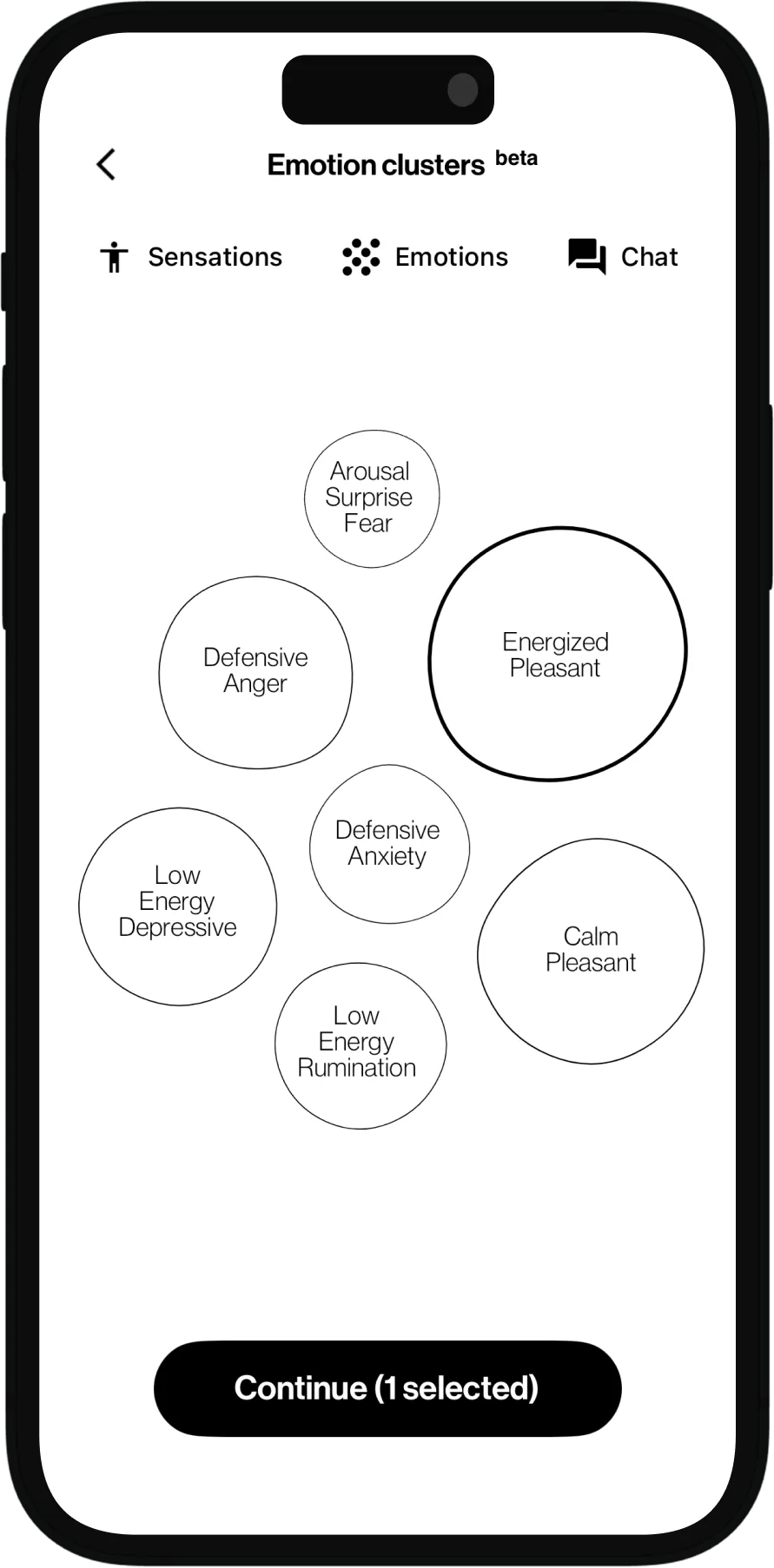
So start with fewer choices. First ask whether the feeling is pleasant or unpleasant, and whether the intensity is high or low. Then pick from a handful of broad families, such as angry, afraid, sad, ashamed, or hurt. Only then try a more precise word. If two feelings both seem true, keep both, because naming each part of a mixed feeling tells you more than forcing a single answer. Look under the first feeling as well. Anger often shows up first, and hurt or fear can sit underneath it. The alexithymia exercises walk through this process step by step.
Keep catch-up notes for therapy
Many people can only describe a feeling while they are in it. By the time a therapy session comes round, the detail is gone:
“I can’t even describe it unless I’m in that exact state at the moment. But that’s where therapy fails cause I don’t feel it then…”[14]
A commenter in r/BPD, in a discussion about not being able to describe feelings out loud
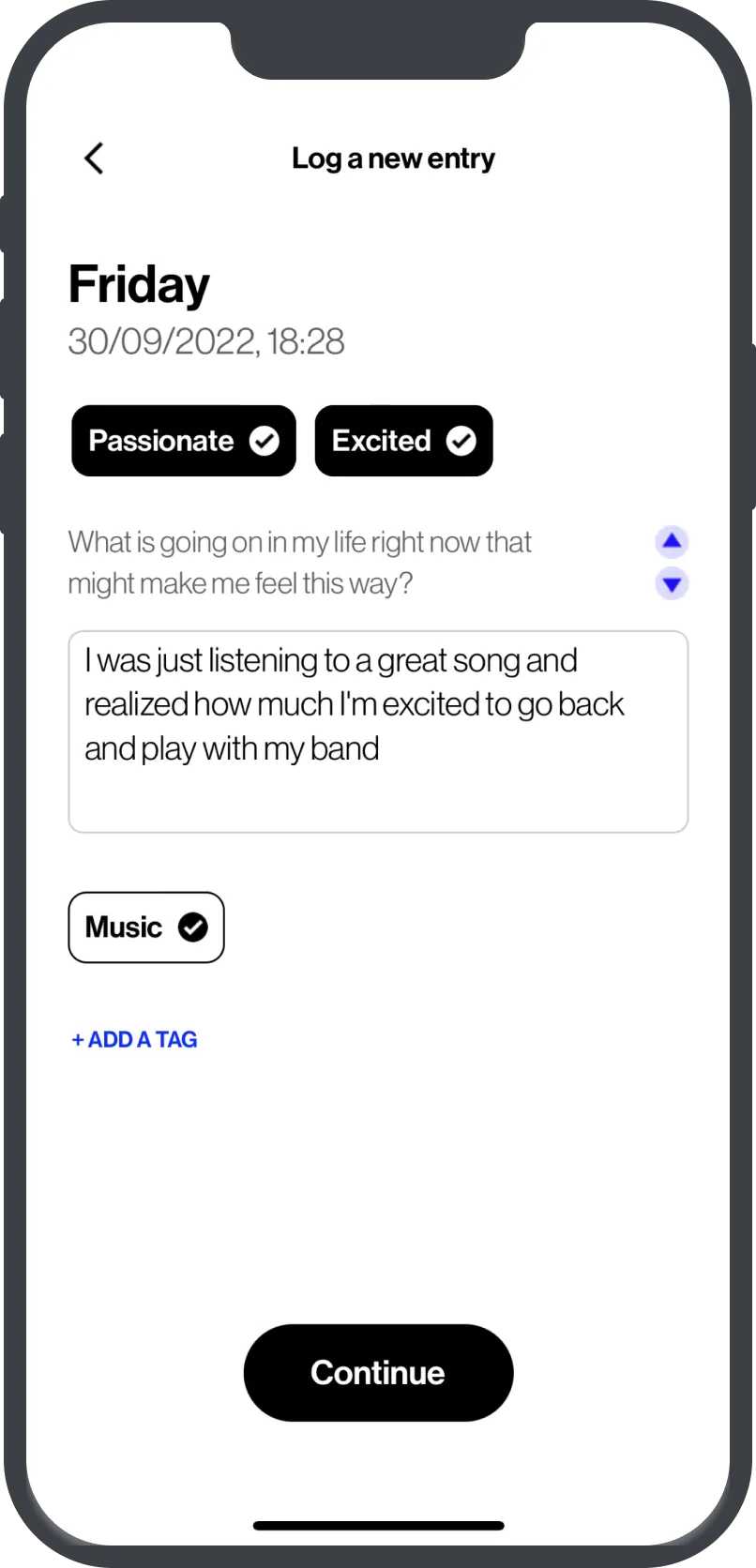
A short note soon after a wave keeps that detail. Write what happened, what your body did, what you wanted to do, and your best guess at the feeling, even if the guess is rough. Then bring the notes to therapy. Over time, they show patterns too, such as which situations set off which feelings and how long each one lasts.
Go gently
As you get better at naming, feelings can seem stronger for a while, because you notice more of them. That discomfort can be a sign of progress. Work within your window of tolerance, the range where you can feel something without being overwhelmed. If practice brings on panic, numbness, or urges to hurt yourself, stop and reach out for support.
If You Feel Unsafe
Alexithymia is linked with self-harm in BPD. In one study included in a 2024 review, 71% of people with BPD scored as alexithymic, and higher scores went with current self-injury.[8] When a feeling has no name, it can be harder to find another way through it. You don’t have to manage those moments alone.
- If you have hurt yourself or feel you might, call your local emergency number or go to an emergency department. In the UK, call 999 or go to A&E.[15]
- In the US, call or text 988 to reach the 988 Suicide & Crisis Lifeline, any time of day or night.[16]
- In the UK, call Samaritans free on 116 123.[15]
- If you have a crisis plan or an out-of-hours number from your DBT team, use it.[4]
- Tell someone you trust what is going on.[15]
If you are outside the US or UK, you can use Find A Helpline to find a crisis line near you.
Next Steps
- Read the alexithymia guide for the full picture of what alexithymia is.
- Take the alexithymia test to get a sense of where you are starting from.
- Try the alexithymia exercises for a step-by-step way to name a feeling.
- Read about alexithymia treatment and the therapies that build emotional awareness.
- If big feelings show up most with a partner, see the alexithymia and relationships guide.
References
Show referencesHide references
- Derks YPMJ, Westerhof GJ, Bohlmeijer ET. A meta-analysis on the association between emotional awareness and borderline personality pathology. J Pers Disord. 2017;31(3):362-384. doi:10.1521/pedi_2016_30_257.
- Sayar H, Wilberg T, Eikenæs IU, et al. Improvement of alexithymia in patients treated in mental health services for personality disorders: a longitudinal, observational study. Front Psychiatry. 2025;16:1558654. doi:10.3389/fpsyt.2025.1558654.
- Lieberman MD, Eisenberger NI, Crockett MJ, et al. Putting feelings into words: affect labeling disrupts amygdala activity in response to affective stimuli. Psychol Sci. 2007;18(5):421-428. doi:10.1111/j.1467-9280.2007.01916.x.
- NHS. Treatment: borderline personality disorder.
- Khosravi M. The mediating role of alexithymia in the association between attachment styles and borderline personality symptomatology. Health Psychol Res. 2020;8(2):8894. doi:10.4081/hpr.2020.8894.
- Modasi J, New AS, McClure MM, et al. Associations between alexithymia and borderline personality criteria in personality disorders. Personal Disord. 2026;17(1):73-82. doi:10.1037/per0000744.
- Reddit, r/BPD. Comment in the discussion “Anyone else bpd and alexithymic?”. Individual experience, October 2019.
- Chaim CH, Almeida TM, de Vries Albertin P, Santana GL, Siu ER, Andrade LH. The implication of alexithymia in personality disorders: a systematic review. BMC Psychiatry. 2024;24(1):647. doi:10.1186/s12888-024-06083-6.
- Reddit, r/BPD. Comment in the discussion “Do you feel your emotions almost physically?”. Individual experience, July 2024.
- Müller LE, Schulz A, Andermann M, et al. Cortical representation of afferent bodily signals in borderline personality disorder: neural correlates and relationship to emotional dysregulation. JAMA Psychiatry. 2015;72(11):1077-1086. doi:10.1001/jamapsychiatry.2015.1252.
- Reddit, r/AutisticWithADHD. Post “Alexithymia and BPD misdiagnosis”. Individual experience, June 2026.
- Storebø OJ, Stoffers-Winterling JM, Völlm BA, et al. Psychological therapies for people with borderline personality disorder. Cochrane Database Syst Rev. 2020;5:CD012955. doi:10.1002/14651858.CD012955.pub2.
- Reddit, r/BPD. Comment in the discussion “Anyone else bpd and alexithymic?”. Individual experience, October 2019.
- Reddit, r/BPD. Comment in the discussion “does anyone else have the inability to describe their emotions and how they feel like verbally?”. Individual experience, May 2023.
- NHS. Help for suicidal thoughts.
- 988 Suicide & Crisis Lifeline. 988 Lifeline.