
Alexithymia and anxiety often show up together. Studies report that between 12.5% and 58% of people with an anxiety disorder also have alexithymia, depending on the type of anxiety and how it was measured.[1] And the link runs both ways in daily life. When you find it hard to tell what you feel, a racing heart or a tight stomach can read as anxiety whether you are nervous, excited, angry, or just hungry. Other people notice the opposite: their body is clearly on edge while their mind feels calm. You can learn to tell these states apart, and the steps below are a good place to start.
How Alexithymia and Anxiety Are Connected
Alexithymia means having trouble identifying and describing your own feelings. It isn’t an anxiety disorder or a diagnosis, but researchers keep finding it alongside anxiety. In generalized anxiety disorder (GAD), where worry is hard to control and lasts for months, alexithymia is common, and clinicians who work with it say it can make treatment harder.[1]
Part of the reason is simple. Anxiety is easier to calm down when you know it’s anxiety and what it’s about. When you can’t tell, the body’s alarm can keep running in the background, and every vague feeling of tension gets added to it.
A 2026 review pooled 69 studies of adults with depression, anxiety disorders, or eating disorders, and the anxiety studies showed the same pattern as the others. People with an anxiety disorder, most often panic disorder, had clearly higher alexithymia scores than comparison groups without these conditions. The difference came mainly from trouble identifying and describing feelings rather than from a habit of focusing on the outside world. And the more severe someone’s anxiety symptoms were, the more alexithymia they tended to have.[2] The review can’t show which comes first, though, and few of its studies looked at generalized or social anxiety.
Why alexithymia may raise the risk of anxiety
Researchers widely see alexithymia as a risk factor for anxiety and depression symptoms, and one likely reason is emotion regulation: how you notice, make sense of, and manage what you feel. Knowing which emotion you have helps you decide whether to respond and how. Fear usually signals a possible threat, anger that something crossed a line, and sadness a loss that may call for comfort or rest. But if fear, anger, and sadness all register as the same tense discomfort, it is harder to choose a response that helps, so the feeling can drag on or keep coming back.
David Preece and colleagues tested this idea in an online survey of 501 US adults. People with more alexithymia reported more symptoms of depression, anxiety, and stress, and more difficulty regulating their emotions. When the researchers looked at all three together, alexithymia was linked to symptoms through those regulation difficulties, with no separate direct link.[3] Everyone answered questionnaires at a single point in time, so the survey supports this explanation without proving it, and it can’t predict who will develop an anxiety disorder. Plenty of people with alexithymia never do, and anxiety has many other causes. Regulating emotions is something you can practice, though, and the steps later in this guide start with working out what you feel.
Panic and fear of body sensations
A review of 61 studies on how people with panic disorder handle emotions found high levels of alexithymia, more pushing feelings away, and more trouble rethinking a situation to feel differently about it.[4] In an Italian study, 139 outpatients with panic disorder had more alexithymia than healthy volunteers, and they were also more afraid of anxiety’s body sensations, such as a racing heart or breathlessness.[5] The authors suggested that being good at reading emotions and body sensations may help protect people at risk of panic.[5]
Social anxiety
In a 2026 study, adults rated how strongly they felt eight pleasant and eight unpleasant emotions every day for three weeks. People with social anxiety disorder or panic disorder were less able to tell their unpleasant emotions apart than people without either condition.[6] So on a hard day, nervous, ashamed, irritated, and sad may all blur into one general feeling of being anxious or bad.
To see which part of emotional awareness is hardest for you, you can take a short self-check.
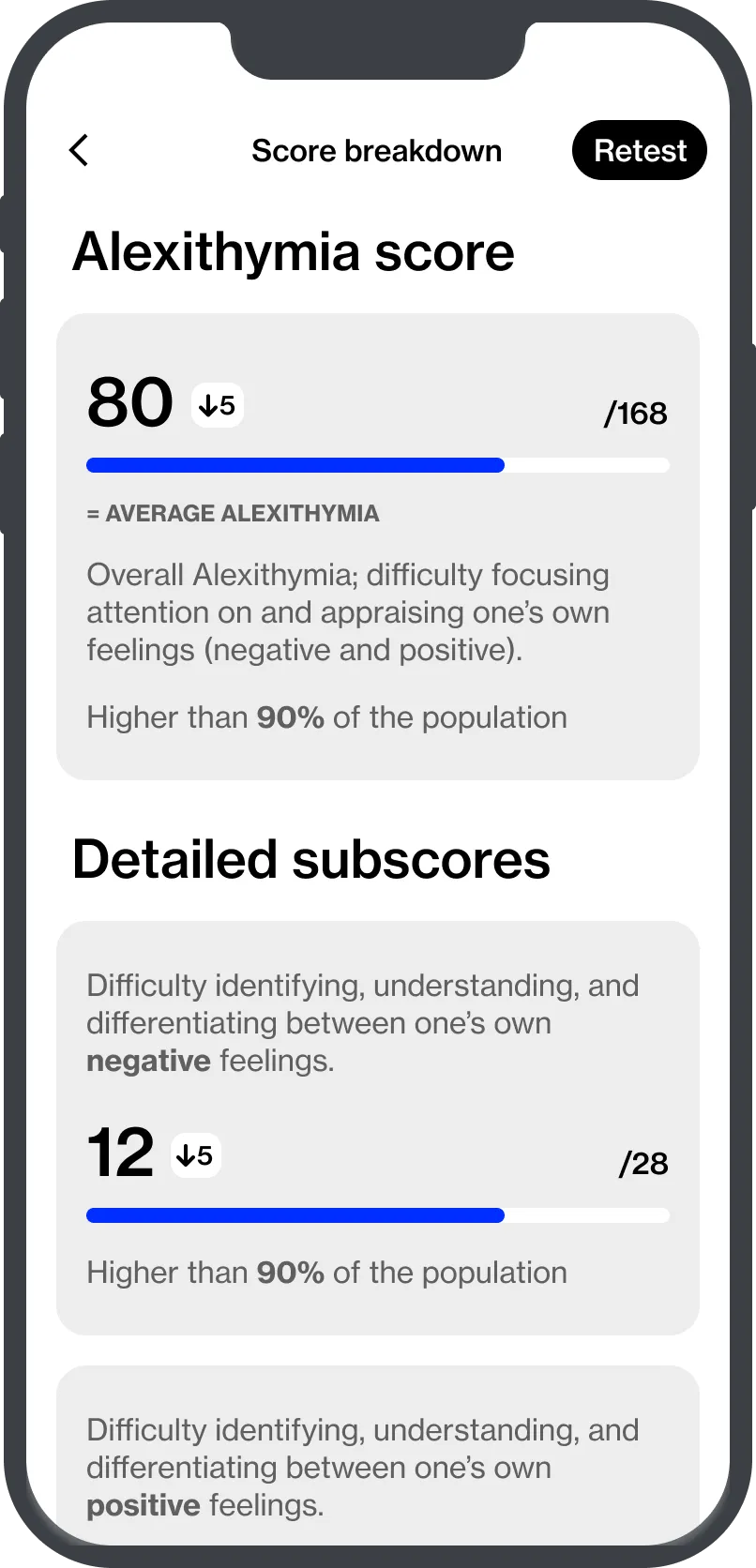
Why So Many Feelings Read as Anxiety
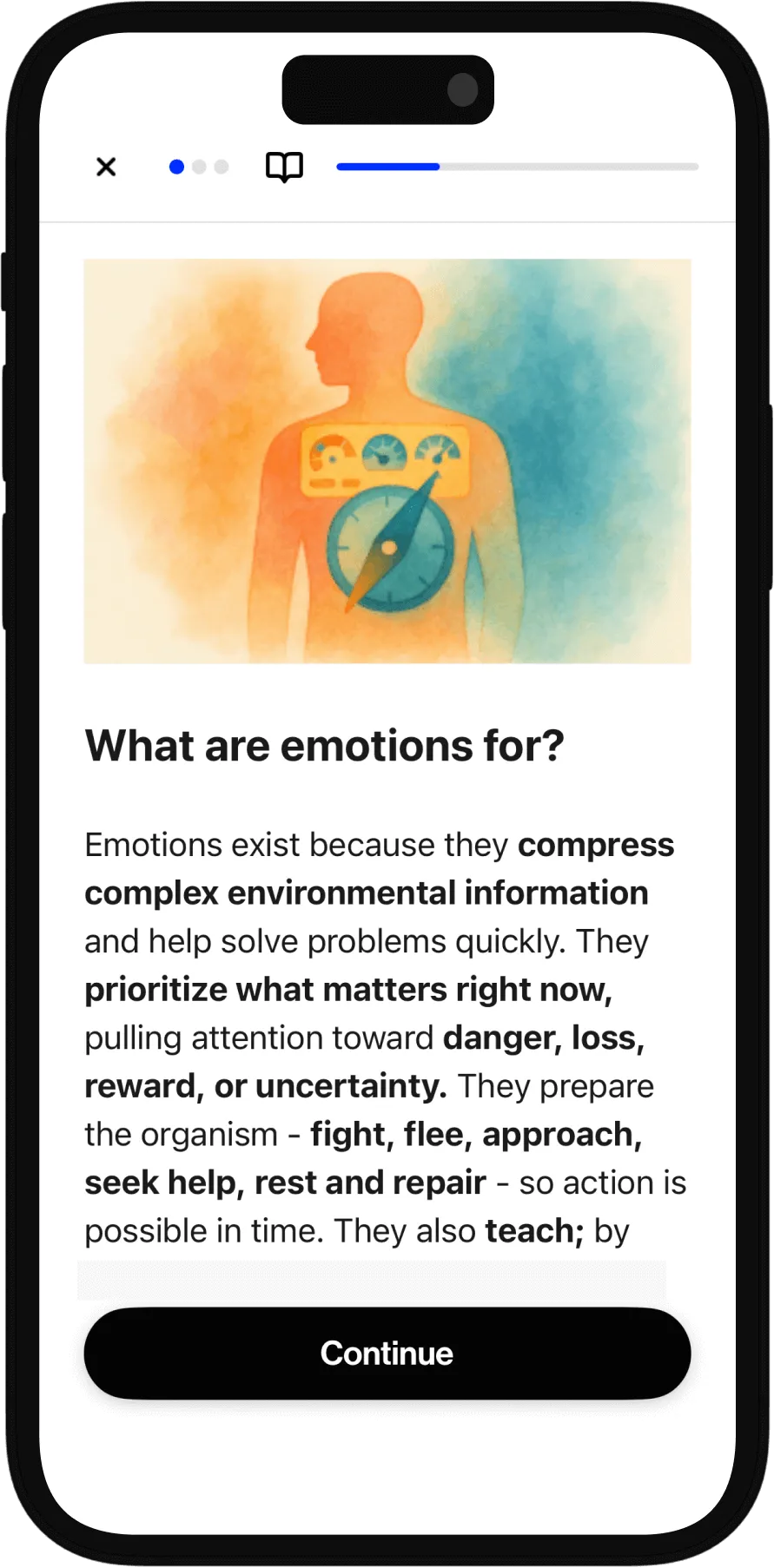
Many feelings start with the same body changes. Your heart speeds up, your breathing gets faster, your muscles tighten, or your stomach flips. That happens before a job interview, before a first date, during an argument, and after skipping lunch. What turns these changes into a particular feeling is mostly context: what is happening, what you expect, and what you want.
Alexithymia makes that step harder. In a study of about 200 adults, people with more alexithymia reported more trouble reading body states such as hunger and tiredness, and they saw their emotional and non-emotional states as more alike.[7] So when the signals are unclear, anxiety often becomes the default reading, because it is the loudest and most familiar one. One commenter described what happens to their excitement:
“I can’t tell you how many times I’ve been excited in a positive way but then the bodily sensations messed with my perception of it and it just morphed into anxiety”[8]
A commenter in r/autism, in a discussion about telling excitement and anxiety apart
The reading you choose can change how the moment goes, too. In a lab experiment, hungry people felt more negative emotions and judged a researcher more harshly, but only when they weren’t paying attention to their own feelings.[9] So stopping to ask what you feel, and why, may take some of the edge off.
| Possibility | What often goes with it | A question to ask yourself |
|---|---|---|
| Anxiety or fear | Something bad might happen, and you want to avoid it or get away | What am I afraid will happen? |
| Excitement | Something you want is coming, and you want to move toward it | Would I be disappointed if this were cancelled? |
| Anger or frustration | Something crossed a line or got in your way, and you want to push back | Did something feel unfair or blocked? |
| Hunger | Shakiness, irritability, or an empty or queasy stomach, several hours after eating | When did I last eat a proper meal? |
| Tiredness or poor sleep | Feeling wired or on edge, a short temper, nausea in the morning | How did I sleep last night? |
| Caffeine, illness, or medication | A racing heart or jitters that appear without any situation to explain them | Have I had coffee, felt unwell, or changed a medication? |
Several of these can be true at once. You can be hungry and nervous before a presentation, and each one makes the other feel stronger. The interoception guide covers body signals in more detail.
When Anxiety Hides in the Body
For some people with alexithymia, the problem runs the other way. Their body shows every sign of anxiety, but they don’t feel anxious at all.
”I’m fairly certain I am terrified of driving my car. I grip the wheel with a death grip. The toes on my left foot are clenched in my shoes. My arms are rigid in front of me. But I’ll just be driving and listening to music and enjoying the wind or whatever while my body spirals and I don’t even really notice.”[10]
A commenter in r/Alexithymia, in a discussion about alexithymia masking anxiety
Others in the same discussions describe a need to pee before stressful events, clenched toes, flapping hands, or panic attacks with a high heart rate while feeling emotionally calm. These clues are worth collecting, because once you know your own signs, you can catch anxiety earlier. But a body signal alone doesn’t always settle what the feeling is:
“Like right now I have a tight chest. No anxious thoughts, which is how I normally measure anxiety with the tight chest.”[11]
A commenter in r/Alexithymia, in a discussion about how people feel emotions
That commenter combines the body signal with what their thoughts are doing, which is a good habit. Watching your body anxiously can backfire, though. In two questionnaire studies, people who paid attention to their body in worried ways had more anxiety, and alexithymia and difficulty tolerating uncertainty helped explain that link.[12] So treat body clues as information to check against the situation, not as an alarm in themselves.
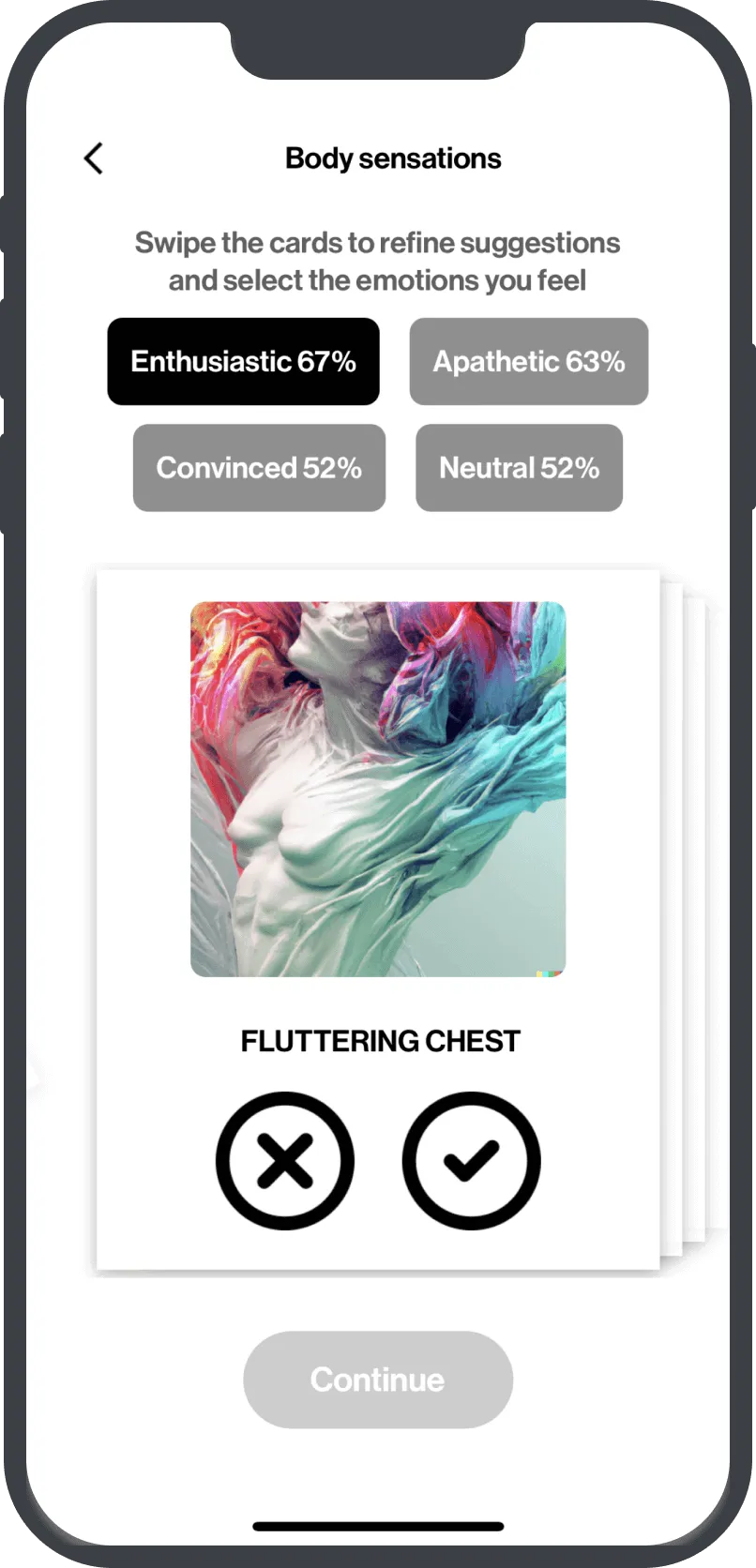
When Body Symptoms Feel Like an Emergency
When you can’t tell what you feel, the physical side of an emotion can arrive with nothing to explain it: a pounding heart, a tight chest, dizziness, or a churning stomach. Then it is easy to read those sensations as a sign that something is wrong with your body, and being scared of them can make them stronger. The NHS describes how panic disorder can leave people living “in fear of fear”, which adds to the panic and can bring on more attacks.[13]
Researchers call this fear of anxious sensations anxiety sensitivity, and it often comes with alexithymia. In a study of 238 students, those who had more trouble identifying their feelings were also more afraid of anxiety symptoms, even after accounting for how anxious they generally were.[14] The two may feed each other. One idea is that pushing away anxiety and the body sensations that come with it makes feelings harder to identify and describe, and the link may run the other way as well, though researchers haven’t yet shown which comes first.[2] People with more alexithymia also report more physical symptoms in general.[15] The symptoms are real either way, and many have physical causes that need their own care.
Frightening sensations can also bring people to the emergency department. In one Montreal emergency department, about a quarter of 441 people who came in with chest pain met the criteria for panic disorder, and 44% of those also had a history of heart disease.[16] So panic and a physical problem can happen together. Call your local emergency number for chest pain that is sudden, severe, or spreads to your arm, jaw, neck, or back, and for severe difficulty breathing. If you faint, see a doctor, and get emergency help if the fainting comes with chest pain or a pounding heart.[17][18][19] Do this even if you have had panic attacks before, rather than assuming it’s anxiety. Once a doctor has checked you, the steps below can help you work out what familiar sensations mean.
Worry as a Stand-In for Feelings
Worry can also take the place of feelings. Researchers studying GAD found that worry is mostly thinking in words, and they suggested it may help people avoid the images and body sensations that come with strong emotions.[20] In a related study, students with GAD symptoms were more likely than others to say that one reason they worry is to distract themselves from more emotional topics.[21]
So if you spend hours planning for every way something could go wrong, it can help to ask what feeling the planning keeps at a distance. Sometimes the answer is sadness, loneliness, or anger about the situation itself.
How to Tell Anxiety Apart From Other Feelings
You don’t need to read your body perfectly to work out what you feel. These steps use the body, the situation, and what you want to do, and they get faster with practice.
Check your body’s basics first
Before you read a signal as an emotion, rule out the simple causes. Have you eaten, slept, had water, moved, or had a lot of caffeine? This sounds obvious, but it catches more than people expect:
“Dull anxiety feels exactly like intense hunger for me. I leaned this one the hard way, when I spent two weeks trying to figure out why I was so fricking anxious, when what had happened was I had lost my safe food and hadn’t eaten proper in two weeks.”[22]
A commenter in r/Alexithymia, in a discussion about how people feel anxiety
If you meet the basic need and the feeling goes away, you have your answer. If it stays, move on to the next questions.
Ask what the feeling is about
Feelings usually point at something. Anxiety points at a possible threat or an outcome you can’t control. Excitement points at something you want. Anger points at something that felt unfair or got in your way. Ask yourself what was happening just before you noticed the feeling, and what you have been thinking about since. If the answer is “something good is coming”, the racing heart may actually be excitement.
Notice what you want to do
Urges are often easier to spot than feelings. If you want to escape, cancel, or check things again and again, that leans toward anxiety. If you want to lean in, talk about it, or make it happen sooner, that leans toward excitement. And if you want to argue or slam a door, anger is a good guess.
When the situation is something you want, you can also choose the excited reading on purpose. In experiments with singing karaoke, public speaking, and math tests, people who said “I am excited” felt more excited and performed better than people who tried to calm down.[23] Try it before something you are looking forward to but feel jittery about.
Name it, even roughly
Putting a feeling into words can calm the body’s alarm. In a brain-imaging study, naming the emotion in an upsetting picture reduced activity in brain areas involved in emotional reactions.[24] And in a study with people afraid of spiders, those who described their feelings during exposure to a spider showed less physical arousal a week later, even though they didn’t report feeling less afraid. People who used more anxiety and fear words improved more as well.[25]
The word doesn’t have to be perfect. “Nervous, maybe a bit excited” or “on edge, not sure why” both count. Write down two or three candidates and the situation, and come back later to see which one held up. Over a few weeks, you will start to see which situations bring which feelings.
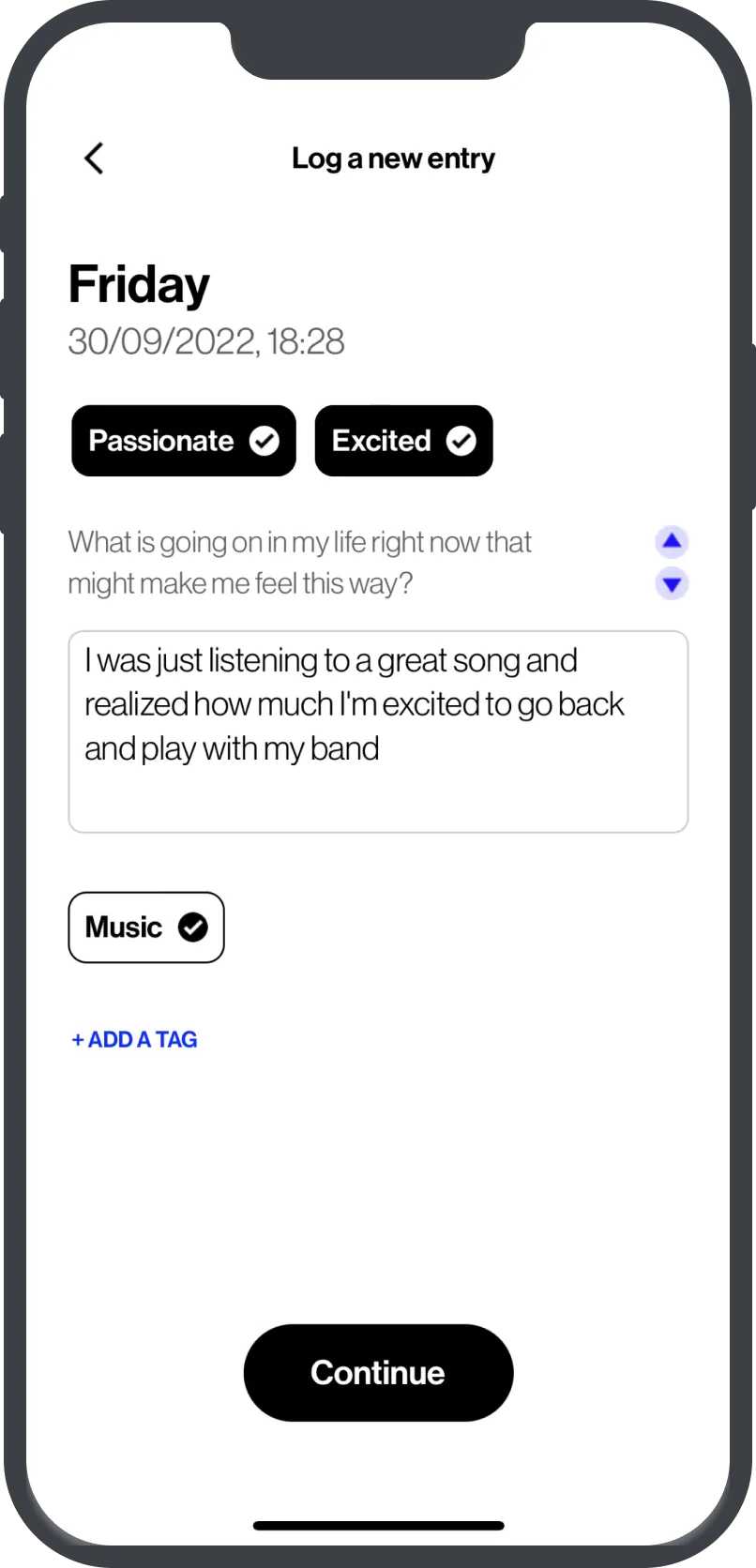
Turn the loudest feeling down first
When anxiety is strong, it can drown out everything else. One commenter, who had worked on their anxiety in therapy for years, described it like this:
“For me, that X is Anxiety. It is the loud noise that drowns everything else out. But the important thing to remember is that there are other emotions at play; they are just drowned out by the volume of the loudest emotion present.”[26]
A commenter in r/Alexithymia, in a discussion about processing emotions
They found that as their anxiety got quieter, the other emotions became easier to hear. So if you can’t tell what you feel under the anxiety, calm the body first with slow breathing, a walk, or something steadying, and then check in again.
Getting Help for Anxiety
Learning to read your feelings helps, but it doesn’t replace treatment for an anxiety disorder. The NHS lists signs of GAD such as feeling restless, irritable, or finding it hard to concentrate, along with trouble sleeping, tiredness, stomach problems, and a noticeable heartbeat. It recommends seeing a GP if you think you might have GAD, and adults in England can also refer themselves to NHS talking therapies.[27] Outside the UK, a family doctor or a licensed therapist is a good first step.
Get physical causes checked too, especially if the anxiety is new. Anxiety that appears for the first time in adulthood can sometimes come from an underlying medical problem, and a doctor can look for it.[28]
Therapy can include emotional awareness directly. In one published case, a woman with GAD had three 50-minute sessions focused on learning emotion words, labelling feelings in daily life, and noticing body sensations. Her alexithymia, anxiety, and depression scores all dropped afterward.[1] It is a single case, but it shows what this kind of work can look like.
What to tell a therapist
Say early on that you often can’t tell what you feel, or that you notice anxiety in your body before your mind. That helps a therapist adjust their questions. You can ask for:
- A list of feeling words to choose from when “anxious” is the only one that comes to mind.
- Ratings instead of words, such as “How strong is this from 0 to 10?”
- Help working out what a feeling is about, from the situation and what you wanted to do.
- Time to answer, or the chance to answer at the next session.
The alexithymia treatment guide covers therapies that work on emotional awareness and how to choose a therapist.
Go at a Pace You Can Manage
Paying closer attention to your feelings can bring up more of them at first, and for anxious people, turning inward can sometimes increase anxiety for a while. A review of 83 meditation studies found that about two-thirds reported at least one unwanted effect in some participants, most often anxiety or low mood.[29] So keep practices short and stay within your window of tolerance, the range where you feel some discomfort but still feel in control.
- Stop if you notice panic, feeling detached or unreal, or distress that doesn’t settle, and do something steadying, such as moving, getting outside, or talking to someone you trust.
- If you are working with a therapist, tell them what is happening.
- If you have thoughts of harming yourself, get help right away.
If you are in crisis, contact your local emergency number, or use Find A Helpline to reach a crisis line where you live.
Next Steps
Next time you feel anxious, try one round of the steps above: check the basics, ask what the feeling is about, notice what you want to do, and write down your best guess. After a week, read back your notes and look for one situation where “anxious” turned out to be something else.
- Read the alexithymia guide for the full picture of what alexithymia is.
- Read about interoception and emotions to work with body signals.
- Try the alexithymia exercises for step-by-step ways to identify a feeling.
- See the alexithymia treatment guide if you are looking for therapy.
- If anxiety came after a difficult experience, the trauma and PTSD guide may help.
References
Show referencesHide references
- Wang Y, Cao J, Wei J. Case report: Short-term psychotherapy for alexithymia in a patient with generalized anxiety disorder. Front Psychiatry. 2024;15:1342398. doi:10.3389/fpsyt.2024.1342398.
- Yeung SR, Kiropoulos L, Nguyen CPQ, et al. Is alexithymia a transdiagnostic factor across depressive, anxiety, and eating disorders in adults? A meta-analytic review. Clin Psychol Sci Pract. 2026;33(2):123-145. doi:10.1037/cps0000288.
- Preece DA, Mehta A, Becerra R, et al. Why is alexithymia a risk factor for affective disorder symptoms? The role of emotion regulation. J Affect Disord. 2022;296:337-341. doi:10.1016/j.jad.2021.09.085.
- Oussi A, Hamid K, Bouvet C. Managing emotions in panic disorder: a systematic review of studies related to emotional intelligence, alexithymia, emotion regulation, and coping. J Behav Ther Exp Psychiatry. 2023;79:101835. doi:10.1016/j.jbtep.2023.101835.
- Cucchi M, Cavadini D, Bottelli V, et al. Alexithymia and anxiety sensitivity in populations at high risk for panic disorder. Compr Psychiatry. 2012;53(6):868-874. doi:10.1016/j.comppsych.2012.01.005.
- Oren-Yagoda R, Laps I, Aderka IM. Emotion differentiation in social anxiety disorder: a comparison with panic disorder. J Anxiety Disord. 2026;123:103218. doi:10.1016/j.janxdis.2026.103218.
- Brewer R, Cook R, Bird G. Alexithymia: a general deficit of interoception. R Soc Open Sci. 2016;3(10):150664. doi:10.1098/rsos.150664.
- Reddit, r/autism. Comment in the discussion “Can you tell the difference between excitement and anxiety?”. Individual experience, February 2022.
- MacCormack JK, Lindquist KA. Feeling hangry? When hunger is conceptualized as emotion. Emotion. 2019;19(2):301-319. doi:10.1037/emo0000422.
- Reddit, r/Alexithymia. Comment in the discussion “Has Alexithymia helped mask your anxiety?”. Individual experience, September 2025.
- Reddit, r/Alexithymia. Comment in the discussion “How do non-alexithymic people feel emotions?”. Individual experience, January 2025.
- Kotsaris V, Azevedo RT. From interoception to anxiety and social cognition: the mediating roles of intolerance of uncertainty and alexithymia. Cogn Emot. 2026. doi:10.1080/02699931.2026.2736066.
- NHS. Panic disorder.
- Devine H, Stewart SH, Watt MC. Relations between anxiety sensitivity and dimensions of alexithymia in a young adult sample. J Psychosom Res. 1999;47(2):145-158. doi:10.1016/s0022-3999(99)00033-1.
- De Gucht V, Heiser W. Alexithymia and somatisation: quantitative review of the literature. J Psychosom Res. 2003;54(5):425-434. doi:10.1016/s0022-3999(02)00467-1.
- Fleet RP, Dupuis G, Marchand A, Burelle D, Arsenault A, Beitman BD. Panic disorder in emergency department chest pain patients: prevalence, comorbidity, suicidal ideation, and physician recognition. Am J Med. 1996;101(4):371-380. doi:10.1016/S0002-9343(96)00224-0.
- NHS. Chest pain.
- NHS. Shortness of breath.
- NHS. Fainting.
- Borkovec TD, Inz J. The nature of worry in generalized anxiety disorder: a predominance of thought activity. Behav Res Ther. 1990;28(2):153-158. doi:10.1016/0005-7967(90)90027-g.
- Borkovec TD, Roemer L. Perceived functions of worry among generalized anxiety disorder subjects: distraction from more emotionally distressing topics? J Behav Ther Exp Psychiatry. 1995;26(1):25-30. doi:10.1016/0005-7916(94)00064-s.
- Reddit, r/Alexithymia. Comment in the discussion “How do you feel anxiety?”. Individual experience, September 2025.
- Brooks AW. Get excited: reappraising pre-performance anxiety as excitement. J Exp Psychol Gen. 2014;143(3):1144-1158. doi:10.1037/a0035325.
- Lieberman MD, Eisenberger NI, Crockett MJ, Tom SM, Pfeifer JH, Way BM. Putting feelings into words: affect labeling disrupts amygdala activity in response to affective stimuli. Psychol Sci. 2007;18(5):421-428. doi:10.1111/j.1467-9280.2007.01916.x.
- Kircanski K, Lieberman MD, Craske MG. Feelings into words: contributions of language to exposure therapy. Psychol Sci. 2012;23(10):1086-1091. doi:10.1177/0956797612443830.
- Reddit, r/Alexithymia. Comment in the discussion “How do you process emotions with alexithymia?”. Individual experience, November 2021.
- NHS. Generalised anxiety disorder (GAD).
- Cleveland Clinic. Is a hidden medical condition causing your anxiety?
- Farias M, Maraldi E, Wallenkampf KC, Lucchetti G. Adverse events in meditation practices and meditation-based therapies: a systematic review. Acta Psychiatr Scand. 2020. doi:10.1111/acps.13225.