
How ADHD and Alexithymia Overlap
Alexithymia means having a hard time noticing, naming, and describing your own feelings. ADHD is a difference in attention, activity, and impulse control. They are separate things, but they often show up together. In one adult ADHD clinic, 41.5% of patients scored in the alexithymia range.[1] In another group of adults with ADHD, about 22% did, and the group’s average score was close to what researchers see in the wider community.[2]
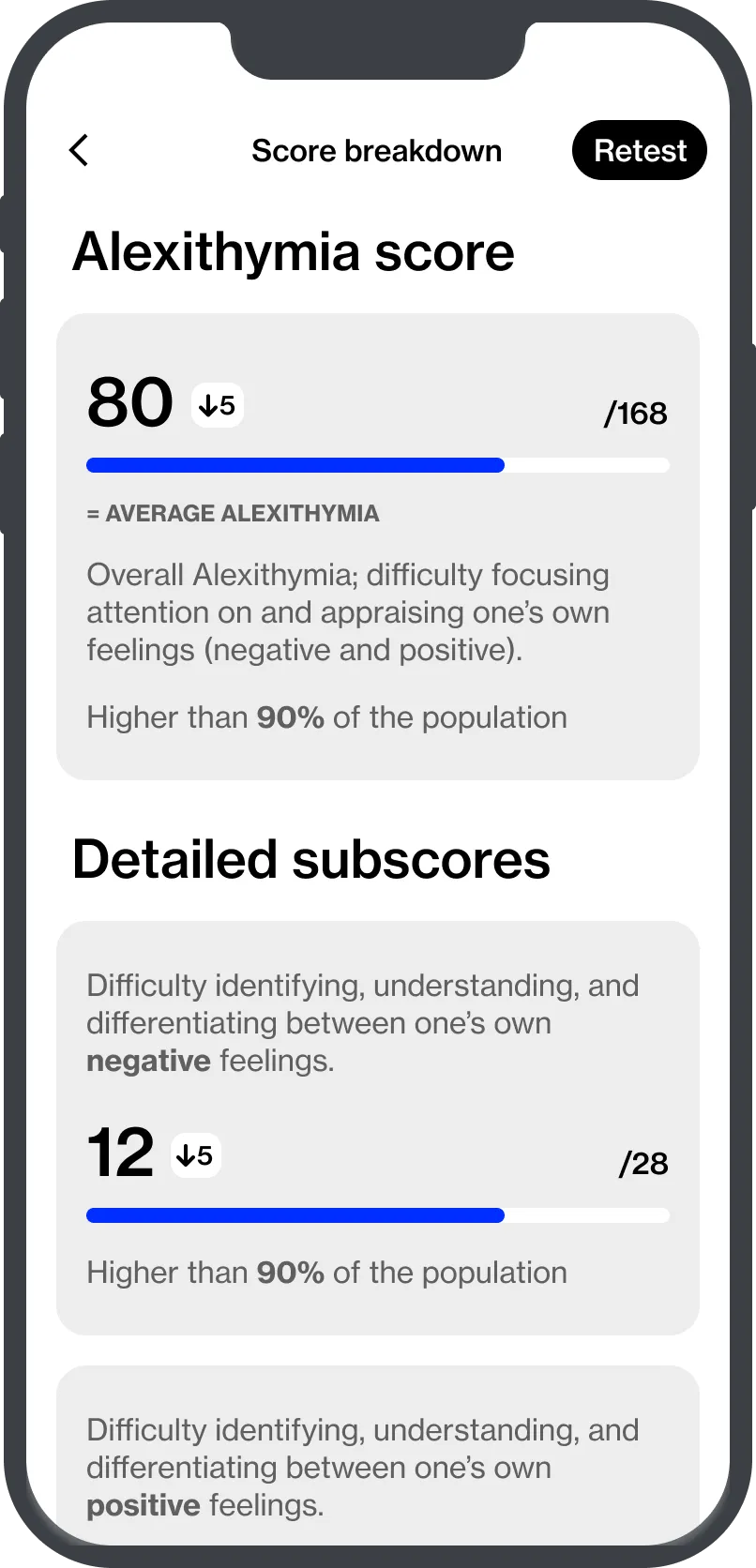
If you are in the first group, you probably know the pattern. Someone asks how you feel and nothing comes up, or you only realize you were upset once it has already boiled over. But this is a skill you can build. It goes best when the practice suits a fast mind that gets pulled away easily: short, frequent, attached to things you already do, and forgiving when you forget.
This guide is written for adults with ADHD, diagnosed or suspected, and for partners and clinicians who want to understand them. Use it to make sense of your own patterns. It can’t diagnose ADHD or anything else, and alexithymia itself is a trait that comes in degrees rather than something you either have or don’t.
Attention, Big Emotions, or Alexithymia?
When feelings seem out of reach, at least four different things can be going on, and each one calls for a different approach. Attention is about where your focus goes. Emotional dysregulation is about how fast and strongly feelings rise and how hard they are to bring back down. Alexithymia is about recognizing and naming the feeling at all. And body-signal blur happens when hunger, tiredness, or noise get mixed up with emotions.
| What it is | What it can feel like | A clue | A first move |
|---|---|---|---|
| ADHD attention: your focus jumps to the next thing before a feeling has time to register | Moving on fast, then a vague sense later that something was off | When you do stop and look, the feeling is easy to name | Build tiny pauses into your day to check-in with yourself |
| Emotional dysregulation: feelings rise fast and strong and take a while to settle | Snapping, sudden tears, or frustration that seems too big for the moment | You know exactly what you feel, there is just a lot of it | Learn ways to slow the surge, and get support if it is wearing you down |
| Alexithymia: trouble identifying and describing your own feelings | Knowing you feel “something” without knowing what, going blank when asked, or working it out hours later | Even with time and quiet, the word won’t come | Start from body sensations and your own words |
| Body-signal blur: hunger, tiredness, pain, or sensory overload passing for an emotion | Irritability, restlessness, or just feeling “off” | It eases after food, rest, or a quieter room | Check the basics before looking for a feeling |
These do, however, often stack on top of each other. For example, not identifying and processing the feeling due to alexithymia can make it brew into a bigger issue and result in emotional dysregulation. In a review of 13 studies comparing adults with ADHD to people without it, emotional lability, meaning moods that shift quickly and strongly, showed the largest difference of the emotional patterns measured,[3] so a lot of what feels like “too much emotion” belongs in the second row. Alexithymia is a separate question. One commenter in an alexithymia discussion described the difference well:
“I do have ADHD, but for me, it’s not like I was too distracted to be introspective. It’s more like I know I feel “something”, usually based on physiological signs. Then when I try to figure out what that thing is, it takes forever because I don’t have a vocabulary for emotions. When someone asks how I feel, I describe it as being dropped in an AP Chinese class on oral presentation day after four years of Spanish. I might know a couple words like, “hello” and “horse”, but I don’t actually know how to speak the language.”[5]
A commenter in r/Alexithymia, in a discussion about alexithymia and ADHD
That is the third row. The feeling has been noticed, and what’s missing is the language for it. Like any language, emotional vocabulary grows with use.
How Common Is Alexithymia in ADHD?
The 41.5% figure you may have seen comes from a study of 101 adults with ADHD at one clinic, most of them in their early twenties.[1] A German study of 73 adults with ADHD found a smaller share, about 22%, and noted that the group’s average score “was not much higher than in community samples.”[2] Taken together, somewhere between one in five and two in five adults with ADHD in these clinics scored high for alexithymia. That’s common enough to be worth checking, but it also means most of the adults in these studies didn’t.
Which part of ADHD goes with alexithymia? Probably not the part most people expect. In a pilot study of 50 children with ADHD, difficulty identifying feelings was linked to hyperactivity and impulsivity, and “No significant relationship between alexithymia and inattentiveness symptoms emerged.”[4] In the adult clinic study, impulsiveness predicted alexithymia as well.[1] So the act-first, notice-later side of ADHD may be the more useful place to look.
Why Feelings Arrive Late or All at Once
Many adults with ADHD describe the same sequence. The feeling is there, but it doesn’t register until it’s big, or until someone else points it out.
”It actually fits in nicely with times where I was oblivious to my own behavior until someone else pointed out eg. “Why u so mad, bro?” I-I’m not mad tho? … Wait, yeah, I guess I am. When did that happen??
It’s like the emotions spin out of control because of ADHD, and either ADHD itself or Alexithymia render one oblivious to there even being a problem. But, at least for me, it’s also momentary. I can reflect later on and pick the right word for the feeling for most cases, although it does sometimes require some cognitive sleuthing (how did my body feel in that moment, and what was the context?) as opposed to a more intuitive understanding.”[6]
A commenter in r/Alexithymia, in a discussion about alexithymia and ADHD
Other people’s reactions are useful information here. If someone asks why you’re annoyed and you aren’t sure, you can treat it as a cue to check in with yourself rather than a claim to argue with. And sometimes the feeling comes back hours later, aimed at the wrong thing.
”get mad about some random, insignificant thing that wouldn’t usually bother me, and then realize it’s not actually the random insignificant thing that I am mad about, but about that thing that someone said that rubbed me the wrong way 2 hours ago which I didn’t address there in the moment!!!”[7]
A commenter in r/ADHD, describing how a missed feeling comes back later
That delay is something you can plan around, though. If feelings reliably arrive late, you can set up a way to catch them late, and the practices below include a simple one. Late recognition still counts as well. Each time you trace a flare-up back to its real cause, you add one more example of what that feeling looks like for you, so you can catch it earlier next time.
Body Signals Amid Overload
Some of what feels like an emotion is your body asking for something. Hunger, tiredness, a headache, or a loud room can all come across as irritability or restlessness. And when you’re absorbed in something, it’s easy to miss those signals until they’re loud.
Research on how well people with ADHD read their body’s signals is mixed. A 2025 review found that people who reported more ADHD symptoms, including more emotional dysregulation, tended to have weaker awareness of signals from inside the body, though differences seen in children “may not be maintained to adulthood.”[8] One study of 24 adults with ADHD found their heartbeat sensing “strikingly similar” to that of adults without ADHD.[9] But a 2025 study of people aged 16 to 35 found lower accuracy in those with ADHD, even after accounting for alexithymia, autistic traits, and depression.[10] So it’s worth finding out how well you read your own body rather than assuming either way.
When something feels off, try these checks in order. The whole thing takes less than a minute.
- Basics. When did I last eat, drink water, or move? Am I tired, in pain, or too hot or cold?
- Load. Is it loud, bright, or crowded here? Have I been switching between tasks or people all day?
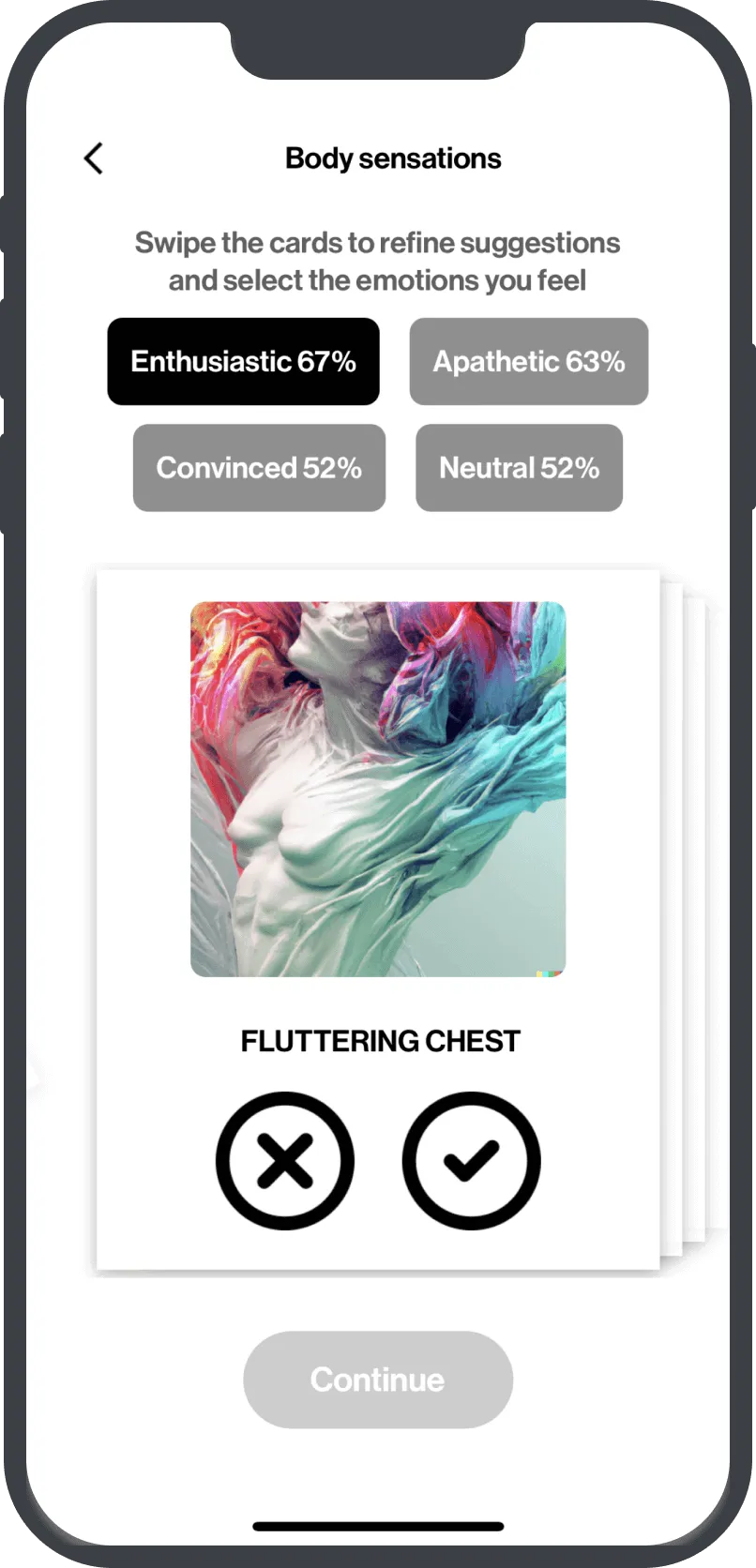
- Body. Where do I feel something? A tight jaw, a hot face, a jiggling leg, or a heavy chest all count.
- Size. How big is it, from 1 to 10?
- Word. Now try a feeling word. A rough one is fine, and you can change it later.
If the first two checks explain it, deal with that first: eat something, step outside, or put in earplugs. If the feeling is still there afterwards, it’s more likely an emotion, and you have already gathered most of what you need to have a better chance naming it.
Low-Effort Practices for a Busy Mind
Advice to “sit with your feelings” or keep a detailed journal can be hard to stick with when your attention moves fast. The practices below are short, attach to things you already do, and are easy to pick up again after a few missed days. They build toward what researchers studying adults with ADHD suggest: learning to identify, accept, communicate, and regulate emotions.[2]
Work within your window of tolerance. As you start noticing more, feelings you used to miss may come through more strongly, and that discomfort can be a sign of progress. If a practice tips you into panic, numbness, or overwhelm, stop, do something that steadies your body, and come back to it more gently later or with support.
Attach a check-in to something you already do
A check-in only helps if it happens, so tie it to something you do every day anyway, such as making coffee, sitting down at your desk, or getting into the car. When that moment comes, ask one question: “What’s my body doing, and how big is it?” Ten seconds is enough. Add a feeling word if one comes, and skip it if it doesn’t. Over a few weeks, these tiny checks give you far more examples to learn from than an occasional long reflection.
Rate the size before you name it
In the middle of a surge, finding the right word may not be possible at all.
”if Im angry or upset over something there’s like a mental limit and if I cross that line all explanation and words leave my head. Like my ability to reason or form thoughts about what is happening completely vanish and I’m just mad with an empty head.”[11]
A commenter in r/ADHD, describing what happens past a certain level of anger
So at that point, ask yourself for a number instead of a word. “This is a 7” takes no vocabulary, and it still tells you what to do: above your own limit, step away and settle first, then name it later. Over time you may notice which numbers still leave room for words. Telling someone “I’m at a 7, give me twenty minutes and I’ll come back to this” is a clear and honest request.
Name it in your own words
Standard emotion words aren’t the only option. A commenter with both ADHD and autism shared a method their therapist taught them:
“I start by doing a “body scan” and noticing how my body feels. I have a notebook where I drew a bunch of (super rough) outlines of the body, and color in where the physical sensation is, using whatever colors, patterns, or shapes I associate with that sensation. Then I give that “body map” a name. It doesn’t have to be a typical emotion word- for example, one of mine is called “I did the thing and it went well.” That one feels like a yellow glow in my face and chest. Now whenever I’m having trouble identifying how I’m feeling, I check my notebook (after a while I was able to do this in my head). If nothing matches, I make a new “body map” for it.”[12]
A commenter in r/AutisticWithADHD, describing a method from their therapist
You don’t need a notebook of body outlines to try this. Next time you notice a strong sensation, give it a short name of your own, such as “Sunday dread” or “the fizzy one,” and note where you felt it. Once your private names start repeating, you can link them to standard words when you want to explain yourself to someone else.
Keep a two-line catch-up log
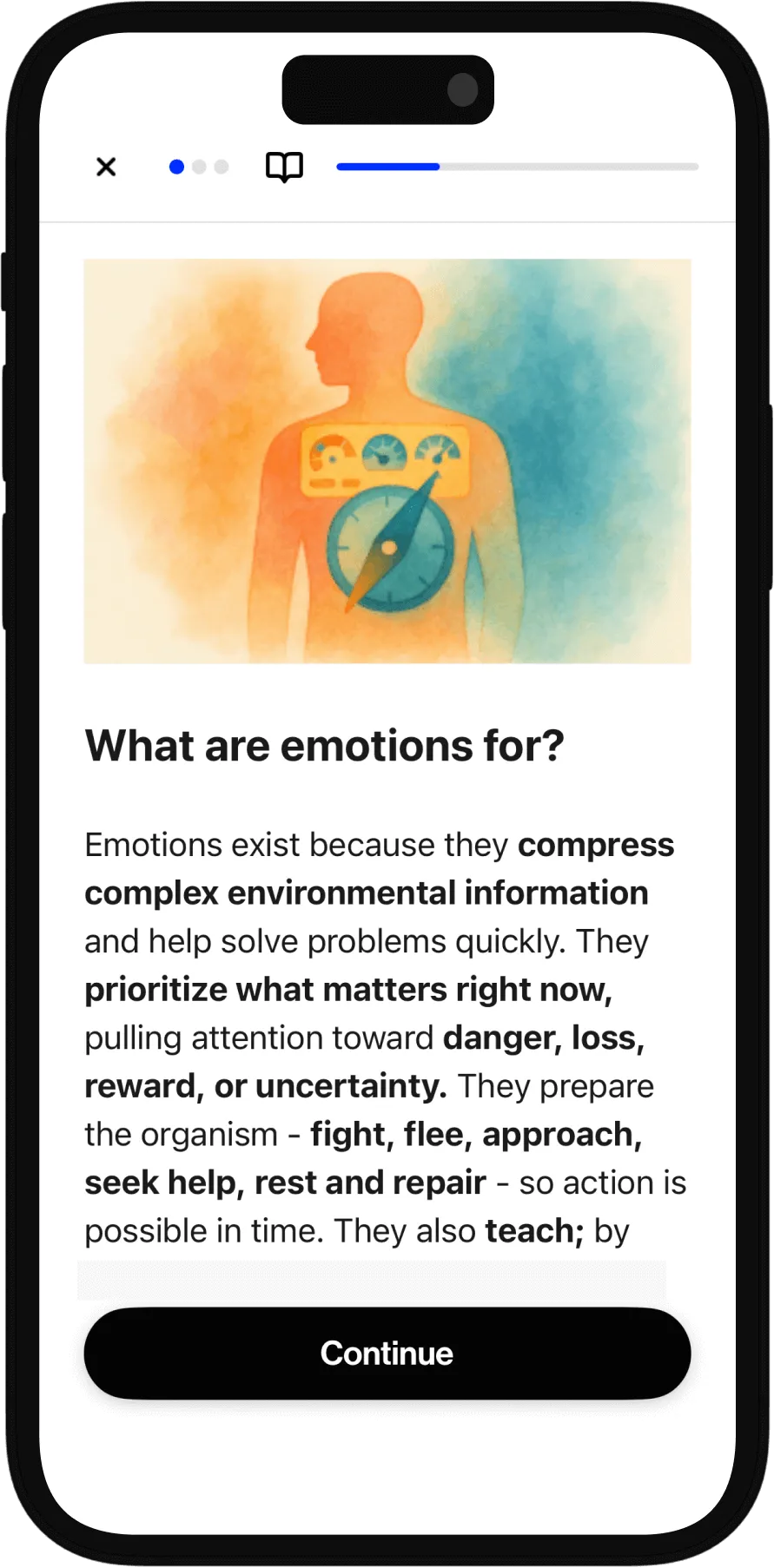
If your feelings tend to arrive late, give them a place to land. Once a day, or right after a flare-up, write two lines: what happened, and what you think you were really reacting to. For example, “Snapped about the dishes. Probably still annoyed about the comment in the meeting.” Then once a week, skim back through it and look for repeats, such as certain people, times of day, or skipped meals that come before the same kind of flare-up. Over time, you may start catching the real cause closer to when it happens.
Finding Support That Takes ADHD Into Account
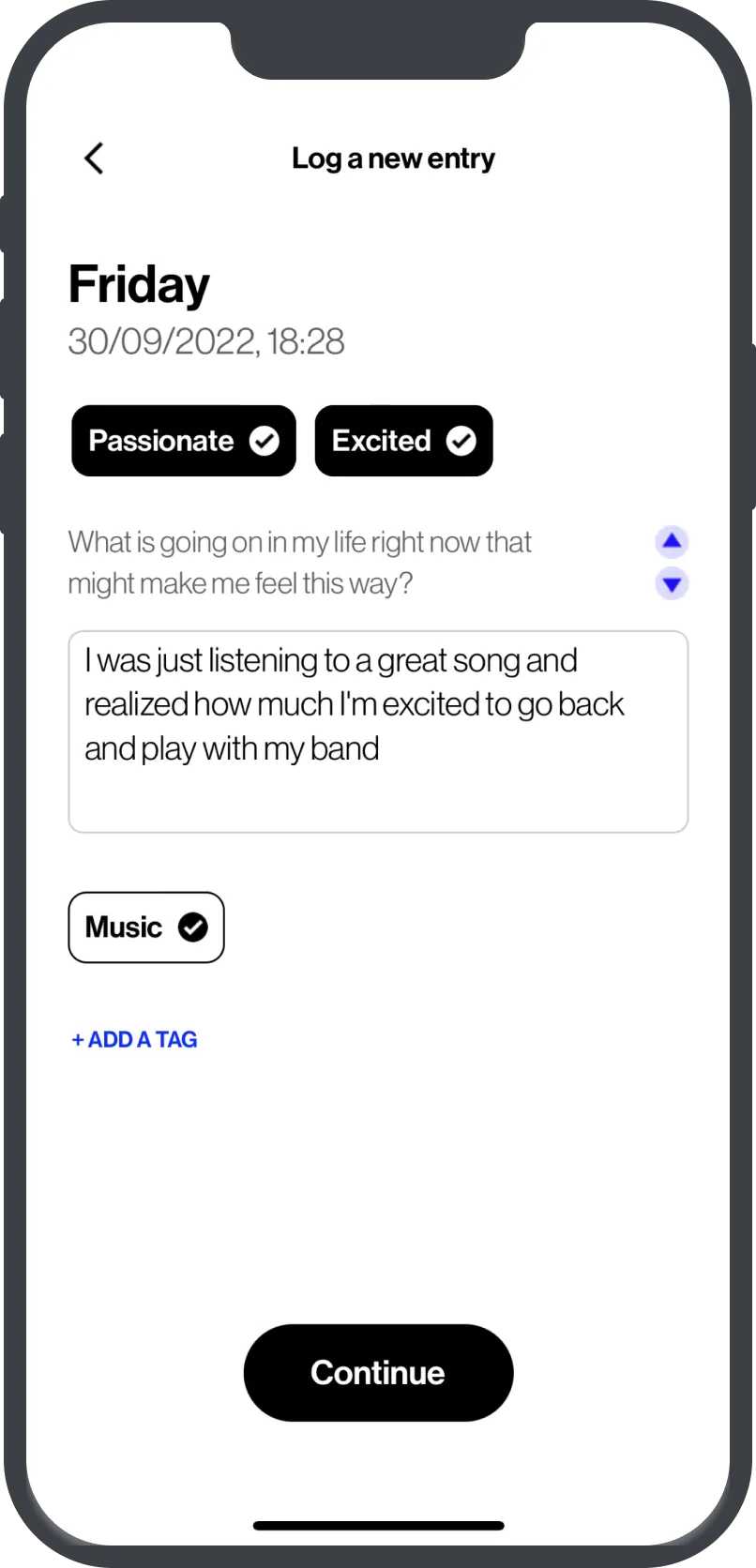
Self-guided practice can take you a long way, and a therapist or coach can help too. When feelings are hard to find, open-ended reflection alone is often not enough, and concrete, structured approaches usually help more, as the full guide to alexithymia explains. A few things can make support easier to use:
- Say it early. Tell them that “I don’t know” is often your honest answer to feeling questions, and bring your test result or catch-up log.
- Ask for short, specific questions. “What did your body do?” or “Was it closer to angry or disappointed?” is easier to answer than “How did that make you feel?”
- Work on the surge and the naming. Big, fast emotions and unnamed emotions are different problems,[3] so it’s reasonable to ask for help with both.
- Mention changes on medication. If you take ADHD medication and your feelings seem calmer, flatter, or different in some other way, tell your prescriber. It’s useful information for them.
The alexithymia treatment guide covers therapy options in more detail, including when to pause or adapt a practice.
ADHD, Alexithymia, and Bids for Connection
Relationship researchers call the small ways partners reach for each other “bids.” A bid can be a comment, a question, a sigh, or a touch, and it is an attempt to get the other person’s attention, interest, or support.[13] ADHD and alexithymia can both make bids easy to miss, but for different reasons. With ADHD, your attention may already be on the next thing, so the bid never quite registers. With alexithymia, you may hear the bid but not the feeling underneath it, so you answer the words and miss the message.
Say your partner sighs and says, “Long day.” If you were deep in a task, you might not look up at all. If you did look up but couldn’t read the sigh, you might say “Same” and go back to your screen. Both can happen when you care a lot, and both get easier when bids are spelled out. Your partner can try “I had a rough day, can you sit with me for ten minutes?” You can make your own bids just as concrete, such as “I don’t know what I’m feeling yet, but I’d like a hug.” And when you realize later that you missed one, you can still come back to it: “Earlier you said you had a long day, and I was in the middle of something. Do you want to tell me about it now?”
The guide to alexithymia in relationships explains bids in more detail, along with ways for both partners to listen, respond, and return to a conversation after a pause.
If You Are Also Autistic
Some people are autistic and have ADHD, and several of the commenters quoted here describe both. If that’s you, the guide to alexithymia and autism covers sensory overload, body signals, and practices built around autistic ways of thinking.
Next Steps
Pick one practice to try this week. If you often feel something without knowing what, attach a ten-second check-in to your morning coffee. If your feelings tend to arrive late, start the two-line catch-up log tonight.
- Take the alexithymia test to get a baseline you can revisit.
- Read the full guide to alexithymia for causes, effects, and how people improve.
- See the alexithymia treatment guide for therapy options and what to ask for.
- Work through the Emotions 101 course to build body awareness and emotion vocabulary at your own pace.
References
Show referencesHide references
- Kiraz, Sertcelik, Erdogan Taycan. The relationship between alexithymia and impulsiveness in adult ADHD. Turkish Journal of Psychiatry. 2021.
- Edel MA, Rudel A, Hubert C, et al. Alexithymia, emotion processing and social anxiety in adults with ADHD. Eur J Med Res. 2010;15:403.
- Beheshti A, Chavanon ML, Christiansen H. Emotion dysregulation in adults with attention deficit hyperactivity disorder: a meta-analysis. BMC Psychiatry. 2020;20(1):120. doi:10.1186/s12888-020-2442-7.
- Donfrancesco R, et al. Attention-deficit/hyperactivity disorder and alexithymia: a pilot study. ADHD Atten Def Hyp Disord. 2013;5:361-367.
- Reddit, r/Alexithymia. Comment in the discussion “Anyone Else With ADHD?”. Individual experience, May 2020.
- Reddit, r/Alexithymia. Comment in the discussion “Anyone Else With ADHD?”. Individual experience, May 2020.
- Reddit, r/ADHD. Comment in the discussion “Do people with ADHD have a hard time identifying their own emotions?”. Individual experience, November 2020.
- Bruton A, et al. Diminished interoceptive awareness in attention-deficit/hyperactivity disorder: a systematic review. Psychophysiology. 2025;62(2):e14750. doi:10.1111/psyp.14750.
- Wiersema JR, Godefroid E. Interoceptive awareness in attention deficit hyperactivity disorder. PLoS ONE. 2018;13(10):e0205221.
- Göz Tebrizcik B, et al. Interoceptive abilities in adults with attention deficit hyperactivity disorder. Biol Psychol. 2025;202:109161.
- Reddit, r/ADHD. Comment in the discussion “Do people with ADHD have a hard time identifying their own emotions?”. Individual experience, November 2020.
- Reddit, r/AutisticWithADHD. Comment in the discussion “Anyone experience alexithymia?”. Individual experience, December 2022.
- Driver JL, Gottman JM. Daily marital interactions and positive affect during marital conflict among newlywed couples. Fam Process. 2004;43(3):301-314.