
Many people who drink or use drugs to cope can’t say what they are coping with. There is a restless, heavy, or bad feeling, and a drink or a hit makes it go quiet. Some people push feelings down on purpose. With alexithymia, which means having trouble identifying and describing your own feelings, it can be hard to tell what the feeling is in the first place. Alexithymia is common in people with addiction problems. A review of 52 studies with more than 22,000 people found a strong link, and it was strongest for difficulty identifying feelings.[1] This guide explains how hard-to-name and pushed-down feelings connect to using, what to look for when cravings are hard to spot, and how naming feelings can support recovery alongside whatever program or treatment you choose.
How Alexithymia and Addiction Are Connected
Alexithymia isn’t a diagnosis per se, it is a trait and a transdiagnostic factor that ranges from mild to strong, and an estimated 10% of people in the general population have high levels. Among people with alcohol use disorder, studies typically find 45 to 67%, and one reported as many as 78%. Two studies of people with drug use disorders found 42% and 50%.[2]
The largest summary so far is a 2022 meta-analysis led by Kirsi Honkalampi. It pooled 52 studies with 22,712 participants and found a strong link between alexithymia and alcohol or drug use. The link was strongest in clinical groups, weakest in students, and in between for the general population.[1] One person in a Reddit thread about sobriety described how the chain looked from the inside:
“I had to change how I lived life. Every drink I had started with an emotion, then a thought, then ended with a drink in my hand. I had to end the cycle by changing how I dealt with my emotions.”[5]
A commenter in r/stopdrinking, in a discussion about what nobody tells you about sobriety
When the emotion at the start of that chain has no name, the chain is much harder to see. Kristen Morie and colleagues, reviewing the research, point out that people who find it hard to recognize and describe feelings may struggle to manage them, and may not see how those feelings connect to starting or continuing drug use.[2]
Hard-to-name feelings and pushed-down feelings often show up together. In a survey of 501 US adults, a team including David Preece and James Gross found that people with higher alexithymia scores reported more expressive suppression, which means hiding the outward signs of a feeling. They also reported withdrawing and ignoring their feelings more often, and seeking support, rethinking the situation, and tackling the problem less often. These differences held after accounting for how distressed people were and their demographic background.[3]
Trouble identifying feelings has the strongest link
Alexithymia has three parts: difficulty identifying feelings, difficulty describing them, and a habit of focusing on outside events rather than inner experience. In the 2022 meta-analysis, difficulty identifying feelings was linked to substance use as strongly as alexithymia overall. Difficulty describing feelings had a weaker link, and the outward-focused thinking style had the weakest.[1]
Michael Lyvers and Fred Arne Thorberg looked at why in an online study of 337 young adults who drink. They tested two explanations. One was that people with alexithymia drink more because they find emotions hard to manage. The other was that they notice body signals less in general, including the signs that they have had enough. In their results, difficulty managing emotions accounted for the link between alexithymia and drinking, and body awareness did not.[6]
Braden Linn and colleagues found a similar pattern in 141 people seeking treatment for alcohol use disorder. Difficulty identifying feelings was linked to alcohol problems indirectly, through self-reported trouble managing emotions and psychological distress.[7]
Which comes first?
Almost every study in the meta-analysis measured people once, so the research can’t say which comes first.[1] It may well run in both directions. In a Finnish study that followed adults for seven years, alexithymia scores didn’t predict who later developed an alcohol use disorder.[8] And heavy use can affect emotional awareness, too. In a study of 101 people during a three-week inpatient detox, alexithymia scores dropped slightly, and the researchers concluded that alexithymia in people with substance use disorders is partly a lasting trait and partly a state that can change.[9]
Either way, the next step is the same. Learning to name what you feel gives you more choices, whether the difficulty came first or grew with the drinking.
Numbing Feelings or Reaching for Them
Most writing about addiction and emotions describes numbing: drinking or using to switch off a feeling you don’t want. That is many people’s experience. But people who struggle to feel much describe the opposite as well. In a Reddit thread about trauma titled “I only feel connected to my emotions when DRUNK”, the person posting said they normally feel cut off from their emotions, “so they never get processed.”[10] A reply in the same thread passed on an image from the commenter’s therapist:
“Trauma can be like a boulder in the way of one of those paths and sometimes we use drinking (or other substance use) as a way to unblock the pathway and “trick” ourselves into thinking, feeling, or doing when we don’t want to. Other times, we use drinking as a way to intentionally block the pathway so we don’t have to feel or think or do. Eventually the substance becomes the only pathway for dealing with any stimuli and it becomes an issue or problem.”[11]
A commenter in r/CPTSD, in a discussion about only feeling emotions when drunk
Numbing and reaching are trying to change different things. Numbing tries to turn a feeling down or off. Reaching tries to get to feelings that seem hard to access when sober. Ask what you want to change. That can help you decide what to try instead.
If you want a feeling to stop, try lowering its intensity for a few minutes without a drink or drug. Splash cold water on your face, walk around the block, try a breathing exercise, or text someone you trust that it’s a hard moment. Then rate the feeling again from 1 to 10.
If a drink or a joint is the only time you feel much, ask which feeling you’re hoping to reach. Is it affection, sadness, or a sense of connection? Try starting with a sober moment that brings you a little closer to it. Put on a song that used to move you, look at an old photo, or write two lines to someone who matters to you. Then notice what shifts in your body, even if it is small.
The checks further down this page are one place to start, and the alexithymia exercises give you more.
When You Don’t Feel Cravings
Recovery advice often starts with “notice your cravings.” But some people say cravings don’t arrive the way others describe them. A craving is itself a felt urge: a pull toward a drink, a cigarette, or a drug. It isn’t the same as an emotion such as fear or sadness, but the two often show up together. You might feel sad and want a drink at the same moment, or feel the pull with no clear emotion behind it. One commenter in a Reddit thread about alexithymia described something quieter than a pull:
“I’m a regular smoker, and I can’t really say that I’ve ever had a strong craving for a cigarette. I notice when it’s time for one, and maybe get antsy or annoyed when I don’t smoke…”[12]
A commenter in r/Alexithymia, in a discussion about whether you could have an addiction without realizing it
Research doesn’t settle how alexithymia and craving fit together. Studies have found links between them, but not always in the same direction.[2] If you don’t notice an obvious urge, routine and restlessness can still be clues worth looking into. To look more closely, think back over the last month:
- How often did you drink or use, and how much, compared with what you planned?
- Did you go out of your way for it, for example late at night, in bad weather, or when it cost you something else?
- What happened in the hour before? A hard conversation, a long day, being alone, or an empty evening?
- Has anyone told you they are worried about how much you drink or use?
The NHS lists other people warning you about how much you’re drinking as one sign that you may need help.[4] If your answers worry you, take them to a doctor or a support group. Written answers are easier to talk through than a feeling you can’t describe.
Naming the Feeling Behind the Urge
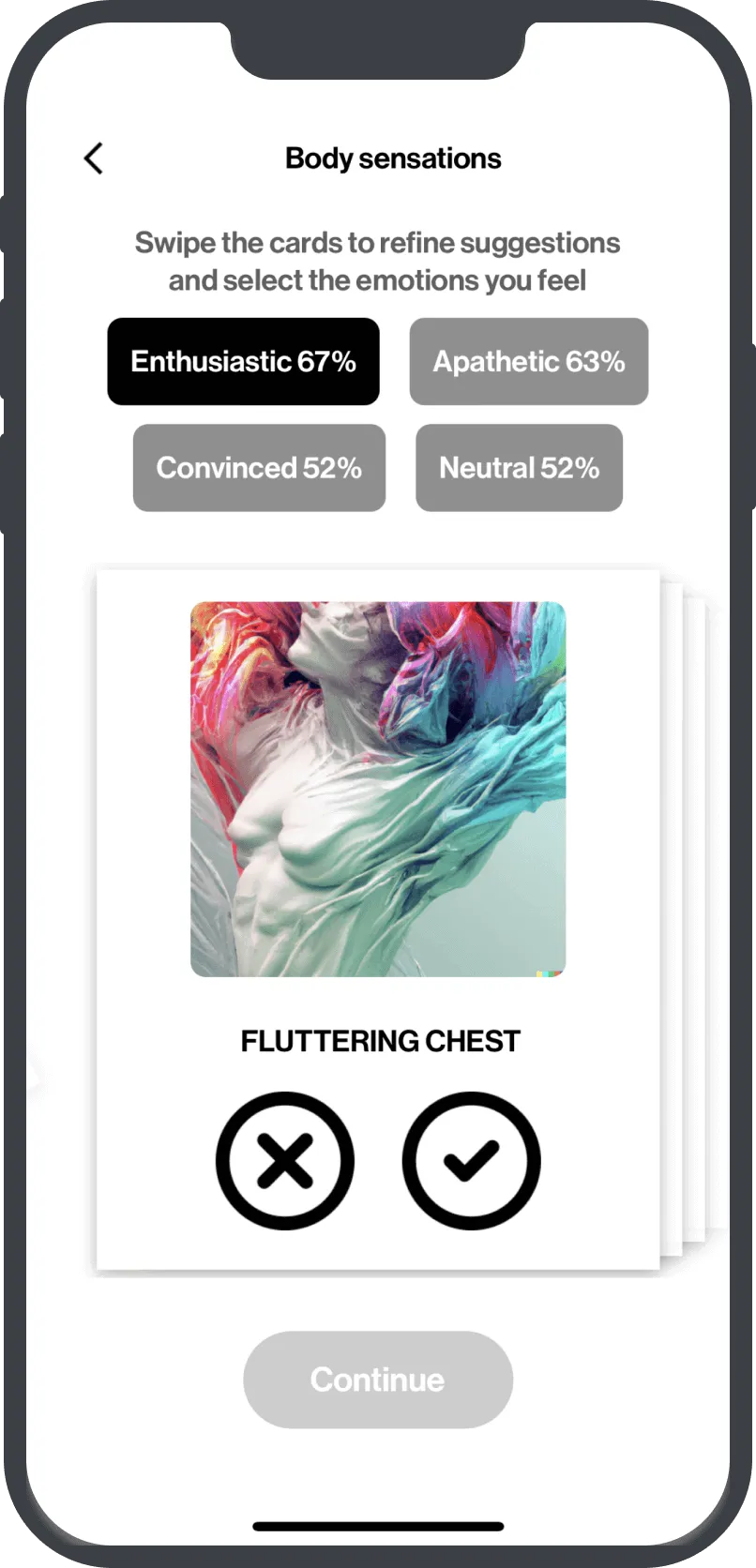
Many recovery programs teach HALT: checking whether you are hungry, angry, lonely, or tired before you act on an urge. With alexithymia, a word like “angry” or “lonely” may not be immediately obvious. So start one step earlier, with what your body is doing, and work toward a word from there.
A one-minute check when an urge starts
- Notice your body. Where is the tension, heat, heaviness, or restlessness? How strong is it, from 1 to 10?
- Check the basics. Have you eaten, slept, and talked to anyone today? Hunger and tiredness can feel a lot like needing a drink.
- Pick the closest word. Is it nearer to bored, lonely, stressed, hurt, angry, ashamed, or sad? Choose two if you can’t decide. A rough word is fine, and you can change it later.
- Ask what that feeling needs. Loneliness might call for a message to a friend, tiredness for an early night, and stress for a walk or a shower.
- Write one line. Note the time, the urge, the body signal, and the word.
Over a few weeks, your notes can show which feelings tend to come before an urge, and that gives you something specific to plan for.
In a study of 181 adults in an alcohol use disorder treatment trial who kept daily diaries over 84 days, people who met the study’s threshold for alexithymia were less likely to drink on days when their ratings distinguished negative emotions more clearly. That link was stronger for them than for other participants.[13]
Riding out an urge
Mindfulness-based relapse prevention (MBRP) is a group program that teaches people to notice cravings and difficult feelings and stay with them without acting on them. In a trial of 286 people who had finished initial treatment for substance use, both MBRP and a standard relapse prevention program lowered the risk of relapse at six months compared with the treatment center’s usual aftercare. Standard relapse prevention did better on how long people went before first using drugs. At 12 months, people in the MBRP group reported fewer days of drug use and heavy drinking than both other groups.[14] The authors suggest part of the benefit came from a better ability to recognize and tolerate the discomfort of craving and difficult feelings.[14]
MBRP wasn’t designed for alexithymia specifically, but its core skill, noticing a craving and the feeling around it, overlaps with the naming practice in this guide. To try a short version, notice where the urge sits in your body, give it rough words (“tight chest, restless, maybe lonely”), and breathe slowly while you watch how it changes over the next few minutes.
When Feelings Come Back in Early Recovery
Stopping using often brings feelings back, sometimes all at once, and that can feel like a lot. Some people find that letting the discomfort in becomes part of recovery:
“As strange as it sounds to willingly let myself feel discomfort, it helped me. Actually experiencing negative emotions was a massive positive, when I’d been running away from them for so long.”[15]
A commenter in r/stopdrinking, in a discussion asking for coping tips
Emotional awareness can shift in early recovery. In the detox study above, alexithymia scores dropped slightly over just three weeks.[9] The one-minute check is one way to start working with whatever comes back.
When anger covers other feelings
Anger is often the one feeling that comes through clearly, and it can stand in for others. One person looked back on the anger they had felt while drinking:
“Every feeling that I had just got bottled up and ignored until it came up as anger. I couldn’t control it. I didn’t even know what was happening.”[16]
A person posting in r/stopdrinking, about realizing they had been scared and sad rather than angry
Seven months sober, they could see they had really been sad, ashamed, and scared of being alone.[16] One reply suggested a question to try: once you peel back the anger, “what is the feeling that you experience underneath it?”[17] Hurt, fear, shame, and loneliness are common answers.
A bigger set of words helps here. If all you have is “fine”, “bad”, and “angry”, spend a few minutes a week reading through a feelings list or emotion wheel, and try out a new word whenever you notice something.
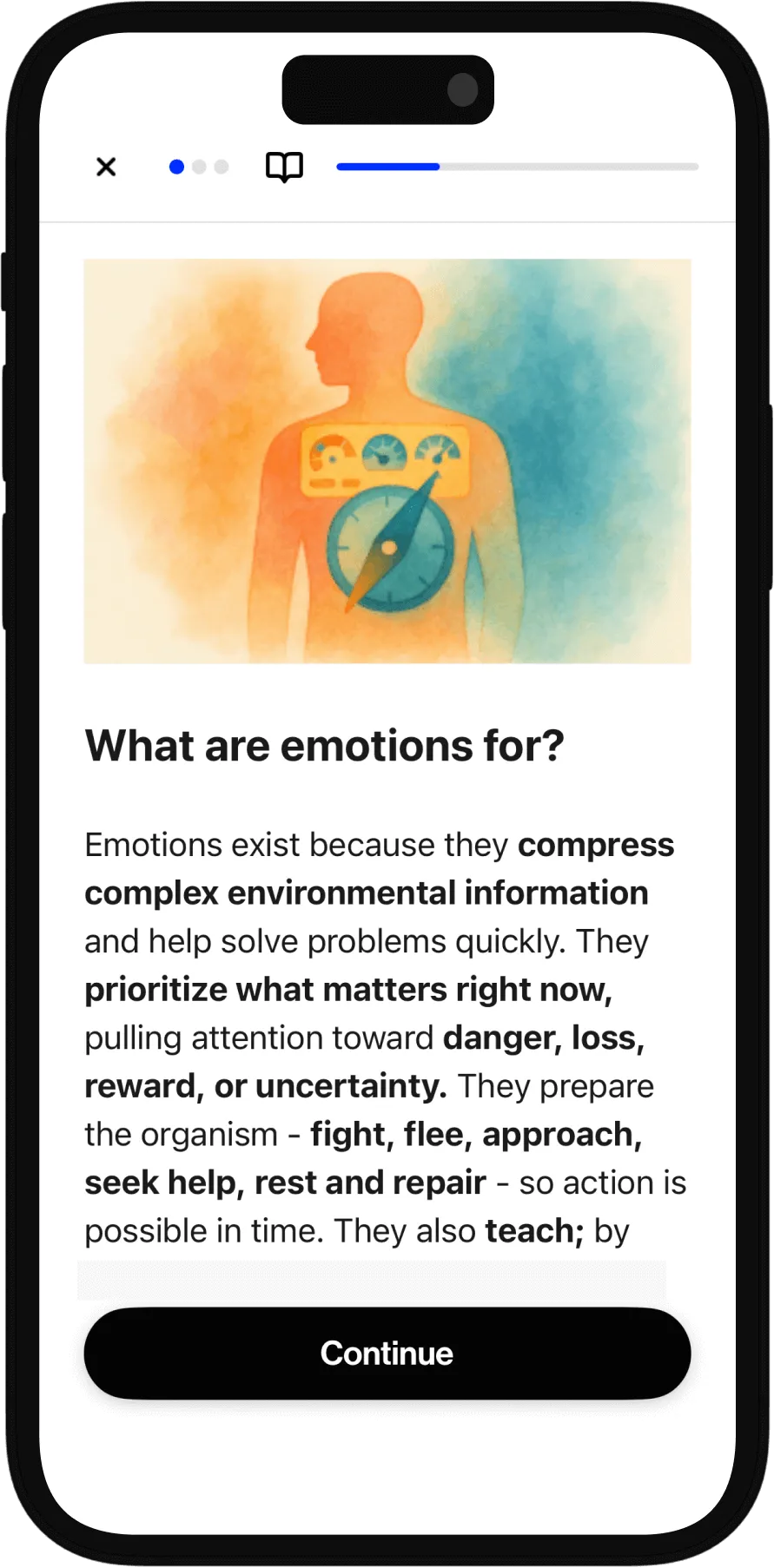
Feeling more can be uncomfortable, but it can also be a sign that previously suppressed signals are getting through. Keep each practice short and stay within your window of tolerance, the range where you feel some discomfort but still feel in control. If you notice panic, feeling detached or unreal, or an urge you can’t manage, stop and reach out to someone: a sponsor, a friend, a counselor, or a helpline.
Getting Support
Alexithymia can make treatment harder to stick with. In a study of 126 outpatients, 41.3% had high alexithymia scores, and they stayed in treatment for less time than the others.[18] A study of young people in residential treatment found no link with relapse or dropout, though.[19] Either way, it is worth it telling your counselor, doctor, or sponsor early on that you find feelings hard to name. Then they can ask about your body, your day, and what you did, instead of only how you feel.
Naming practice works alongside whatever recovery path you choose, whether that’s a mutual-aid group such as AA or SMART Recovery, counseling, medication, or a mix. The NHS notes that groups like these are available in most areas.[4]
Stopping safely
If you are physically dependent on alcohol, stopping overnight can be harmful. The NHS advises getting advice first, including about medicine to help you stop safely, and calling 999 for severe withdrawal symptoms such as hallucinations, severe shaking, or seizures.[4] Opioids such as heroin also cause withdrawal symptoms, so speak to a doctor or drug service before stopping those, too.[20]
- In the US, call SAMHSA’s National Helpline on 1-800-662-4357, a free, confidential treatment referral service open 24/7.[21]
- In the UK, call Drinkline on 0300 123 1110 about alcohol[4] or the FRANK drugs helpline on 0300 123 6600.[20]
- Elsewhere, use Find A Helpline to find support where you live.
- If you or someone else is in immediate danger, call your local emergency number.
The alexithymia treatment guide covers therapies that work on emotional awareness and how to choose a therapist.
Next Steps
Try the one-minute check the next time an urge comes, and keep your notes for two weeks. Then read them together and look for the feelings that came up most often. Those are the ones worth a plan.
- Read the alexithymia guide for the full picture of what alexithymia is.
- Try the alexithymia exercises for step-by-step ways to identify a feeling.
- Read about interoception and emotions to work with body signals.
- If low mood comes with your drinking or using, see the alexithymia and depression guide.
- If you use to cope with a difficult past, the trauma and PTSD guide may help.
References
Show referencesHide references
- Honkalampi K, Jokela M, Lehto SM, Kivimäki M, Virtanen M. Association between alexithymia and substance use: A systematic review and meta-analysis. Scand J Psychol. 2022;63(5):427-438. doi:10.1111/sjop.12821.
- Morie KP, Yip SW, Nich C, Hunkele K, Carroll KM, Potenza MN. Alexithymia and addiction: a review and preliminary data suggesting neurobiological links to reward/loss processing. Curr Addict Rep. 2016;3(2):239-248. doi:10.1007/s40429-016-0097-8.
- Preece DA, et al. Alexithymia and emotion regulation. J Affect Disord. 2023;324:232-238. doi:10.1016/j.jad.2022.12.065.
- NHS. Alcohol support.
- Reddit, r/stopdrinking. Comment in the discussion “Nobody tells you this part of sobriety”. Individual experience, October 2026.
- Lyvers M, Thorberg FA. Alexithymia and alcohol use: evaluating the role of interoceptive sensibility with the revised Multidimensional Assessment of Interoceptive Awareness. J Psychopathol Behav Assess. 2024;46(2):1-13. doi:10.1007/s10862-023-10034-y.
- Linn BK, Zhao J, Bradizza CM, Lucke JF, Ruszczyk MU, Stasiewicz PR. Alexithymia disrupts emotion regulation processes and is associated with greater negative affect and alcohol problems. J Clin Psychol. 2021;77(12):2915-2928. doi:10.1002/jclp.23279.
- Honkalampi K, Koivumaa-Honkanen H, Lehto SM, et al. Is alexithymia a risk factor for major depression, personality disorder, or alcohol use disorders? A prospective population-based study. J Psychosom Res. 2010;68(3):269-273. doi:10.1016/j.jpsychores.2009.05.010.
- de Haan HA, van der Palen J, Wijdeveld TG, Buitelaar JK, De Jong CA. Alexithymia in patients with substance use disorders: state or trait? Psychiatry Res. 2014;216(1):137-145. doi:10.1016/j.psychres.2013.12.047.
- Reddit, r/CPTSD. Post “I only feel connected to my emotions when DRUNK”. Individual experience, November 2024.
- Reddit, r/CPTSD. Comment in the discussion “I only feel connected to my emotions when DRUNK”. Individual experience, November 2024.
- Reddit, r/Alexithymia. Comment in the discussion “Could you have an addiction and not realize it?”. Individual experience, August 2023.
- Knapp KS, et al. Emotion differentiation among individuals in a randomized clinical trial for alcohol use disorder: Within- and between-person associations with affect, craving, and alcohol use in daily life. Behav Res Ther. 2024;173:104474. doi:10.1016/j.brat.2024.104474.
- Bowen S, Witkiewitz K, Clifasefi SL, et al. Relative efficacy of mindfulness-based relapse prevention, standard relapse prevention, and treatment as usual for substance use disorders: a randomized clinical trial. JAMA Psychiatry. 2014;71(5):547-556. doi:10.1001/jamapsychiatry.2013.4546.
- Reddit, r/stopdrinking. Comment in a discussion asking for coping tips. Individual experience, April 2025.
- Reddit, r/stopdrinking. Post “You ever sober up and realize that you were never actually angry, you were just scared and sad?”. Individual experience, April 2020.
- Reddit, r/stopdrinking. Comment in the discussion “You ever sober up and realize that you were never actually angry, you were just scared and sad?”. Individual experience, April 2020.
- Palma-Álvarez RF, Ros-Cucurull E, Daigre C, et al. Is alexithymia related to retention and relapses in patients with substance use disorders?: A one year follow-up study. Addict Behav. 2021;113:106681. doi:10.1016/j.addbeh.2020.106681.
- Parolin M, Miscioscia M, De Carli P, Cristofalo P, Gatta M, Simonelli A. Alexithymia in young adults with substance use disorders: critical issues about specificity and treatment predictivity. Front Psychol. 2018;9:645. doi:10.3389/fpsyg.2018.00645.
- NHS. Drug addiction: getting help.
- SAMHSA. SAMHSA’s National Helpline.